

Peeling nails are usually a moisture problem. Repeated wetting and drying, dry indoor air, or harsh manicure removal lifts the top layers of the nail plate, so the free edge flakes and splits. Protect your hands from water, moisturize after every wash, and keep nails short while they recover.
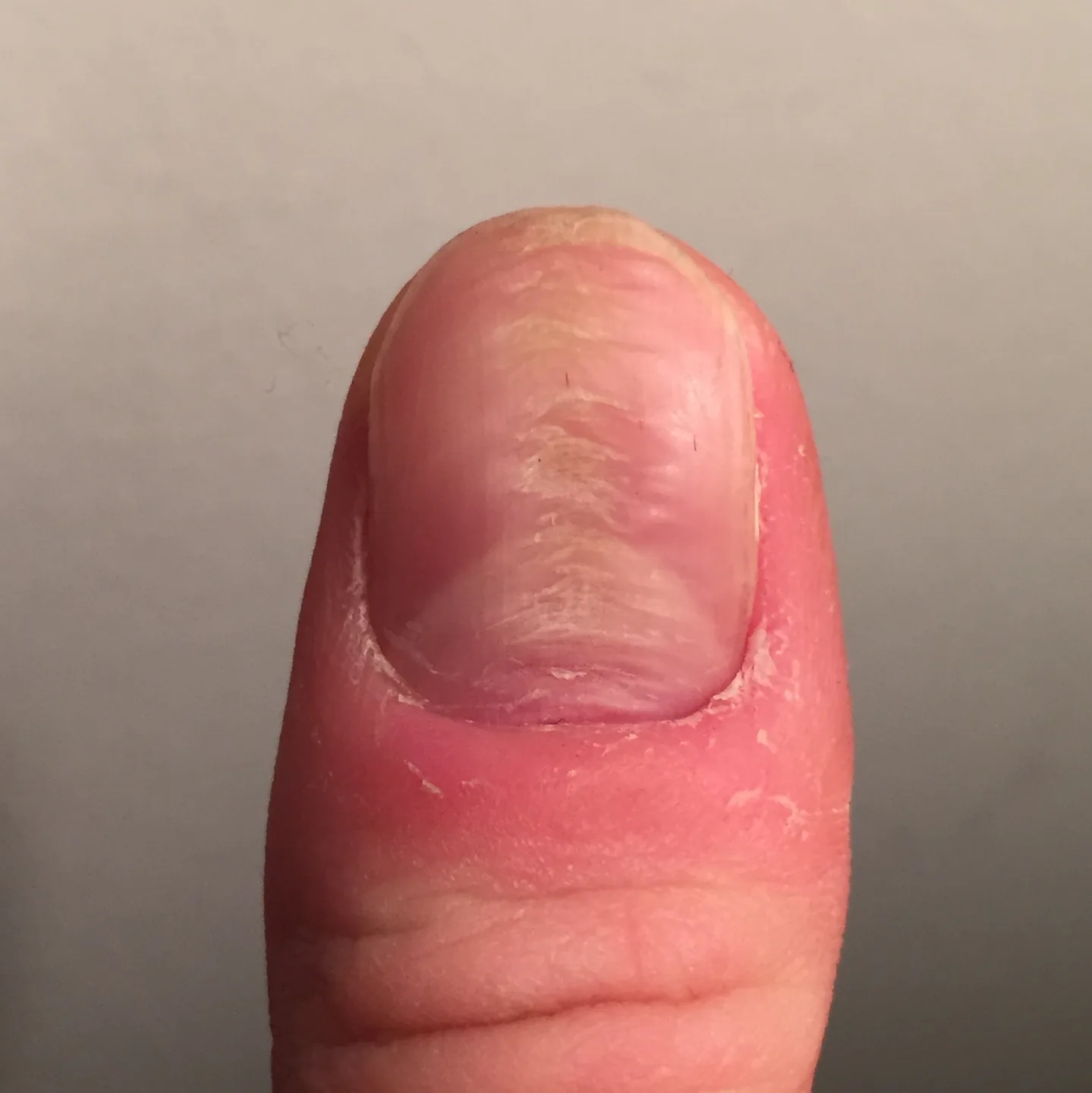
The medical name for that horizontal flaking is onychoschizia, and it is one of the most common forms of brittle nails. It is rarely a sign of something serious on its own, but it is also not just cosmetic: once the surface layers separate, the nail catches on fabric, tears further, and takes months to grow out.
By Ashley. Sources cited include the American Academy of Dermatology, the NHS, and a peer-reviewed review of brittle nails.
Key takeaways
- Most peeling is onychoschizia, a splitting of the nail plate’s top layers, and it tracks with wet-dry cycling and dryness more often than with a vitamin deficiency.
- Gloves and moisturizer beat supplements. The evidence for biotin is weak, and high doses can skew thyroid and other lab tests.
- Some peeling needs a doctor. Color change, lifting, pain, or one stubborn nail can point to psoriasis, a thyroid problem, or a fungal infection.
What the pattern usually means
| What you see | Most likely cause | First thing to try |
|---|---|---|
| Thin layers flaking at the free edge, several nails | Wet-dry cycling or dry air | Gloves for wet work, cream after every wash |
| Peeling that starts after gel or acrylic removal | Manicure trauma or acetone | A break from gel, gentler removal |
| Ragged edge with dry, picked cuticle, one or two nails | Picking or biting | Stop picking, keep the nail short |
| Yellow, thick, crumbly nail | Fungal infection | See a doctor for testing |
| Peeling with pitting, lifting, or a single nail | Psoriasis, thyroid, or another condition | See a doctor |
The table is a starting point, not a diagnosis. Several causes overlap, and the same nail can be dry, over-filed, and picked at the same time.
What causes peeling nails
A nail plate is about 25 layers of tightly packed keratin cells. When the bond between those layers weakens, the edge separates into fine horizontal sheets. A 2019 review in Dermatology and Therapy estimates that brittle nails affect up to 20% of the population, especially women over 50, and names onychoschizia as one of the main patterns.
01. Wetting and drying your hands all day
This is the most common trigger. Water swells the nail plate, then evaporates and shrinks it again; repeat that dozens of times a day and the bonds between cells fracture. The review describes lamellar onychoschizia as typical of people who wash their hands too often, including homemakers, nurses, and hairdressers. The American Academy of Dermatology puts it plainly: too much water exposure weakens nails and makes them split, peel, or break.
02. Dry air and dehydrated nails
Low humidity pulls water out of the nail just as it does out of skin, which is why peeling often worsens in winter and in heated rooms. The review notes that dehydration is more rapid when nails are left long. Age matters too: the NHS lists brittleness as a normal change with age, and the review points to a drop in the lipids that hold nail cells together after menopause.
03. Manicures, gel, and acetone
Every manicure involves some filing, and every removal involves solvent or more filing. The review states that all methods of preparing nails for polish and removing it damage the healthy plate. The AAD adds that gel nails can cause brittleness, peeling, and cracking, and that filing the natural nail so product grips thins it further. If your peeling began after a gel set came off, that history is the diagnosis more often than any deficiency.
04. Picking, biting, and using your nails as tools
Picking at polish, peeling off gel, and using a thumbnail to open a can all pry apart the layers you are trying to protect. The AAD warns that using nails as tools causes chipping, splitting, and lifting of the nail bed, and that biting or removing the cuticle damages the nail. A repetitive pick or rub can leave a central band of horizontal ridges, a pattern called habit-tic deformity.
05. Soaps, detergents, and solvents
Harsh cleaners do more than dry the skin. The review notes that occupational exposure to solvents can dissolve the intercellular lipids that glue nail cells together. Wearing occlusive gloves over wet hands for long stretches can cause its own kind of splitting, so the glove has to go on dry hands and come off when the job is done.
06. A gap in iron, zinc, or other nutrients
Nutrition is a real cause, but a less common one than the internet suggests. The AAD links thin, spoon-shaped nails to low iron, and the review says iron supplementation can help when ferritin is below 10 ng/ml. Zinc deficiency can also make nails fragile. Biotin is the supplement most often recommended, yet the same review calls the studies small and poorly controlled, and warns that more than 10 mg a day can distort thyroid, troponin, and pregnancy tests.
07. A skin, thyroid, or fungal condition
Peeling can be the visible edge of something systemic. Up to half of people with psoriasis have nail changes, according to the review, and about 90% of people with an underactive thyroid do. The NHS also lists iron-deficiency anemia, diabetes, and heart, lung, or liver disease among conditions that show up in the nails, and a fungal infection can make one nail crumble while the rest look normal.
What helps: fixes that actually work
Treatment follows the cause, but a few habits help almost every kind of peeling. Start with the two that cost nothing.
01. Moisturize after every wash
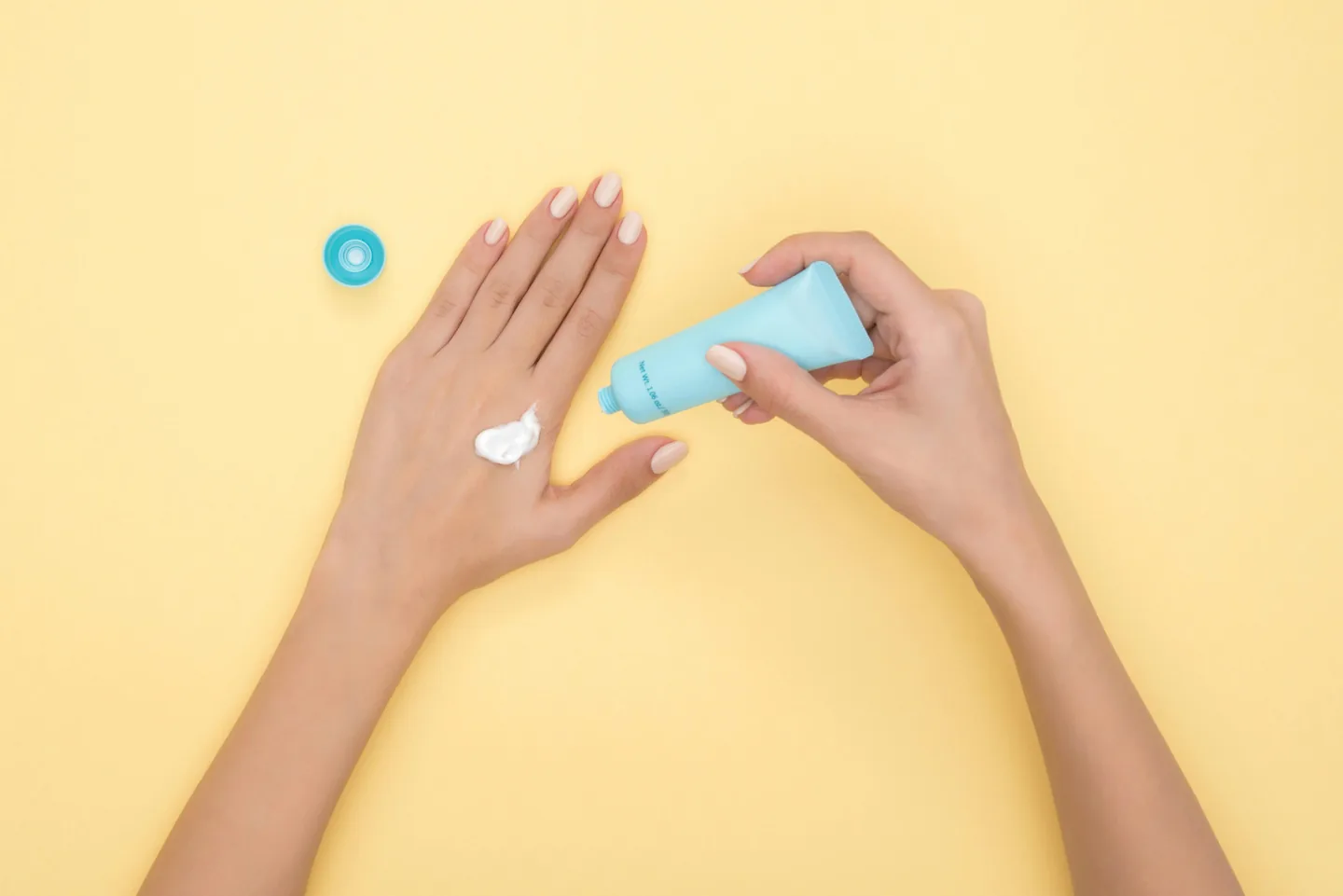
The AAD advises moisturizing after hand washing, and the review recommends creams that combine an occlusive such as petrolatum or lanolin with a humectant such as glycerin. That combination slows water loss and pulls moisture back into the plate. Rub the cream into the nail and the skin around it, not just the palm, and reapply after dishes, cleaning, or any long soak.
For a cream that sinks in fast: a fragrance-free hand cream for frequent washing

- 2-ounce fragrance-free Neutrogena Norwegian Formula Hand Cream delivers concentrated hydration to help moisturize and soothe...
- Dermatologist-recommended brand, this glycerin-rich moisturizing hand cream uses the classic Norwegian Formula to provide lasting...
- Designed for dry hands, this fragrance-free hand lotion is clinically proven to improve dryness and help restore smoother, more...

02. Put gloves between your nails and water
Wear rubber gloves for dishes, cleaning, and any task that keeps your hands wet, as both the AAD and NHS advise. For long wet jobs, the review suggests cotton gloves under waterproof ones so sweat can escape. The gloves only work if your hands are dry when they go in; trapping water against the nail is worse than leaving it bare.
03. File gently and keep nails short
Cut nails straight across and round the tips slightly, the AAD advises, then smooth the edge with an emery board. Keep the filing light and stop before the edge looks thin. Keeping nails short is part of the treatment, not just tidiness: the review notes that dehydration moves faster through a long free edge.
04. Take a break from gel and acetone
Give the plate time to recover between sets. The AAD recommends reserving artificial nails for special occasions, and the review supports limiting both application and removal. When you do remove gel, soak it off with acetone rather than picking or scraping it; our step-by-step gel removal guide covers the method that does the least damage.
05. Stop picking and stop using nails as tools
Keep a file nearby so a snag gets smoothed instead of picked. Open cans with a spoon, not a thumbnail, and leave cuticles alone; the AAD advises against cutting or biting them because they seal the nail against infection. If picking is a habit you cannot break, short nails and a bitter-tasting polish can help interrupt it long enough for the edge to grow out.
06. Test before you supplement
A ferritin and thyroid panel is worth asking for if peeling is persistent, since both causes are treatable and neither improves with a random supplement. If you do take biotin, tell any doctor ordering blood tests: the review notes the FDA warning that high doses interfere with several common immunoassays.
When to see a doctor
Most peeling improves with gloves and cream as the damaged edge grows out. See a dermatologist or your primary care doctor if you notice any of the following:
- A nail that changes color, turns yellow or green-black, or thickens
- Lifting of the nail from the nail bed, with or without white patches
- Pain, redness, swelling, or warmth around the nail
- Peeling or splitting on one nail only, while the others are normal
- Pitting, deep grooves across the nail, or a dark streak
- No improvement after several months of gentle care, or diabetes and poor circulation
The AAD’s list of nail changes a dermatologist should examine includes lifting, pitting, yellow nails, and deep grooves, because each can point to a condition that needs treatment rather than another cream.
Frequently asked questions
Does biotin help peeling nails?
The evidence is weaker than the marketing suggests. The 2019 review found the biotin studies small and poorly controlled, and notes that doses above 10 mg a day can skew lab tests. Ask for a blood test before treating a suspected deficiency blindly.
Can I put polish on peeling nails?
You can, but it will not fix the peeling and removal adds more trauma. The review notes that polish itself sits at a pH close to the nail’s own, so the damage comes from filing and solvent rather than the color. If you paint, use a base coat and remove gently.
How long does it take for peeling nails to grow out?
Longer than most people expect. A fingernail replaces itself slowly, and the NHS notes that a fingernail lost to injury grows back within about six months. Keep the edge filed smooth and protected while the damaged section moves out.
Is peeling nails a sign of a vitamin deficiency?
Sometimes, but it is not the usual explanation. Iron and zinc deficiencies can make nails fragile, and the AAD links low iron to spoon-shaped nails. For most people, the cause is water, dry air, or manicure damage, which is why the first fixes are gloves and cream.
Should I cut peeling nails short?
Yes, at least while they recover. A shorter free edge has less surface to dry out and catch on things, and the review notes that dehydration is more rapid when nails are left long. Trim straight across and smooth the corners.
Can I get gel nails with peeling nails?
Wait until the peeling has grown out or been filed away. The AAD says gel nails can cause brittleness, peeling, and cracking, and the prep and removal add more stress to a plate that is already separating. A regular manicure with a base coat is the gentler choice in the meantime.
Sources
- American Academy of Dermatology. Dermatologists’ tips for healthy nails. Last updated 10 February 2025.
- American Academy of Dermatology. Nail changes a dermatologist should examine.
- American Academy of Dermatology. Artificial nails: Dermatologists’ tips for reducing nail damage.
- NHS. Nail problems. Reviewed 12 March 2024.
- Chessa MA, Iorizzo M, Richert B, et al. Pathogenesis, clinical signs and treatment recommendations in brittle nails: a review. Dermatology and Therapy. 2020;10(1):15–27.
More at-home manicure and nail-care guides live in our Nails section.