

You do not need a big garden to grow roses. A sunny patio, deck, or balcony and the right container are enough, as long as you choose a rose that is happy in a pot and plan ahead for watering and winter.
The short answer: pick a compact patio, miniature, or ground cover rose, and give it a deep pot with drainage holes. The Royal Horticultural Society (RHS) suggests pots 9 to 14 inches deep for patio and miniature roses, and Cornell Cooperative Extension advises containers at least 18 by 18 inches, with 24 by 24 inches better. Fill with good potting mix, give the rose at least half a day of sun, and water deeply whenever the top inch or two of mix is dry. Feed in spring and early summer, stop by late summer, and in cold climates protect the pot through winter.
The Best Roses for Pots
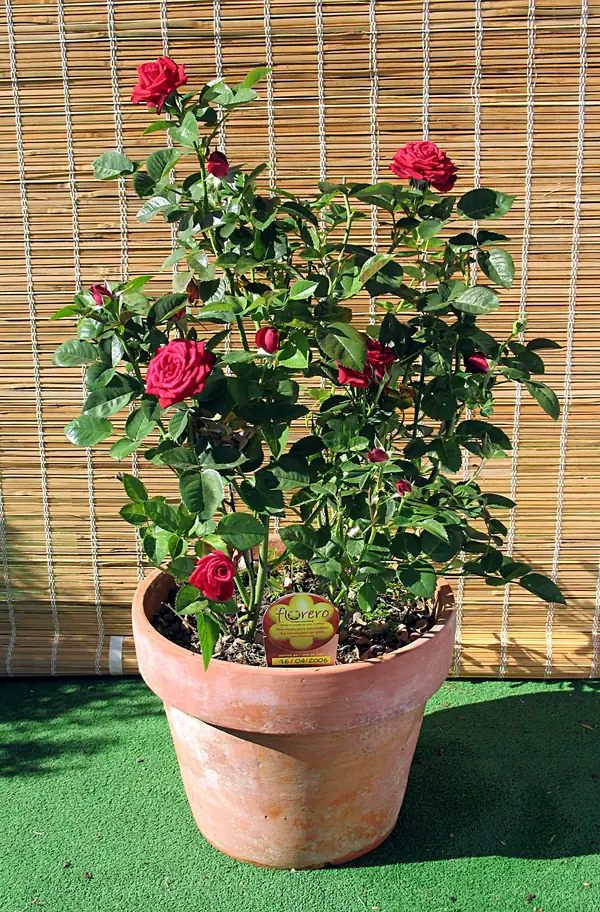
Roses generally have long, deep roots, so only some of them are comfortable in a container. The RHS says the best choices are patio and miniature roses, which were bred with container growing in mind. Less vigorous, more compact ground cover and climbing roses can also work, but they need larger containers.
A Cornell Cooperative Extension answer on Ask Extension for a New York gardener makes a similar recommendation: pick a smaller, compact bush, with miniature, floribunda, and ground cover roses as the best options. It also suggests choosing a rose rated at least one USDA hardiness zone colder than where you live; as the answer puts it, one or more zones hardier will help a rose winter over better in a container.
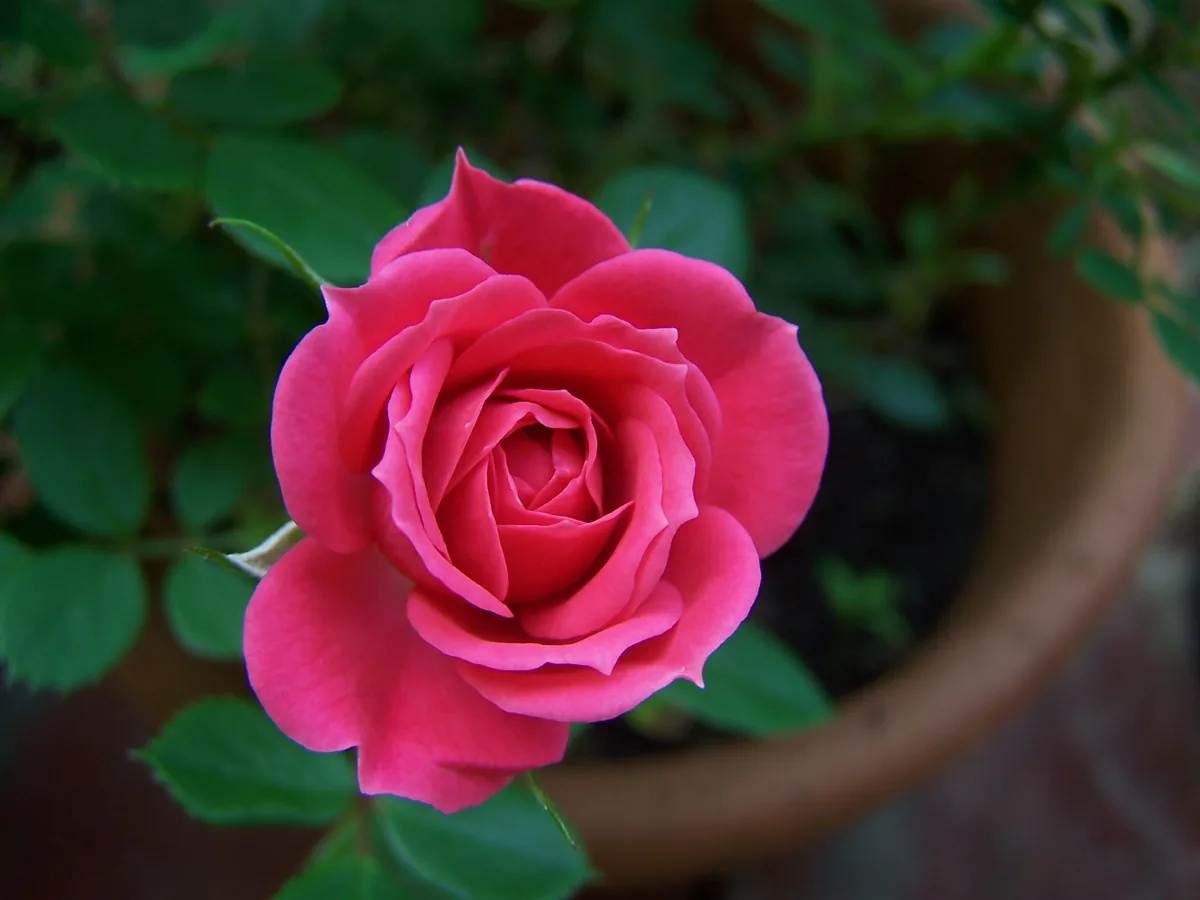
For specific names, the RHS lists these among its top roses for containers: ‘Nice Day’ and ‘Laura Ford’ (patio climbers), ‘Sweet Dream’ (patio), ‘Magic Carpet’ (ground cover), and ‘Robin Redbreast’ (miniature or ground cover). Availability varies by region, so check what your local nursery carries and its hardiness rating.
Choosing the Right Pot
Depth matters as much as width for roses. These are the RHS minimum depths by type:
| Rose type | Pot depth (RHS) |
|---|---|
| Patio, miniature | 9 to 14 inches (23 to 35 cm) |
| Compact climber, ground cover | At least 12 to 18 inches (30 to 45 cm) |
For width, the Cornell Cooperative Extension answer says the bigger the container the better, at least 18 by 18 inches, and 24 by 24 inches is better. Whatever you choose, make sure it has drainage holes, because roses do not like soggy roots. The RHS also suggests putting the container where you want it before you fill it, since a large planted pot may be too heavy to move.

- 【GENEROUS SIZE & DEEP DESIGN】 Give your plants the space they need to thrive! This extra-large planter measures 20" in top...
- 【HEAVY DUTY & REINFORCED】 Built to last season after season. Constructed from premium, virgin PP plastic and featuring a...
- 【EXCELLENT DRAINAGE SYSTEM】 Equipped with 4 pre-drilled drainage holes at the bottom, this planter effectively prevents...
Potting Mix and Planting
Use a good-quality potting mix rather than garden soil. Cornell Cooperative Extension suggests a potting mix without added fertilizer. The RHS, which writes for British gardeners, recommends a peat-free compost for established plants, such as a peat-free John Innes No. 3.
- Set the empty container in its final, sunny spot.
- Add potting mix to the container.
- Ease the rose out of its nursery pot, set it in place, and fill in around the roots with more mix, firming gently.
- Water thoroughly so the mix settles around the roots, and check that water drains from the bottom.
On timing, the RHS says the ideal time to pot up roses is November, using bare-root plants, while container-grown roses can be potted up any time from October to April. That timing is written for the UK, so check with your local extension office for the best planting window where you live.
Sun and Water
Roses love sunshine. The RHS recommends sun for at least half the day, and the Cornell Cooperative Extension answer says at least 6 hours a day.
Watering is where container roses differ most from roses in the ground. The RHS warns that container-grown roses must not dry out, or they become prone to powdery mildew. Cornell Cooperative Extension suggests checking the soil every day during the growing season and watering deeply when the top 1 to 2 inches are dry; in very hot, dry weather, you may need to water every day. One useful RHS tip: if you can, place the pot so the container is shaded for part of the day while the plant itself stays in full sun.
Feeding and Mulching
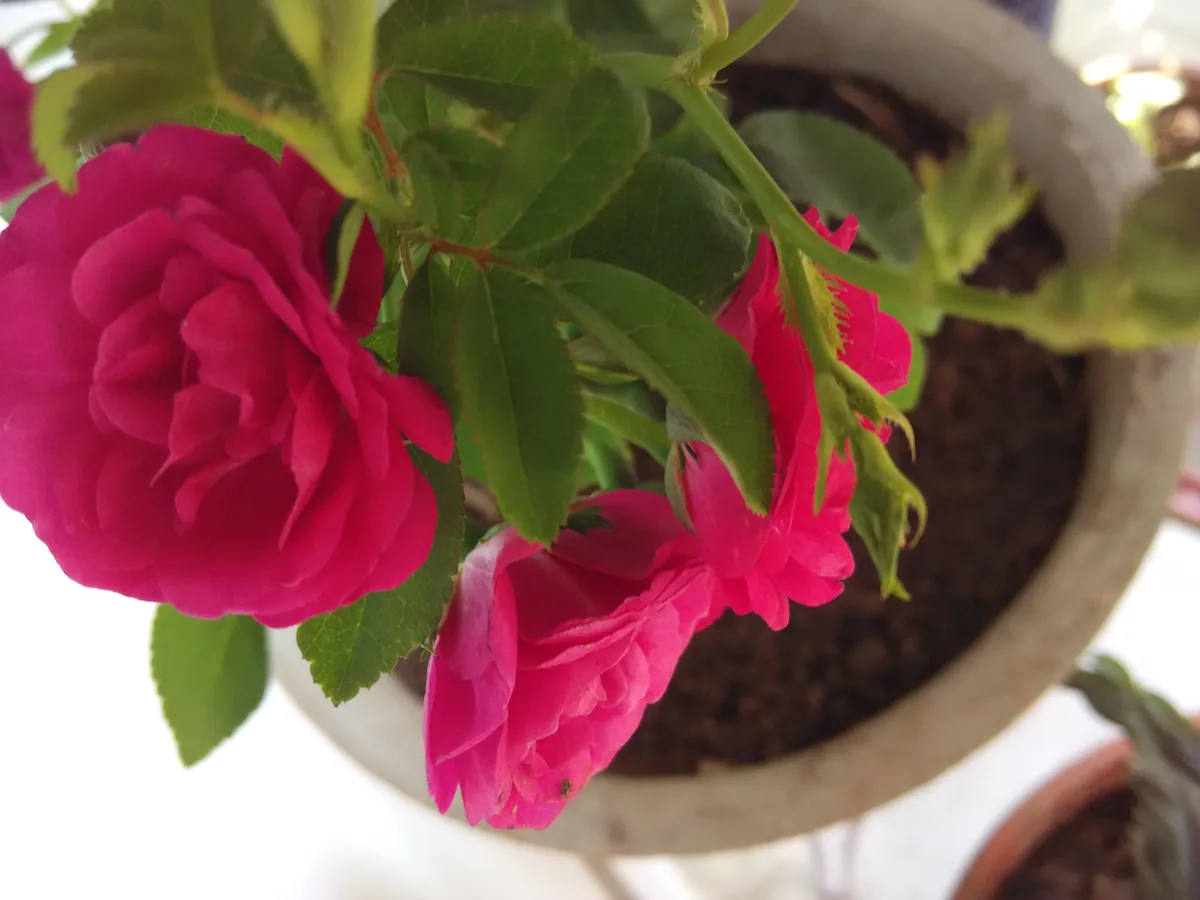
The RHS notes that roses use up their food reserves quickly, and recommends top-dressing each spring with a granular rose fertilizer, with additional feeding as the manufacturer recommends, and avoiding feeding after August, because soft new growth may be damaged by a cold winter.
For newly planted roses, Cornell Cooperative Extension suggests waiting before you fertilize, then starting after 4 to 6 weeks with a liquid rose fertilizer monthly until mid-August, watering well after each feeding.
The RHS also suggests a 2-inch top-dressing of well-rotted garden compost or manure to help retain moisture, and every second year, scraping off the top 2 inches of potting mix and replacing it with a fresh layer.

- Package contains 4 pounds organic flower fertilizer grains and is produced to avoid wasteful runoff, mess, hazards and smells
- Plant fertilizer is formulated with a 3-4-3 NPK to provide roses and flowering plants the nutrients they need to create abundant...
- Jobe's organic fertilizer contains no synthetic chemicals and are OMRI listed for organic gardening by the USDA

What about Epsom salts, coffee grounds, and banana peels?
These kitchen remedies are popular, but they are not a substitute for a rose fertilizer. University of Minnesota Extension says there is no evidence that Epsom salts increase productivity unless the soil is deficient in magnesium, and that adding them to soil that already has enough magnesium can actually harm soil and plants, for example by inhibiting calcium uptake. Use them only if a soil test shows a magnesium deficiency. UMN Extension also says coffee grounds have not been shown to consistently lower soil pH, though they make an excellent addition to compost. We did not find extension research supporting banana-peel water as a rose fertilizer, so a fertilizer made for roses, used according to its label, is the more reliable choice.
Pruning and Deadheading
Cornell Cooperative Extension notes that pruning out dead wood and deadheading spent blooms encourages more flowers. The right way to prune depends on the type of rose, so look up guidance for your specific kind. The RHS has separate pruning guides for patio and miniature roses, ground cover roses, climbers, and more, linked from its container rose page.
Protecting Potted Roses in Winter
This is the step that matters most in cold climates, and November is the time to plan it. Iowa State University Extension warns that a rose left in a pot on a deck or patio over winter may be destroyed, because the potting soil in an above-ground container can get extremely cold and damage or kill the roots. It describes two options:
- Bury the pot. In late autumn, after the rose has gone dormant but before the ground freezes (mid- to late November in Iowa), dig a hole in a sheltered spot, set the pot in it, and fill soil around the pot. Mound soil over the bottom 6 to 8 inches of the canes, then add 1 to 2 feet of straw or pine straw held in a wire cylinder around the plant. In mid-March, before the rose breaks dormancy but after the harsh cold has passed, remove the mulch and extra soil and lift the pot out.
- Store it cool and dormant. Move the container to a cool, protected place, such as a garage or shed, where the temperature stays consistently between 30 and 45°F.
Cornell Cooperative Extension advises against bringing regular potted roses indoors for the winter. Instead, move them into an unheated garage or shed, or leave them outside and wrap them in burlap, and water them a few times during winter if they are stored inside. Winter needs vary a great deal by climate, so check with your local extension office for advice that fits your area.
Miniature roses are the exception
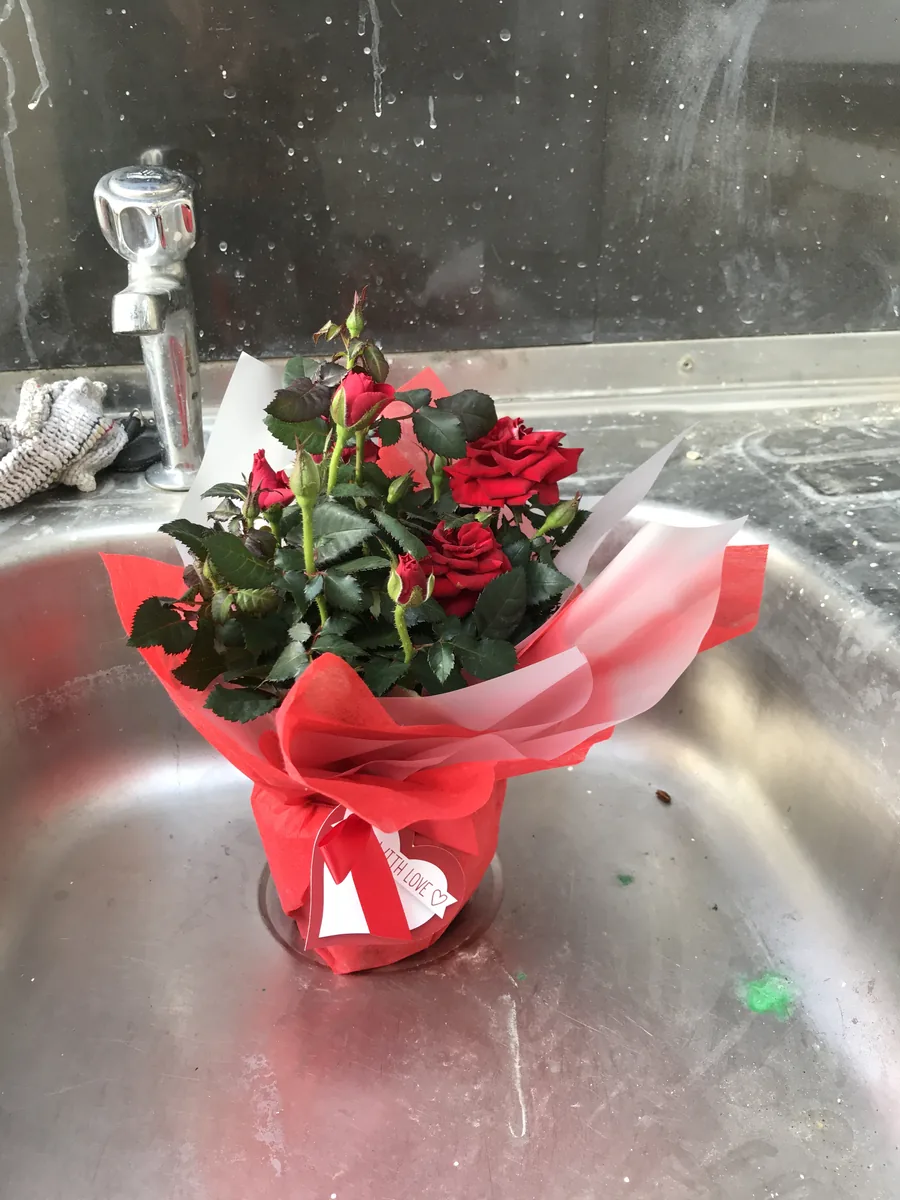
Iowa State Extension says a potted miniature rose can be kept as a houseplant through the winter. Bring it indoors before a hard freeze, place it in a sunny window or under artificial lighting, keep it away from cold drafts and heat sources, water when the soil surface is dry to the touch, and apply a dilute fertilizer solution every 2 to 4 weeks through fall and winter.
Roses in Pots FAQ
What size pot does a rose need?
For patio and miniature roses, the RHS suggests a pot 9 to 14 inches deep; for compact climbers and ground cover roses, at least 12 to 18 inches deep. Cornell Cooperative Extension recommends at least 18 by 18 inches, and 24 by 24 inches is better.
Can roses stay in pots permanently?
Yes, if you choose a container-friendly type, feed it each year, and refresh the top layer of potting mix every second year as the RHS suggests. In cold climates, plan on winter protection every year.
How often should I water a rose in a pot?
Check the mix daily in the growing season and water deeply when the top 1 to 2 inches are dry, which may mean every day in very hot weather, according to Cornell Cooperative Extension.
Can I bring my potted rose indoors for the winter?
Miniature roses, yes: Iowa State Extension says they can be kept as houseplants in a sunny window. For other roses, Cornell Cooperative Extension advises against bringing them inside; store them dormant in an unheated garage or shed, or protect them outdoors.
If you enjoy container gardening, our guide to growing mint in a pot covers another easy plant for a sunny spot, and our poinsettia care guide can help with your holiday plants indoors. Choose a compact rose, give it a deep pot and steady water, and plan for winter, and a single container can give you flowers all season.