

Mint is one of the easiest herbs to grow, and one of the quickest to take over a garden bed if you plant it in the ground. The reliable way to keep a steady supply of leaves, without watching the plant roam through the rest of the garden, is to grow it in a pot.
The short answer: plant culinary mint in a container about 12 to 16 inches across with drainage holes, in a moist, well-drained potting mix, and set it in full sun to partial shade. Keep the soil evenly moist, harvest the young shoot tips often, and bring the pot indoors to a sunny windowsill if you want fresh leaves through winter. The two classic kitchen mints are spearmint (Mentha spicata) and peppermint (Mentha × piperita), a hybrid of spearmint and watermint.
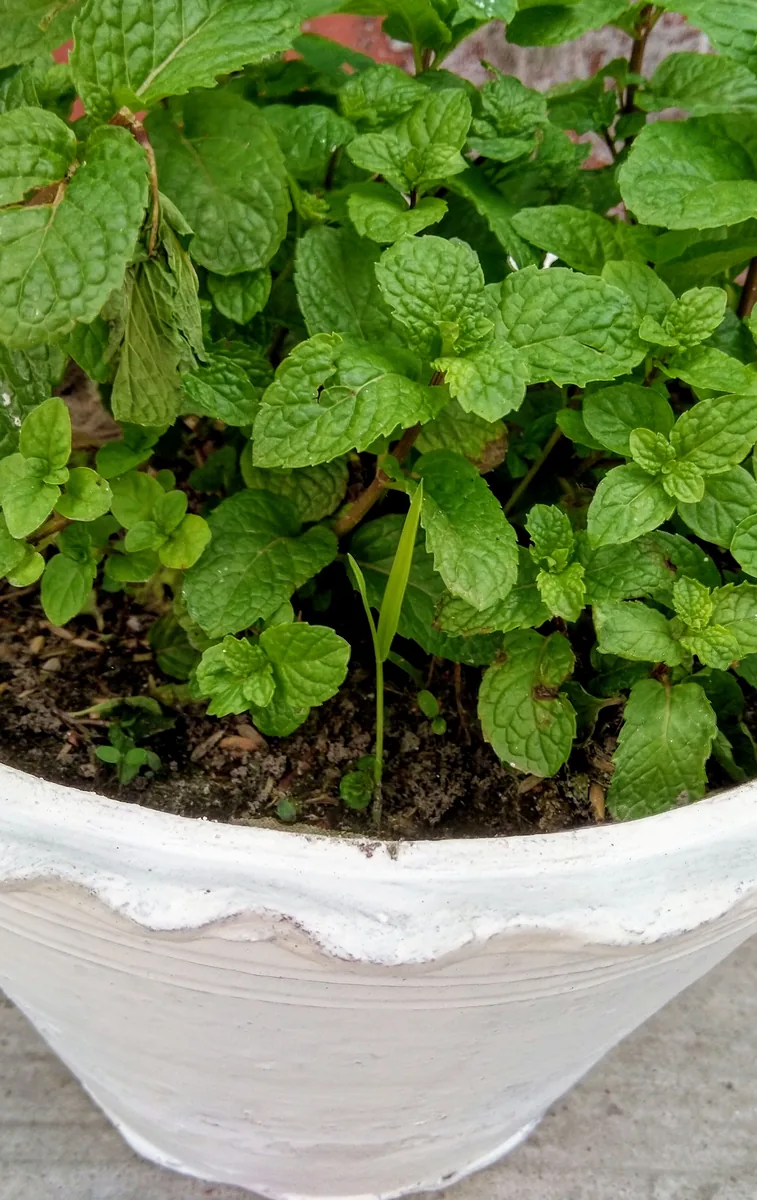
Why Mint Belongs in a Pot
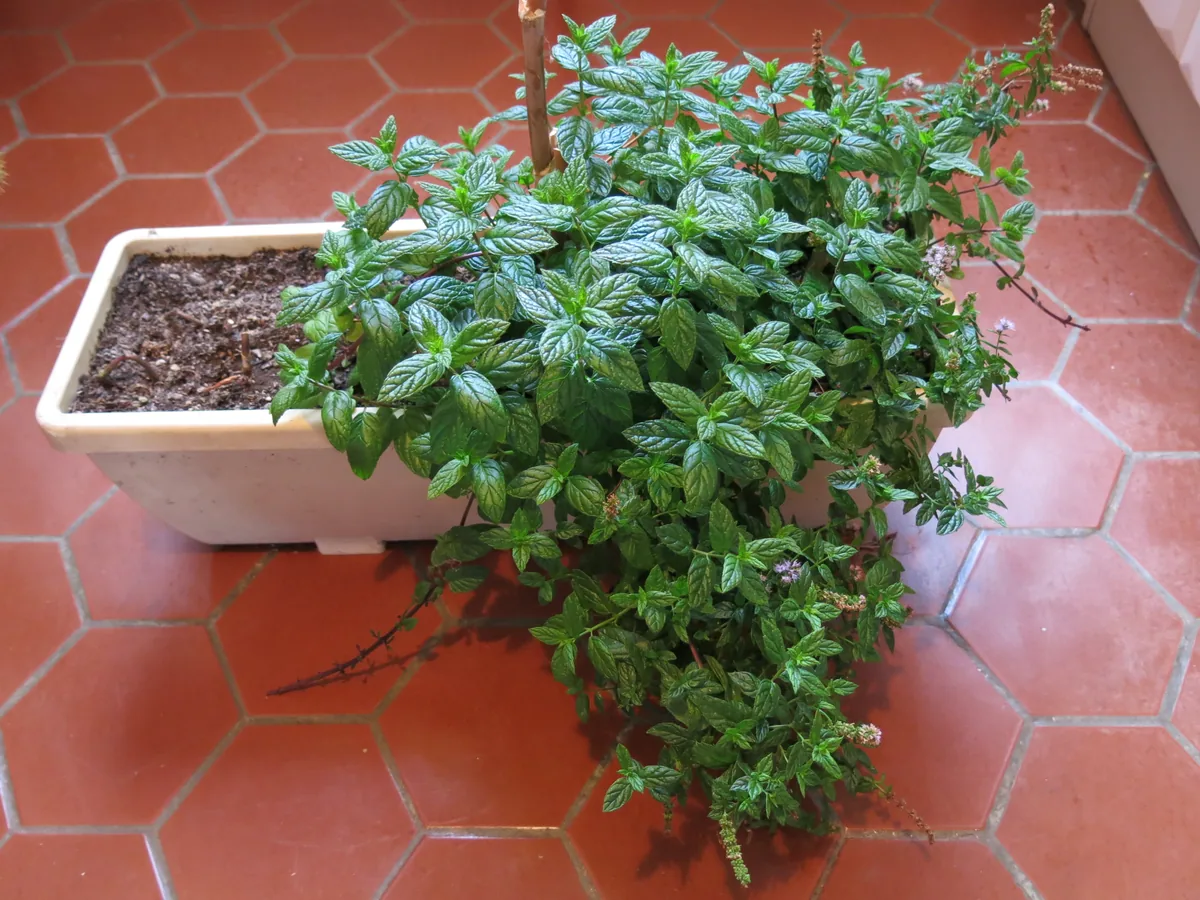
Mint spreads by underground stems, called rhizomes, and by stems that root as they creep. University of Maryland Extension, Illinois Extension, Iowa State University Extension, and the Royal Horticultural Society (RHS) all recommend growing it in a container for that reason. A pot keeps the roots where you can see them, and it makes the plant much easier to move, harvest, and, if needed, divide.
Maryland Extension suggests a container about 12 to 16 inches in diameter, and Illinois Extension says the same size is adequate for peppermint, which can reach about 1 to 3 feet around at maturity. If runners try to creep over the rim, cut them off before they root in the soil or in a neighboring pot.
If you really want mint in a garden bed, both Maryland Extension and the RHS describe a compromise: plant it in a bottomless container, or a pot with large drainage holes, and sink that container into the soil. Leave the rim a little above the soil line (Maryland Extension says about an inch) so new shoots have to climb over the top, where you can see them and trim them before they root on the other side.
Mint in a pot still needs room. The RHS says to repot it, or divide an established clump and replant a section in the same pot, typically every few years so the plant does not get cramped.
Spearmint, Peppermint, and Other Culinary Mints
There are many species and hybrids in the genus Mentha. The two you are most likely to cook with are:
- Spearmint (Mentha spicata). Maryland Extension describes pointed, slightly crinkled leaves that are lighter green than peppermint, with a characteristic sweet smell. Iowa State Extension calls the flavor sweet and mild, and lists plants at about 1 to 2 feet tall, hardy to USDA Zone 5. Spearmint is the usual mint for teas, drinks, and savory dishes such as mint sauce.
- Peppermint (Mentha × piperita). This is a hybrid between spearmint and watermint (Mentha aquatica), a point made by both Iowa State Extension and Illinois Extension. It has a higher menthol content and a stronger, cooler flavor. Maryland Extension describes upright stems about 2 feet or more, dark green leaves, reddish stems, and a warm, spicy scent, with tiny purplish flowers in spikes 1 to 3 inches long.
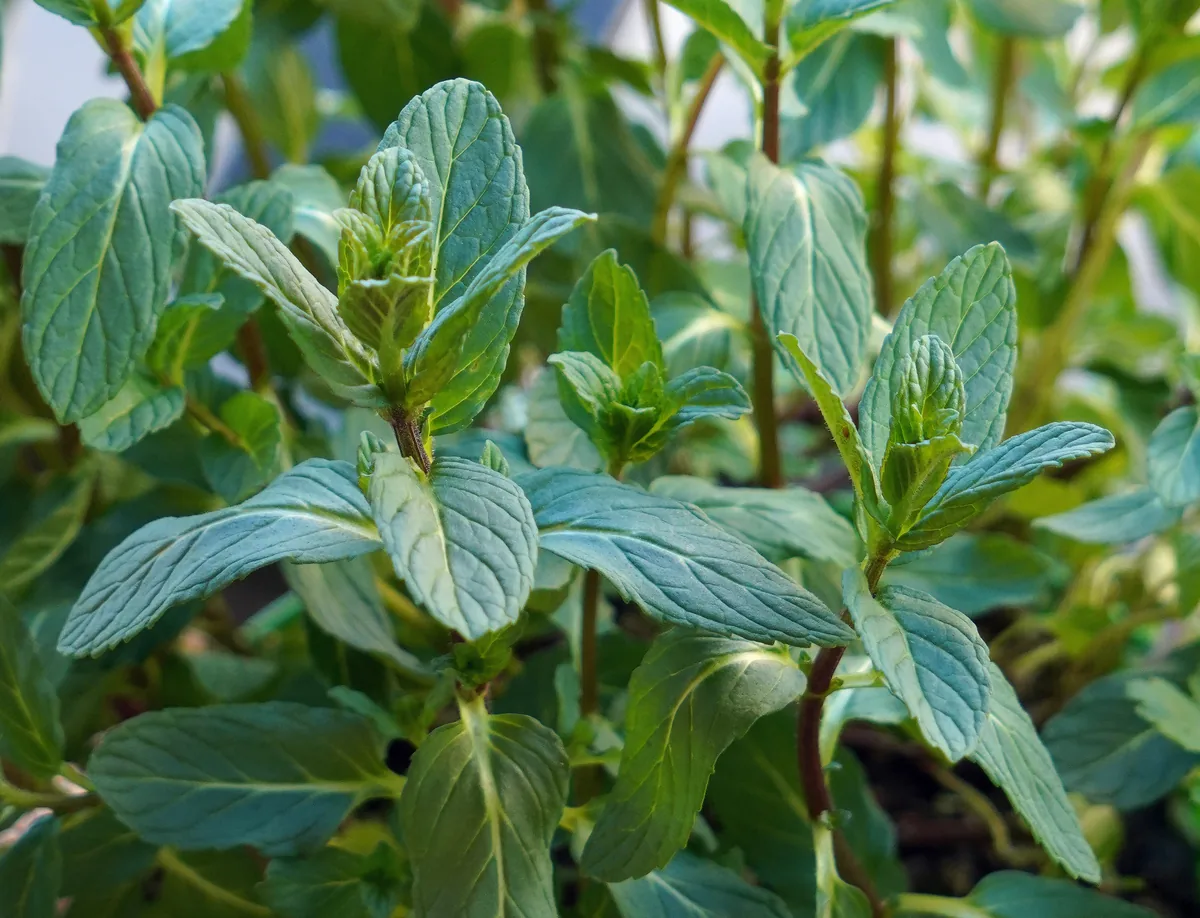
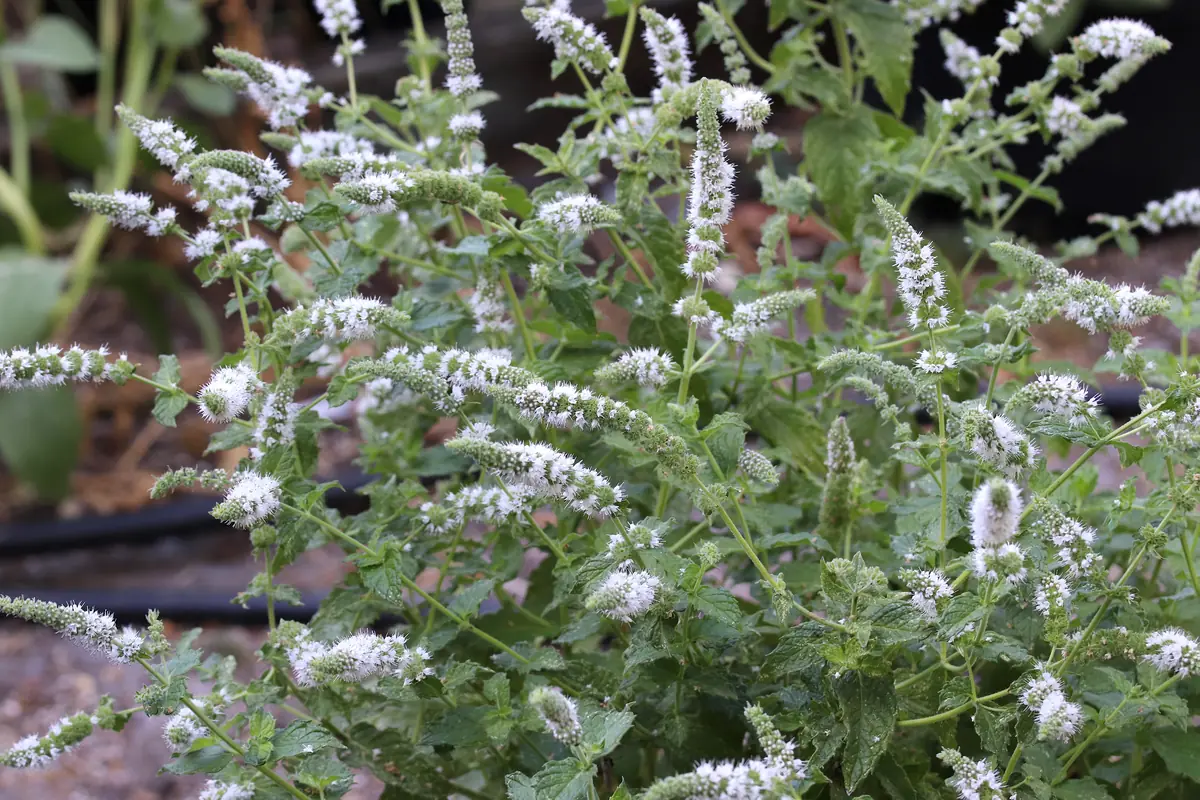
The RHS also lists other kitchen flavors, including chocolate mint, apple mint, and lime mint. Iowa State Extension adds pineapple mint (Mentha suaveolens ‘Variegata’), orange mint, and curly mint, among others, with most of the common types hardy to Zone 5.
Not every plant labeled “mint” is meant for the kitchen. The RHS notes that pennyroyal (Mentha pulegium) is listed as “harmful if eaten” in the Horticultural Trades Association guide to potentially harmful plants. Buy from a reputable supplier so you get a correctly named culinary variety. Other plants commonly called mint, such as catmint (Nepeta), are not true Mentha.
Choosing a Pot and Planting
Use a pot about 12 to 16 inches across, with drainage holes in the bottom. A waterlogged pot is hard on the roots, and a pot without holes makes it easy to overwater. Fill it with a multipurpose or soil-based potting mix; the RHS recommends a peat-free compost. Iowa State Extension says mint performs best in a mix that stays moist, drains well, and is rich in organic matter.
Young plants can be planted at any time of year, according to the RHS, but they settle in best in spring or autumn. Set the plant at the same depth it was growing in its nursery pot, firm the mix gently around the roots, and water it in.
Mint can be grown from seed, but both the RHS and Iowa State Extension prefer vegetative methods (division or cuttings) when you want the new plant to match the parent. Seedlings may vary in flavor and vigor, and some named varieties do not come true from seed.
Give mint its own pot. Because it spreads so readily, it can crowd other herbs if you tuck it into a mixed planter.

- 【Practical Size Combo】-These plastic planters indoor combines with 6 different sizes, 8 inch 7inch 6.5 inch 6 inch 5.5 inch...
- 【Durability, Light weight, Sturdiness】-Made of durable recyclable plastic, solid plastic plant pots protect plants and soil...
- 【Intriguing Design】-A simple modern aesthetic and clean matte finish planters indoor plants bringing out a minimalistic...
Light, Water, and Everyday Care
Mint is happy in full sun or partial shade, a range repeated by the RHS, Maryland Extension, and Iowa State Extension. Maryland Extension adds that peppermint will grow in sun or shade, but will probably be at its most productive in full sun. You do not need to hide the pot from direct sun as a rule; watch the soil instead, because a pot in bright weather dries out faster.
Unlike rosemary or other Mediterranean herbs, mint prefers consistently moist soil. Iowa State Extension notes that when temperatures are very warm and the soil dries out, the leaves often develop brown edges. The RHS says container plants should be checked regularly, especially in hot, dry weather, and watered enough to keep the compost evenly moist. You can reduce how often you water by moving the pot to a slightly shadier spot in a heat wave.
Iowa State Extension also notes that mint in containers needs more frequent watering than mint in the ground, and occasional fertilizer, because nutrients are used up more quickly in a pot. It does not prescribe a fixed feeding schedule, so start lightly and follow the directions on the product you use.
| Need | Starting point |
|---|---|
| Pot size | About 12 to 16 inches across, with drainage holes |
| Light | Full sun to partial shade |
| Water | Keep the mix evenly moist; containers dry out faster than garden soil |
| Harvest and prune | Pick young shoot tips often; after flowering, cut the plant back to about 2 inches |
Sources: University of Maryland Extension, Illinois Extension, Iowa State University Extension, and the RHS.
How to Harvest and Prune Mint
The more you pick mint, the more it tends to produce. The RHS recommends harvesting the young, soft shoot tips for the most intense flavor, from late spring until the stems die back in autumn. Maryland Extension and Iowa State Extension both say regular or frequent harvesting encourages bushy, full growth.
If you want leaves for drying, Maryland Extension and Iowa State Extension agree on the timing: cut them just as the flowers begin to appear, when the flavor is typically at its best. Iowa State Extension also suggests removing flower spikes as they develop if you want to keep the focus on leaf quality.
When mint finishes flowering, the RHS says to cut the whole plant down to about 5 cm (2 inches) from the base. Fresh shoots should follow, and you can start harvesting those in a few weeks. That is a mid- to late-season cut after bloom, not a first trim on a fixed day count after planting.
Mint is a herbaceous perennial, so the top growth naturally dies back over winter. The RHS says faded stems can be cut back anytime from late autumn until spring, just before new shoots emerge.
Winter Care and Growing Mint Indoors
Most of the common culinary mints are hardy to about USDA Zone 5, according to Iowa State Extension, so a plant in the ground in a cold-winter climate will often come back in spring with little extra protection. A pot is more exposed. If you want to keep harvesting through winter, the RHS recommends bringing potted plants indoors in autumn and setting them on a sunny windowsill.
Indoors, keep the mix lightly moist and give the plant as much bright light as you can. Growth will usually slow as the days shorten. If you would rather let the plant rest, you can leave a hardy mint outdoors and wait for new shoots in spring, cutting back the old stems as described above.
How to Propagate Mint
If you already have a plant you like, it is easy to make more. The RHS and Iowa State Extension both describe these vegetative methods, which produce plants that match the parent:
- Division. In spring or autumn, lift the root ball, cut it into smaller sections, discard any tired growth in the center, and pot up the healthy pieces. Iowa State Extension suggests dividing established patches every three to four years to keep them vigorous.
- Stem cuttings. The RHS says softwood cuttings can be taken from new shoots in spring, and that stems also root readily in a jar of water before you pot them up. Iowa State Extension notes that stem cuttings root in water or in moist potting mix.
- Rhizome cuttings. The RHS says cuttings can be taken from the underground stems at any time of year. If you do this indoors in November, the RHS notes you can have fresh mint by Christmas.
Common Problems
The usual difficulty with mint is not getting it to grow. It is keeping it in bounds. Growing it in a pot, trimming runners, and dividing it every few years will prevent most of that trouble.
Iowa State Extension says fungal diseases such as rust and leaf spot can show up when plants are crowded or air circulation is poor. Give the pot some space, avoid wetting the leaves more than you have to, and remove infected foliage. Aphids, spider mites, and other minor pests may appear from time to time, but Iowa State Extension says they rarely cause serious damage on a healthy, actively growing plant.
Brown leaf edges in hot weather are often a water issue, not a disease: Iowa State Extension ties them to dry soil and high temperatures. Check the pot, then water so the mix is moist again.
Mint and Pets
If you keep cats, dogs, or horses, place the pot where they cannot nibble on it. The ASPCA lists mint (garden mint, Mentha sp.) as toxic to dogs, cats, and horses. The toxic principles are essential oils, and the clinical signs listed for large ingestions are vomiting and diarrhea.
If you think a pet has eaten mint and seems unwell, contact your veterinarian or the ASPCA Animal Poison Control Center at (888) 426-4435. A consultation fee may apply.
Using the Leaves in the Kitchen
Fresh spearmint is a natural fit for tea, cold drinks, salads, and sauces. Peppermint, with its cooler, stronger flavor, often shows up in baked goods, candies, and hot drinks. Iowa State Extension notes that fresh mint can sit in a glass of water for several days, or in the refrigerator in a bag for up to a week. For longer storage, the RHS and Iowa State Extension both say mint freezes and dries well; the RHS adds that freezing preserves the flavor better than drying.
If you like growing other easy plants around the house, you may also want these guides to spider plant care, poinsettia care, and amaryllis care.
Mint in a Pot FAQ
Can I plant mint in the ground?
You can, but mint is very likely to spread. Maryland Extension, Illinois Extension, Iowa State Extension, and the RHS all prefer a container. If you plant it in a bed, sink it in a bottomless pot with the rim above the soil so you can catch runners before they root.
How often should I water mint in a pot?
There is no single schedule, because a pot in full sun on a hot day dries out much faster than one in part shade. Check the mix often and water when needed to keep it evenly moist, not soggy. In hot, dry weather the RHS says containers need especially close attention.
Should mint be in sun or shade?
Full sun to partial shade is the usual range. Maryland Extension says peppermint is probably most productive in full sun. If the leaves scorch or the pot dries out constantly, move it to a slightly shadier spot and keep the watering consistent.
How do I keep mint from getting tall and sparse?
Harvest the shoot tips regularly, which encourages branching. After the plant finishes flowering, cut it back to about 2 inches, as the RHS recommends, so it can send up a fresh flush of leaves.
Is mint safe for cats and dogs?
The ASPCA lists garden mint (Mentha sp.) as toxic to cats, dogs, and horses, with vomiting and diarrhea possible after large ingestions. Keep the plant out of reach, and call your veterinarian or ASPCA Poison Control if a pet eats it and seems ill.
A roomy pot, regular picking, and a little attention to watering are really the whole habit. Keep mint contained, and it will keep giving you leaves for tea, supper, and whatever you like to cook.