

Moth orchids (Phalaenopsis) are the orchids you see in grocery stores and garden centers, and they’re among the easiest orchids to grow at home. The flowers can last a month or more, but once they drop, many people aren’t sure what to do next. You may have seen claims that a single vitamin pill dissolved in water will make an orchid bloom forever. It won’t. What does work is simpler and more reliable.
The short answer: give your orchid bright, indirect light, water it thoroughly and then let the bark dry out before watering again, feed it lightly while it’s growing, and give it several weeks of cooler nights in fall. That cool spell, with nights around 55 to 65°F, is what usually triggers a new flower spike. Light is the most common missing piece: University of Maryland Extension says low light is the most common reason a moth orchid won’t rebloom.
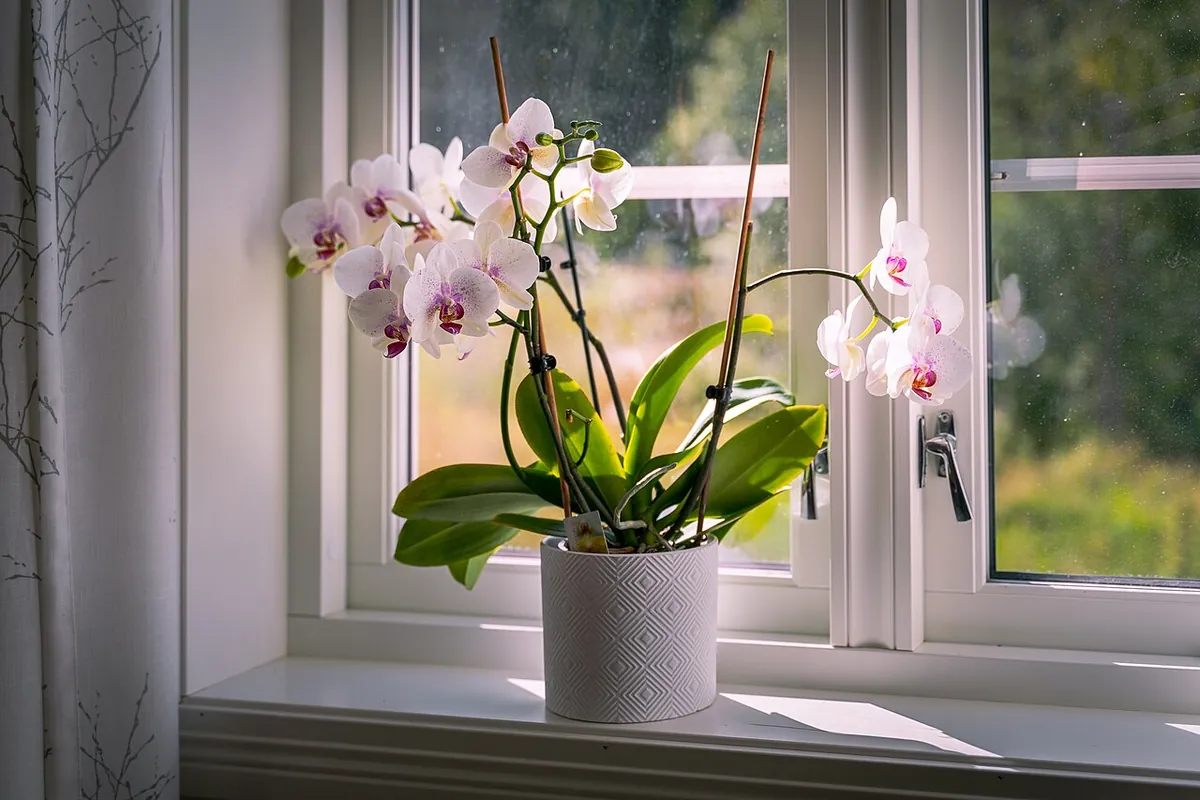
Moth Orchid Care at a Glance
| What it needs | In plain terms |
|---|---|
| Light | Bright, indirect light, such as an east or west window; light green leaves are a good sign |
| Water | Soak the bark thoroughly, let it drain, then water again when the bark is nearly dry (usually no more than once a week) |
| Potting mix | Coarse orchid bark, never regular potting soil |
| Temperature | Days about 70–80°F, nights about 60–70°F; avoid temperatures below 55°F |
| To rebloom | Several weeks of cooler fall nights, about 55–65°F, with a 10–15°F drop from day to night |
| Fertilizer | Dilute orchid or balanced fertilizer every few waterings while it grows; less in winter |
| Repotting | Every 1–2 years, or when the bark breaks down; ideally after flowering |
| Pets | The ASPCA lists Phalaenopsis as non-toxic to dogs, cats, and horses |
Sources: Iowa State University Extension, University of Maryland Extension, and the ASPCA.
Does Vitamin B (or a Pill in the Water) Make Orchids Bloom?
This is a popular tip, so it’s worth a clear answer: there’s no good evidence that it works. Washington State University Extension horticulturist Linda Chalker-Scott explains that applying vitamin B-1 (thiamine) to the roots of whole plants does not stimulate root growth, a claim that has been repeatedly refuted in the scientific literature. Healthy plants make their own thiamine, and the fungi and bacteria around roots produce it too. University of Arizona Cooperative Extension reaches the same conclusion about vitamin B1 root stimulators.
What actually makes a moth orchid flower is the right combination of light, water, nutrients, and a seasonal temperature drop. The rest of this guide covers each one.
Light: The Key to Reblooming
Moth orchids like bright, indirect light. University of Maryland Extension recommends indirect light from an east or west window, and notes that during the short days of winter they can even move to a south window or direct light. An orchid on a desk or in an interior room can grow under a grow light.
The leaves tell you whether the light is right. According to Maryland Extension, plants getting the proper amount of light have light green leaves. Dark green, very stiff leaves point to too little light, while leaves that turn yellow-green or develop pinkish or reddish edges are getting too much.
How to Water a Moth Orchid
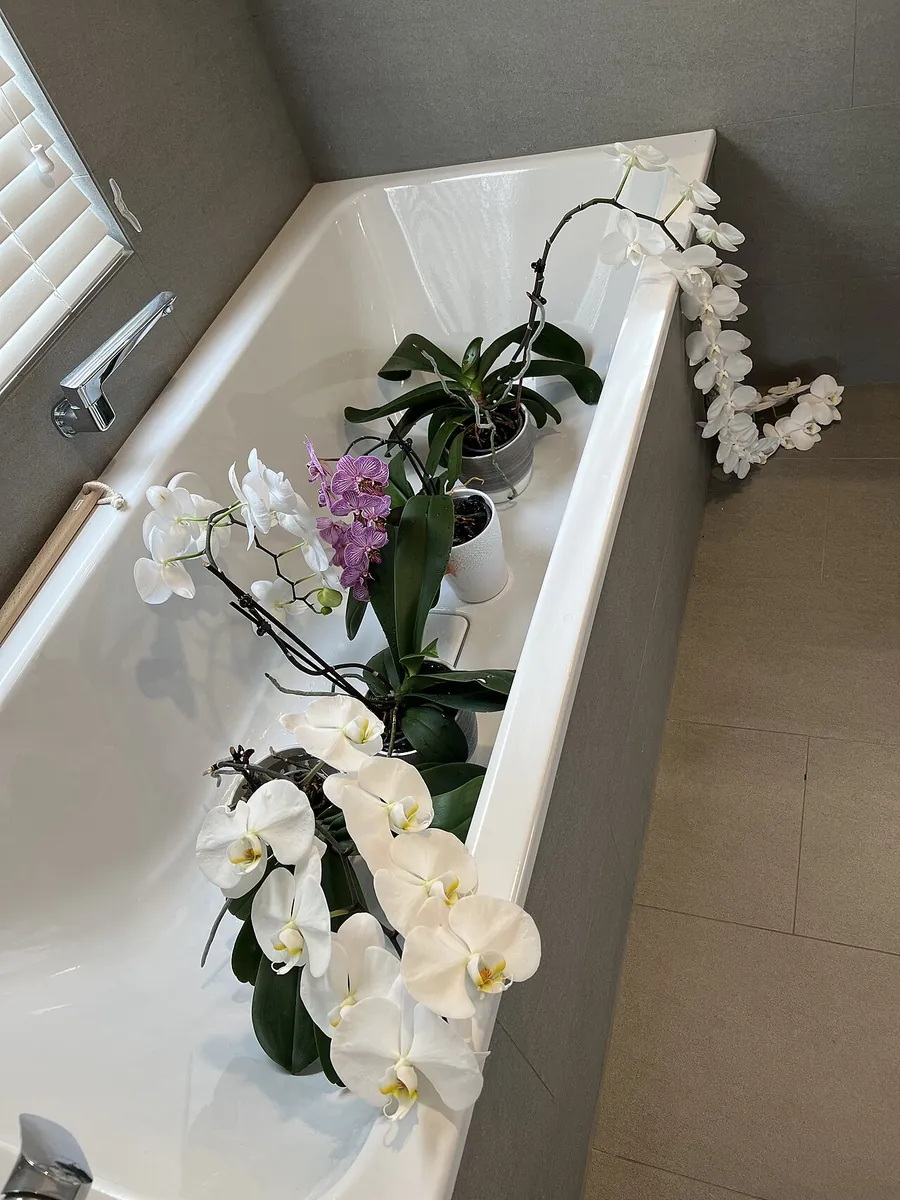
Most moth orchids are potted in chunky bark, which drains fast, so they need a thorough soak rather than a splash. University of Maryland Extension suggests setting the plant in a sink or tub and running warm water over the bark and roots in three or four drenches over about 10 minutes, then letting it drain completely before putting it back on its saucer.
- Check before you water. Iowa State Extension suggests pushing a wooden chopstick into the bark; when it comes out completely dry, it’s time to water.
- Watch the roots. Silvery or white roots turn pale green when they’ve had enough water, according to Maryland Extension. Under normal home temperatures, watering usually isn’t needed more than once a week.
- Keep water out of the crown. Water sitting where the leaves meet can lead to rot, so tip out any that collects there. UC Master Gardeners also advise avoiding water in the crown.
- Never let it sit in water. A pebble tray can raise humidity around the plant, but Maryland Extension cautions not to flood it, or the roots will stay too wet and may rot. Misting alone usually doesn’t add enough moisture indoors.
Wrinkled, limp leaves usually mean the plant is too dry or the air is very dry. Moth orchids don’t have the water-storing pseudobulbs that many other orchids have, so they rely on regular watering.
Those Long Roots Climbing Out of the Pot
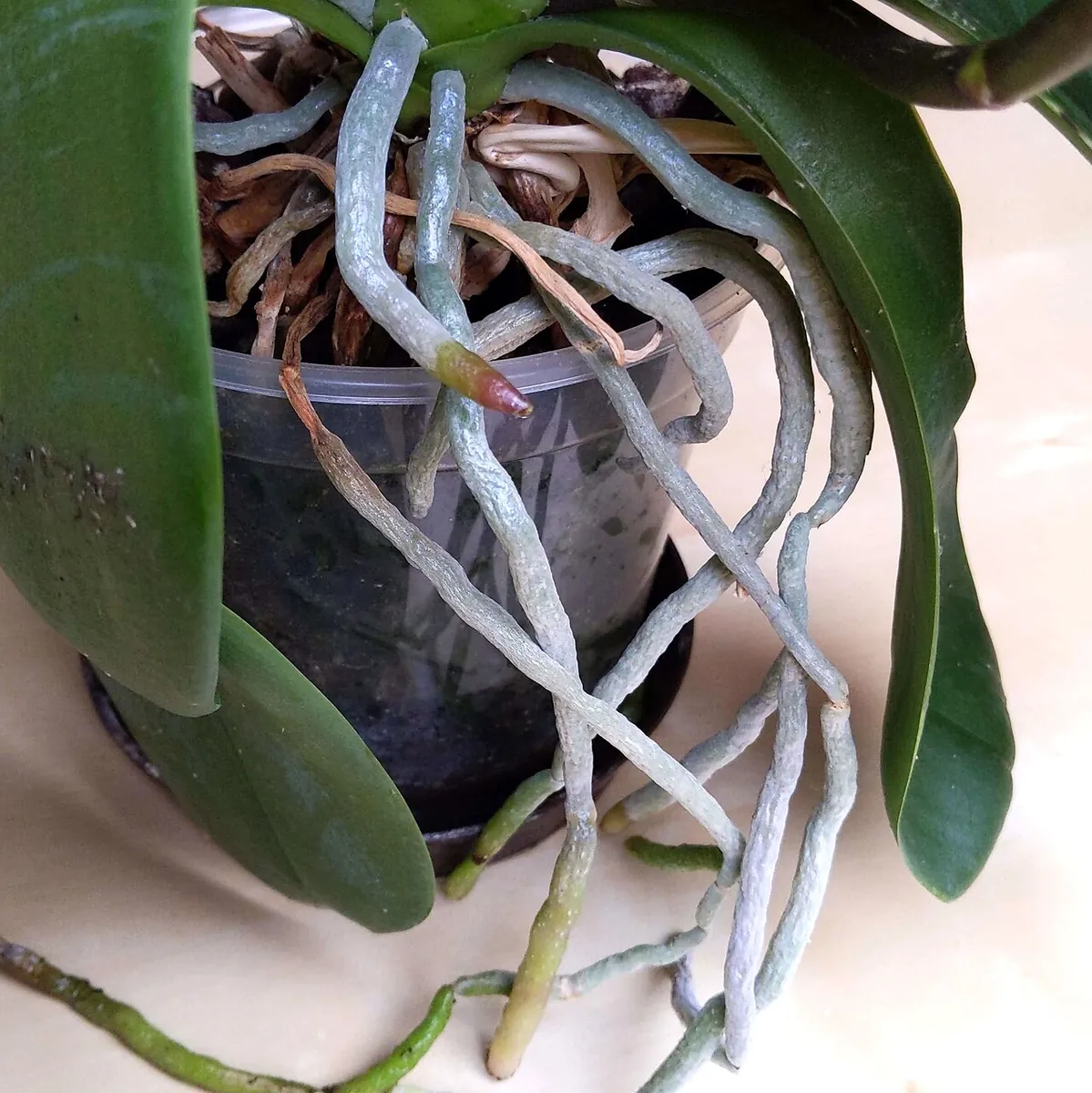
In nature, moth orchids grow on tree trunks and branches, clinging to bark. That’s why they send out thick aerial roots that wander above the pot and over the edge. University of Maryland Extension says this is perfectly normal and that you shouldn’t cut them off. Roots that turn brown and mushy are a warning sign: the American Orchid Society notes that root rot occurs when plants are left in soggy potting medium.
Potting Mix and Repotting

Moth orchids should never be potted in regular potting soil. They need a coarse, airy medium such as orchid bark that lets air reach the roots. Over time, bark breaks down and starts holding too much water.
- How often: University of Maryland Extension recommends replacing the potting mix every 1 to 2 years under typical indoor conditions, before it breaks down. The American Orchid Society says repotting is usually needed every one to three years.
- When: the American Orchid Society says spring, right after flowering, is the best time. UC Master Gardeners advise against repotting just before, during, or immediately after flowering, so aim for when the plant is growing new roots and leaves rather than when it’s in bud.
- Pot choice: use a pot with good drainage. UC Master Gardeners suggest plastic or glazed ceramic, and note that most orchids prefer slightly crowded pots. Pre-wet the bark before potting.

- 【3 Sizes Clear Orchid Pots】Orchid pots for repotting set come in packs of 6 and are available in 3 sizes...
- 【Thicker and Long-lasting】The orchid pots with holes are made of high quality PP material, which is thicker than ordinary...
- 【Upgrade Design】We upgraded the shape and size of the holes on the surface of the orchid clear pot to prevent orchid roots...
Feeding Your Orchid
Moth orchids benefit from regular, light feeding, but more isn’t better. University of Maryland Extension warns that overfeeding often produces lush leaves at the expense of flowers. Their general rule is to fertilize actively growing and flowering plants every third or fourth watering with an orchid fertilizer, following the label, and to skip fertilizing during the cooler, darker winter months.
Iowa State Extension notes that orchids that haven’t been fertilized enough won’t flower well, and suggests feeding more often during spring and summer with a balanced fertilizer mixed at half or quarter strength, applied every other or every third watering. Either approach works. The key is dilute and consistent.

- Made for Orchids – Specially formulated orchid fertilizer designed to support indoor orchid care and growth.
- Supports Blooming & Flowering – Orchid fertilizer for blooming helps promote vibrant flowers and longer-lasting blooms.
- Encourages Healthy Roots & Growth – Orchid plant food supports strong root systems and overall plant development.
How to Get Your Orchid to Bloom Again
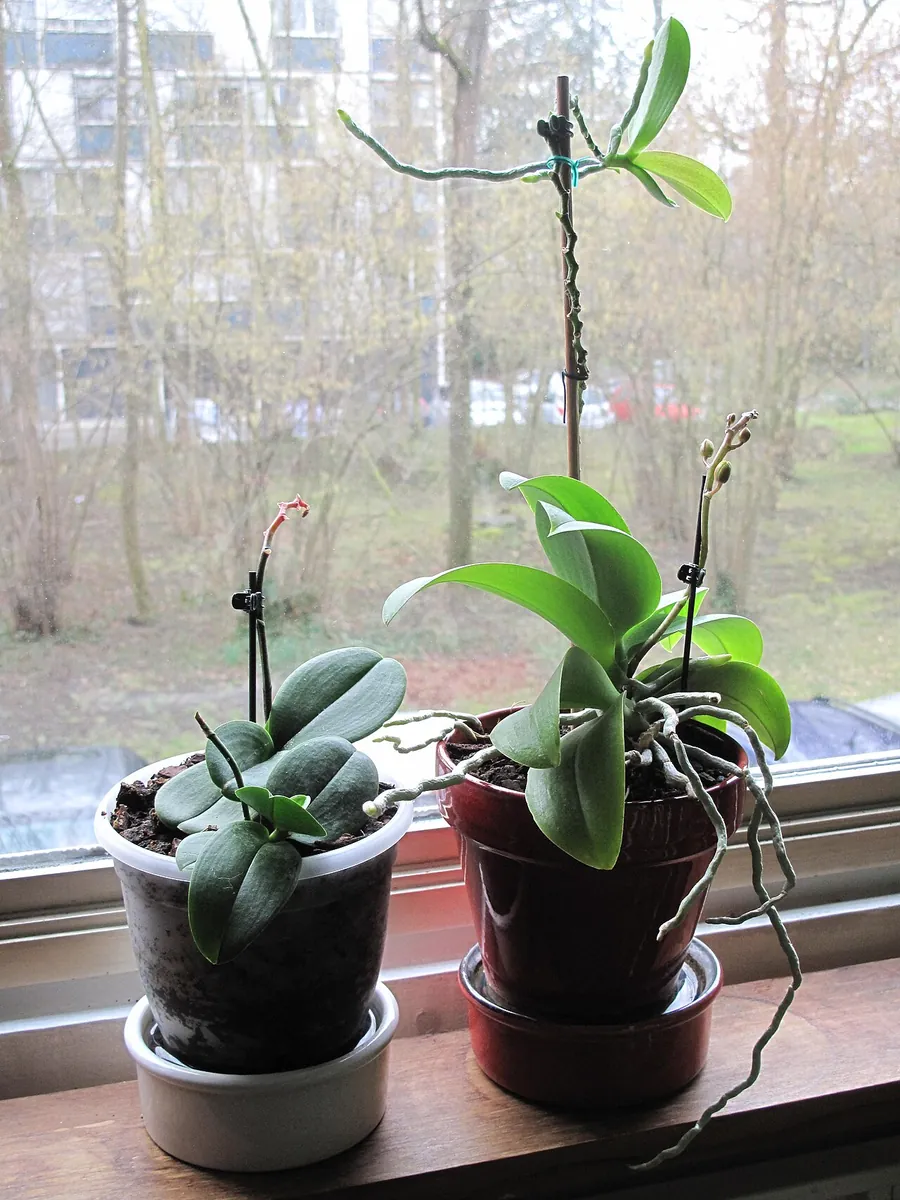
Moth orchids usually start new flower spikes in the cool temperatures of fall and bloom over winter, according to Iowa State Extension. If your orchid has healthy leaves but no new spike, here’s what to work on:
- Give it brighter light. This is the first thing to fix. Maryland Extension notes that some growers move non-blooming orchids outdoors to a shady spot for the summer.
- Provide cooler nights in fall. Iowa State Extension says moth orchids need several weeks of nights 10 to 15°F cooler than the days, ideally down to 55 to 65°F, to start a flower spike. Illinois Extension describes 55 to 65°F nights and 70 to 80°F days for 6 to 8 weeks before a stalk appears. A spot near a cool window often does the trick. Iowa State recommends avoiding temperatures below 55°F.
- Keep feeding during the growing season. A well-fed plant has the energy to flower.
- Be patient. Once a spike appears, it takes a while for buds to develop. Keep conditions steady: the American Orchid Society notes that fluctuating temperatures can cause buds to drop.
What to do with the old flower spike
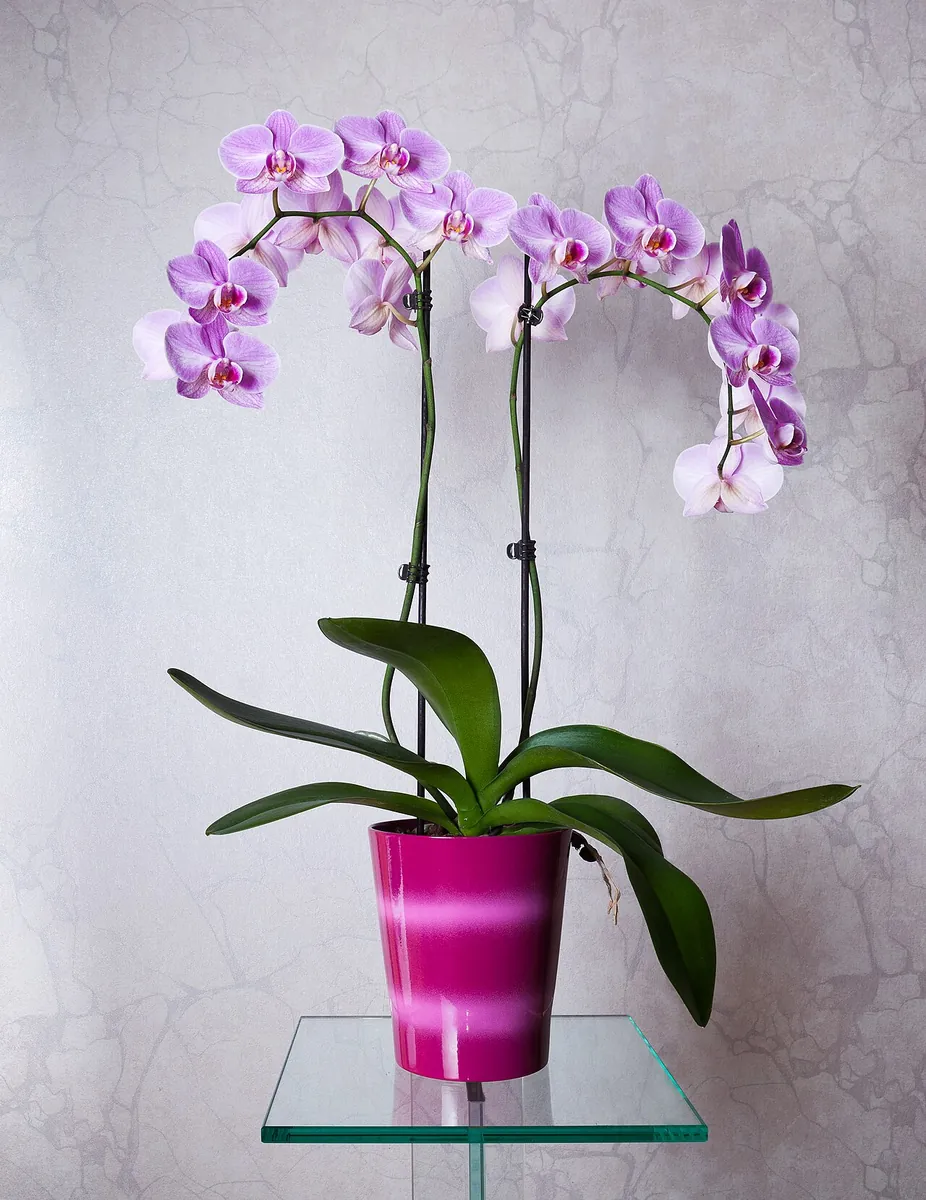
Moth orchids can form new flowering branches along an old spike. After the flowers fall, University of Maryland Extension suggests watching the old spike for new buds. The American Orchid Society notes that, on certain hybrids, cutting the tip of a green spike after the first flowering can encourage another flush; only healthy plants should be induced to flower again. If the spike turns yellow, brown, or dry, cut it off at the base, as University of Maryland Extension describes for old, dried, brown flower spikes.
Common Moth Orchid Problems
| What you see | Likely cause | What to try |
|---|---|---|
| Healthy leaves, no new flowers | Too little light or no cool fall nights | Brighter window and a 10–15°F night drop in fall |
| Dark green, stiff leaves | Too little light | Move to a brighter spot |
| Yellow-green leaves or reddish edges | Too much light | Filter the light or move back from the glass |
| Wrinkled, limp leaves | Too little water or very dry air | Water thoroughly; check that the roots are healthy |
| Brown, mushy roots | Bark staying too wet or breaking down | Repot into fresh bark; water less often |
| Buds yellow and drop | Temperature swings or drafts | Keep conditions steady; avoid cold drafts and heat vents |
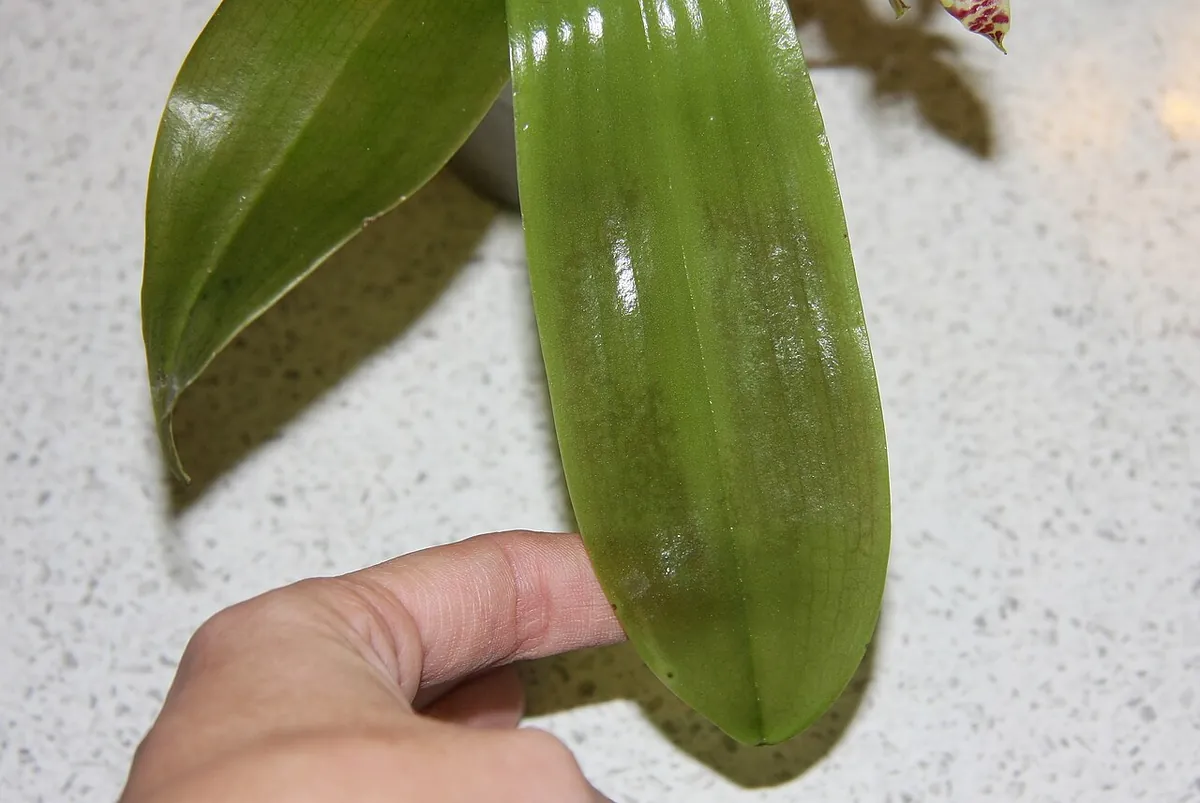
| Dark, water-soaked patches on leaves | Cold damage | Keep the plant above 55°F and away from cold glass in winter |
For insects or spots you can’t identify, ask your local extension office for help with a diagnosis before you treat.
Moth Orchid FAQ
Are moth orchids safe for cats and dogs?
The ASPCA lists Phalaenopsis (moth orchid) as non-toxic to dogs, cats, and horses. Eating any plant can still upset a pet’s stomach, so it’s best to keep plants out of reach, and keep fertilizer stored away.
How long do moth orchid flowers last?
University of Maryland Extension says the flowers can last at least a month or longer with proper care. Keeping the plant out of hot sun and away from heat vents and cold drafts helps.
Why are my orchid’s lower leaves turning yellow?
An occasional old leaf yellowing at the bottom of the plant isn’t cause for alarm; University of Maryland Extension simply suggests cutting off old yellowed leaves at the base. If several leaves yellow at once, check the roots and review your watering and light.
What is the little plant growing on my orchid’s stem?
That’s probably a keiki, a baby plant. UC Master Gardeners note that moth orchids can produce keikis on their flower stems.
If you love easy-care blooming houseplants, our guides to African violet care and Christmas cactus care are good next reads. With good light, a thorough soak when the bark is dry, and a cool spell each fall, a moth orchid can flower for years.
Care information in this guide comes from Iowa State University Extension and Outreach, University of Maryland Extension, University of Illinois Extension, UC Master Gardeners of San Luis Obispo County, the American Orchid Society, Washington State University Extension, University of Arizona Cooperative Extension, and the ASPCA.