

A Christmas cactus is the kind of plant that gets handed down for decades, yet plenty of us watch ours sulk, drop its buds, or skip a holiday bloom entirely. The good news: it is not fussy, just misunderstood. It is a rainforest cactus, not a desert one.
The short answer: give your Christmas cactus bright, indirect light, water thoroughly only after the top of the mix dries, and let it drain completely. To get flowers, it needs cool nights (around 50 to 55°F) or about six weeks of long, truly dark nights in fall. Keep conditions steady once buds form; if a move is necessary, do it while the buds are still small.
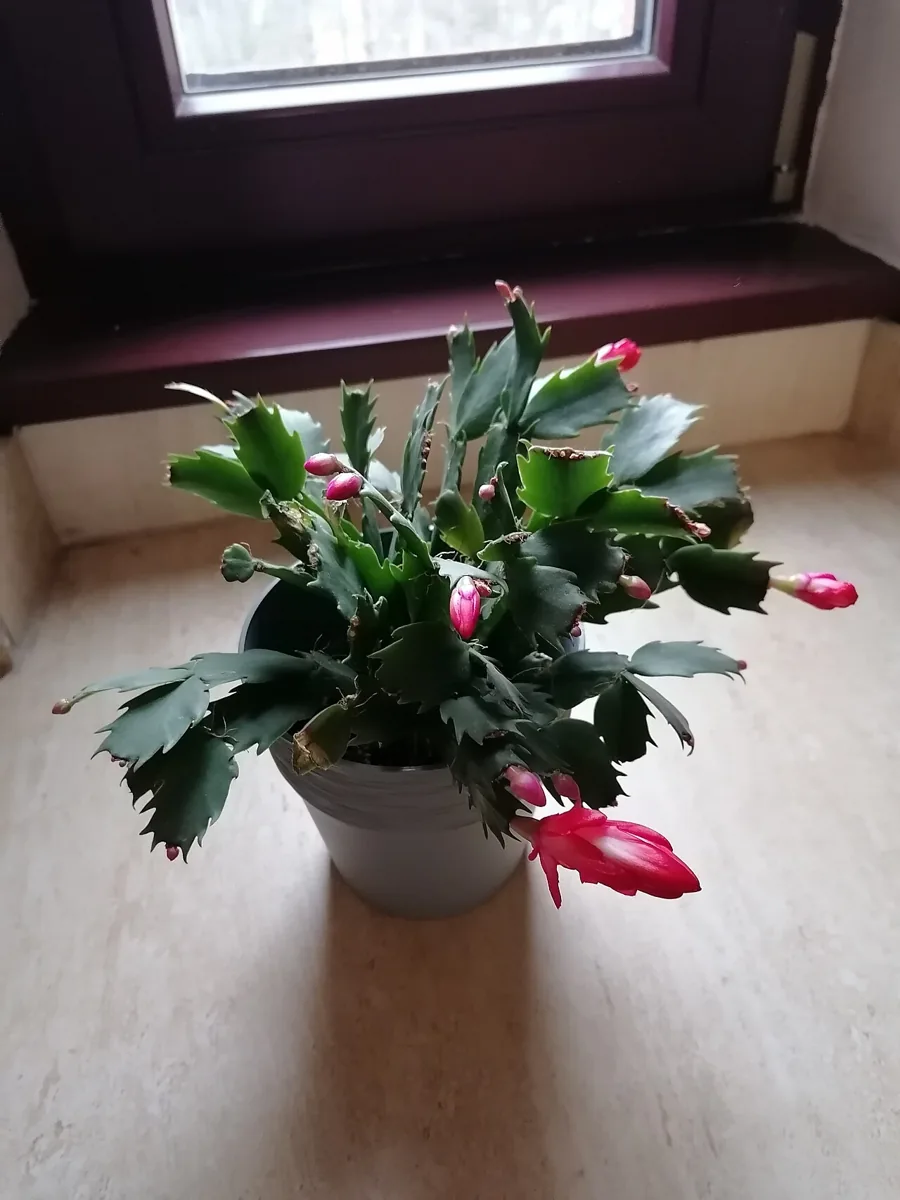
Christmas Cactus Care at a Glance
| What it needs | In plain terms |
|---|---|
| Light | Bright, indirect light; full summer sun can pale or burn the stems |
| Water | Water thoroughly when the mix is dry to the touch, then let it drain; never leave it sitting in water |
| Soil | Light, fast-draining mix in a pot with drainage holes |
| Temperature | Comfortable room temperatures most of the year; cool nights in fall help it set buds |
| Bloom trigger | Cool nights (about 50–55°F) or roughly 6 weeks of 12+ hour dark nights |
| Feeding | Half-strength houseplant fertilizer during the growing season; ease off in fall |
| Repotting | Every few years, after flowering; it blooms best slightly pot-bound |
| Pets | Listed as non-toxic to dogs and cats by the ASPCA |
Sources for the table: University of Minnesota Extension, University of Missouri Extension, and the ASPCA plant list.
Is It a Christmas Cactus or a Thanksgiving Cactus?
Here is a little secret from the garden center: many plants sold as “Christmas cactus” are actually Thanksgiving cactus (Schlumbergera truncata). The two are close relatives, they hybridize, and their care is nearly identical. The names only hint at when each one tends to bloom.
- Thanksgiving cactus has pointed, claw-like teeth along the edges of each flat stem segment, and it usually starts blooming earlier, in late fall.
- Christmas cactus (Schlumbergera × buckleyi, often listed as S. bridgesii) has smoother, more rounded scalloped segments and typically flowers a little later in the season.
- Easter cactus (listed by University of Minnesota Extension as S. gaertneri) needs a longer short-day period, about 8 to 12 weeks, and blooms in late winter or early spring.
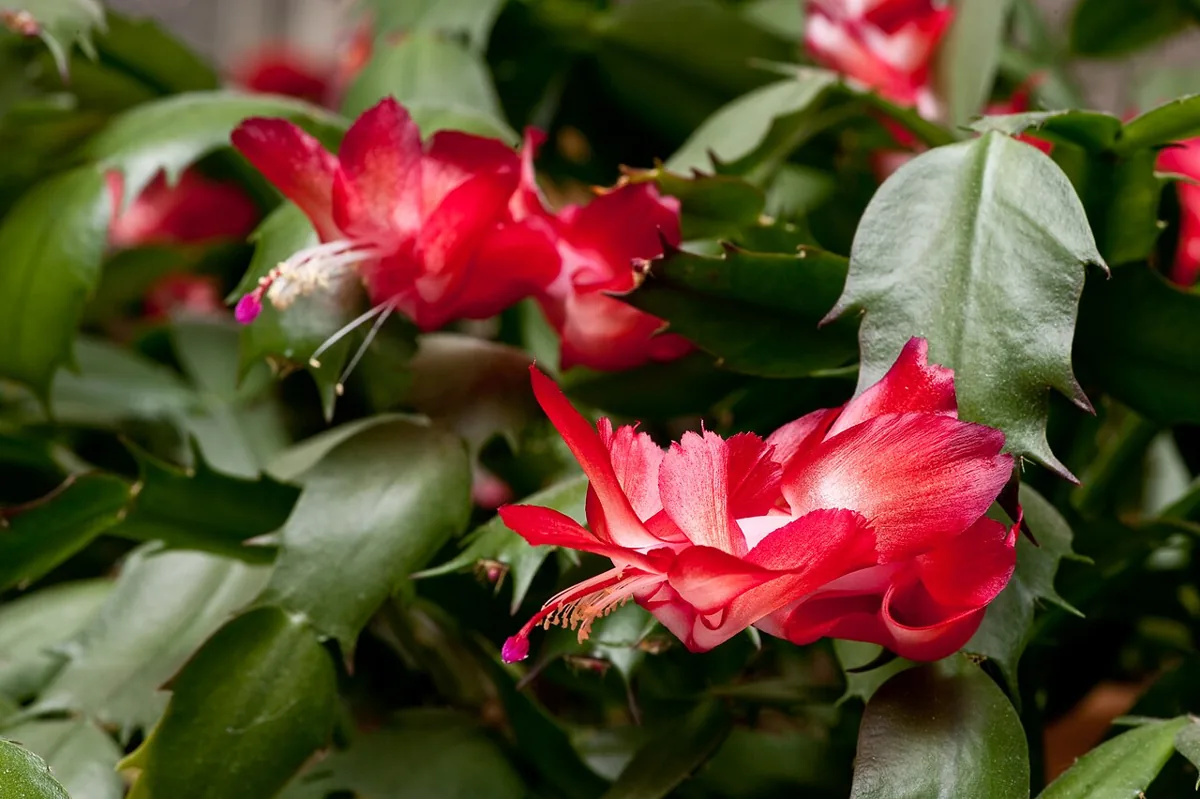
The pointed “claws” on these segments are typical of Thanksgiving cactus. If yours looks like this and blooms in November, that is not a problem, it is simply doing what its type does. Everything below works for both.
Light and Placement
In the wild these plants grow on trees in South American rainforests, so think “bright, filtered light” rather than “sunny windowsill in July.” Indoors, that usually means near a bright window but out of harsh direct afternoon sun. Missouri Extension notes that brighter light helps in winter, while full summer sun can leave plants pale.
If you set the plant outdoors for summer, keep it in part shade, such as under a tree, and bring it in before frost. Before it comes back inside, check the stems and soil surface for pests, trim off broken or dead pieces, and make sure the pot drains freely, all steps University of Minnesota Extension recommends.
Renter-friendly note: need to soften harsh sun? A sheer curtain near a bright window can help. Just keep it away from heat vents, radiators, and cold drafts.
How to Water a Christmas Cactus
Watering is where most holiday cacti get into trouble. Root rot from soggy soil is one of the most common causes of death, so the goal is “drink deeply, then drain.”
- Check the mix with your finger. If it is dry to the touch, it is time to water.
- Water slowly until it runs out of the drainage holes. Doing this in the sink is easiest.
- Let it drain completely, then empty any water left in the saucer or decorative cachepot.
- After flowering, water a little less often until new growth starts again in spring or early summer.
Watch for this: limp, wilted stems in wet soil usually point to too much water, not too little. Let the plant dry out and check that water can escape the pot.
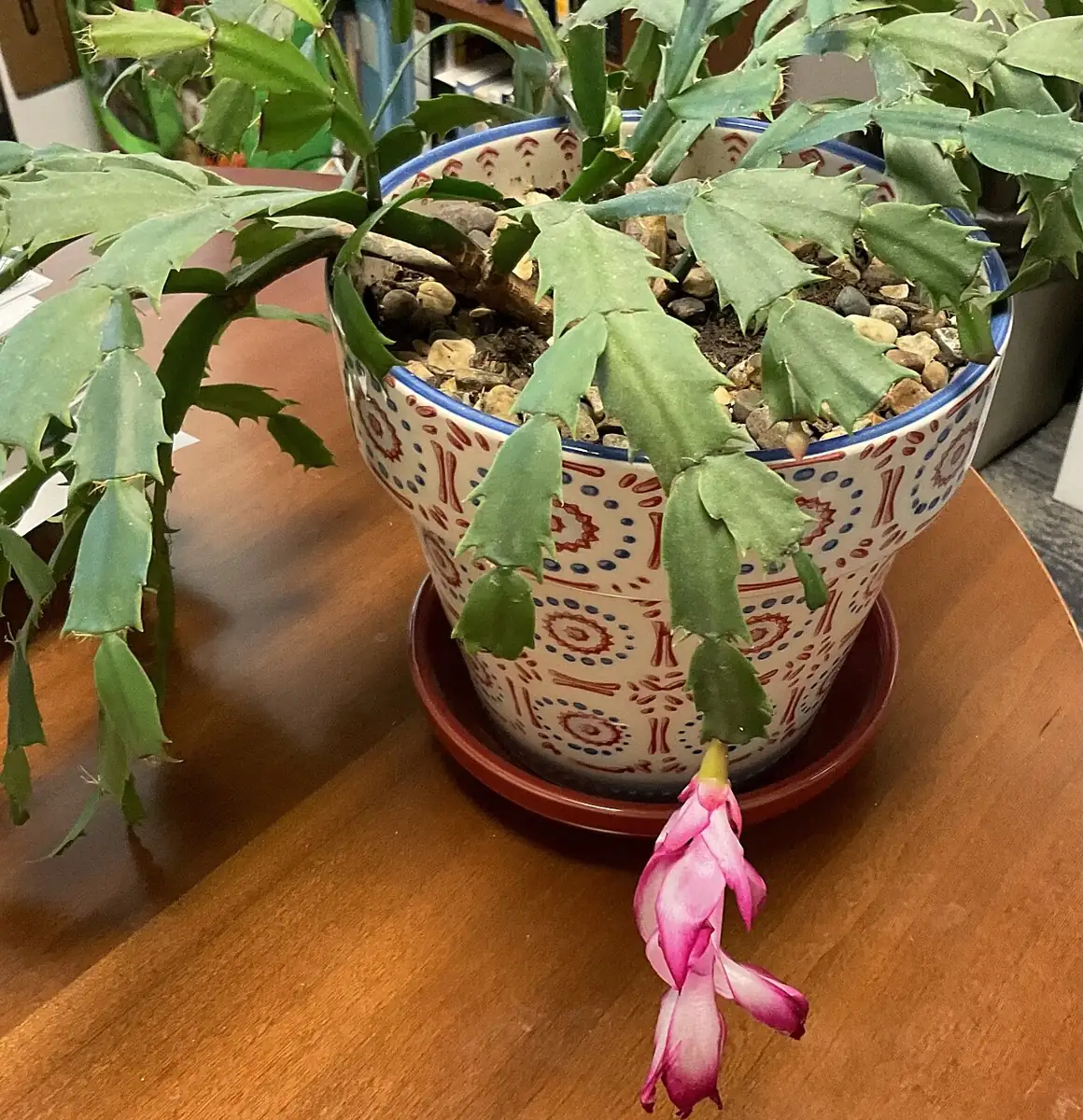
Pretty ceramic pots are lovely for the holidays. If yours has no hole, keep the plant in a plastic nursery pot inside it and tip out any extra water after each drink.
Soil, Pots, and Repotting
Holiday cacti want a loose, airy mix that drains quickly. University of Arizona Extension suggests a blend of roughly 60 to 80 percent potting soil with 20 to 40 percent perlite; University of Minnesota Extension recommends a mix of potting soil, peat moss, and coarse sand or perlite. The goal is an airy medium for a rainforest epiphyte, not a heavy mix that stays wet.
These plants tend to bloom best when they are a little snug in their pots, so there is no rush to size up. Repotting every three years or so, after flowering, is usually plenty. When you do repot, choose a pot only slightly larger than the old one; our guide to choosing the right container size for your plants offers general container-sizing examples.
Feeding Through the Year
Recommendations vary a little by extension service, but they agree on the basics: feed lightly during active growth, then stop pushing growth in fall.
- Spring and summer: a balanced houseplant fertilizer at half strength about once a month. (Minnesota Extension suggests June through August; Arizona Extension suggests April through October.)
- Fall: stop the regular feeding while buds are forming. University of Minnesota Extension notes that a low-nitrogen, higher phosphorus and potassium formula can be used at that stage.
- While in bloom: simply keep up with watering.
How to Get a Christmas Cactus to Bloom
Holiday cacti are “short-day” plants. Longer nights and cooler temperatures in fall tell them to form flower buds. According to University of Minnesota Extension:
- At night temperatures around 55°F, plants tend to bloom in about 5 to 6 weeks, sometimes regardless of day length.
- At night temperatures of 60 to 65°F, they need at least 12 hours of complete darkness every night for about 6 weeks.
- Above 65°F at night, they are unlikely to bloom at all.
In practice, that means a cool, bright spare room, a sunporch that reliably maintains the recommended cool night range of about 50 to 55°F, or a spot where no lamps are switched on in the evening. Missouri Extension points out that even stray light from indoor lamps, streetlights, or passing cars can break the dark period. If you need to, cover the plant with a dark cloth or box overnight, then uncover it for bright light during the day.
Timing note: after buds start, flowers take several more weeks to open. NC State recommends starting the cool or dark treatment about 9 to 10 weeks before the date you want flowers. If it is already November and you see no buds, give it cool, dark nights now; it may still bloom, just later in winter.
Why Is My Christmas Cactus Dropping Buds?
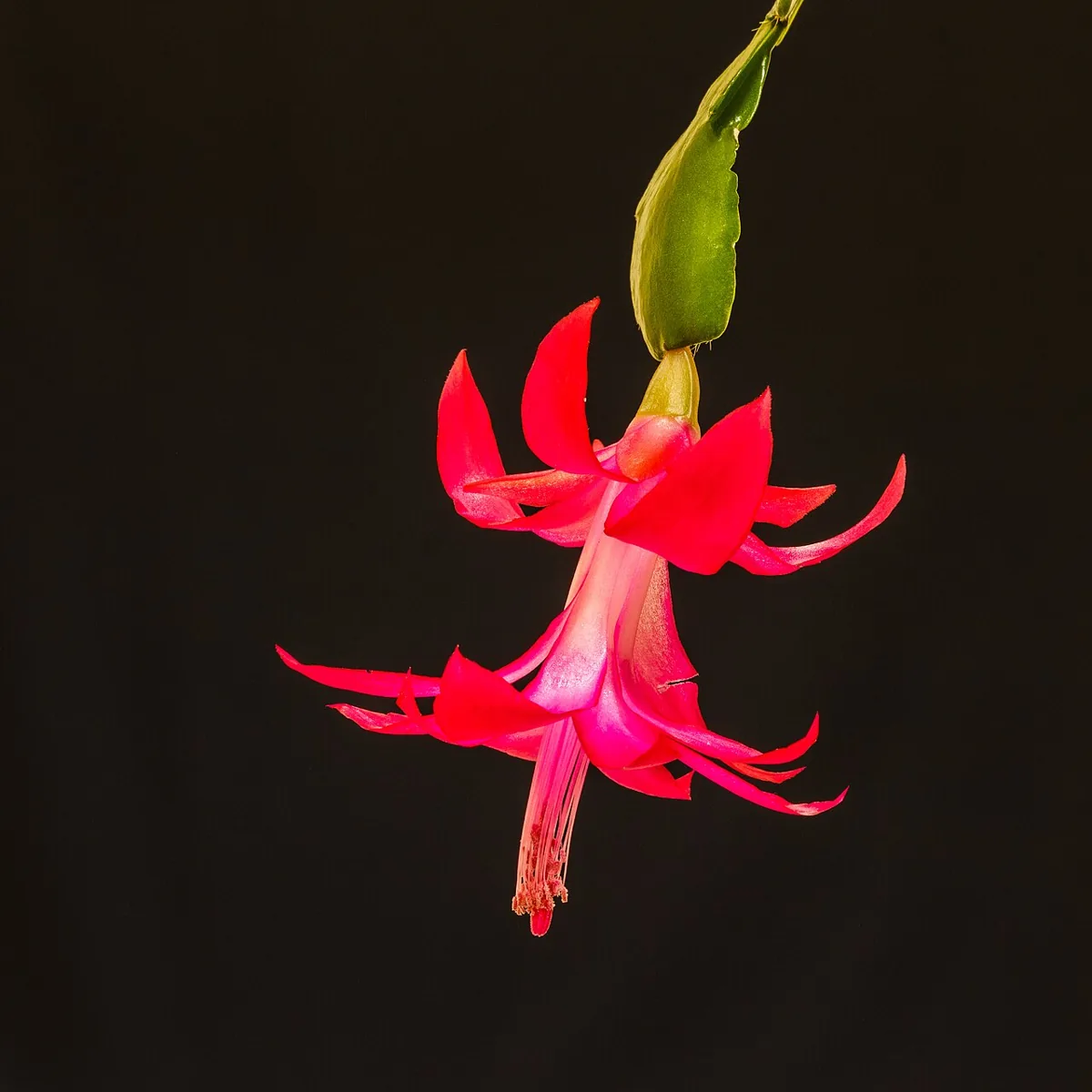
Bud drop is frustrating, but it usually has a simple cause. Once buds form, these plants dislike being disturbed.
- Sudden changes: moving the plant to a warmer room, a cold draft, or a heat vent can all trigger drop. If you want it somewhere else for the holidays, move it as soon as buds appear, not when they are about to open.
- Watering swings: letting the mix go bone-dry, or keeping it soggy, can both cause buds to fall.
- Too many buds: a plant will sometimes shed a few extra buds on its own. Keep care steady and the rest should open.
Common Problems and What They Mean
| What you see | Likely cause | What to do |
|---|---|---|
| No blooms | Nights too warm or lamps on in the evening | Give cooler nights or 12+ hours of real darkness for about 6 weeks |
| Wilting while soil is wet | Too much water, possible root rot | Let it dry, check drainage, never let it sit in water |
| Pale or yellowing stems | Too much direct sun | Move to bright, indirect light |
| Small flies around the pot | Fungus gnats in constantly wet soil | Let the mix dry between waterings |
| Brown, corky base on an old plant | Normal aging | No action needed if it is not scale |
| Black, slimy or sunken spots | Rot diseases | Keep watering minimal; badly infected plants may need to be discarded |
Table adapted from the troubleshooting guidance published by University of Minnesota Extension.
Pruning and Sharing Cuttings
After flowering, you can tidy and thicken the plant by cutting where two stem segments join. Each cut usually produces one or two new branches. Those trimmed pieces are easy to root, which is why so many families pass these plants along.
- Take a short piece of a few connected segments, cut at a joint.
- Optionally dip the base in rooting hormone.
- Set it upright in a damp, well-draining mix or coarse sand.
- Keep it warm (around 70 to 80°F) in bright, indirect light, and keep the mix lightly moist, not wet.
- After a couple of weeks, gently check for roots before moving it into its own small pot.
Christmas Cactus FAQ
Is a Christmas cactus safe for cats and dogs?
The ASPCA lists Christmas cactus as non-toxic to dogs, cats, and horses. Nibbling any houseplant can still upset a pet’s stomach, so keep an eye on curious chewers.
How long do Christmas cacti live?
A very long time. University of Minnesota Extension notes that holiday cacti can live over 100 years with good care, which is why many are heirloom plants.
Should I put my Christmas cactus in the dark?
Only if your nights are on the warm side. At around 55°F, cool nights alone often trigger buds. In a warmer home, about 12 or more hours of uninterrupted darkness each night for roughly six weeks does the job.
Can I keep it outside?
Yes, in summer, in part shade. Bring it indoors before frost, check it over for pests, and let the shorter, cooler fall days start the bloom cycle.
With bright, indirect light, careful watering, and a cool, dark stretch in fall, your holiday cactus can keep flowering for many winters to come. For more easy-going greenery, browse our list of indoor plants that thrive in living rooms.
Care information in this guide is drawn from University of Minnesota Extension, University of Missouri Extension, Kansas State University Research and Extension, University of Arizona Cooperative Extension, NC State Extension, and the ASPCA.