

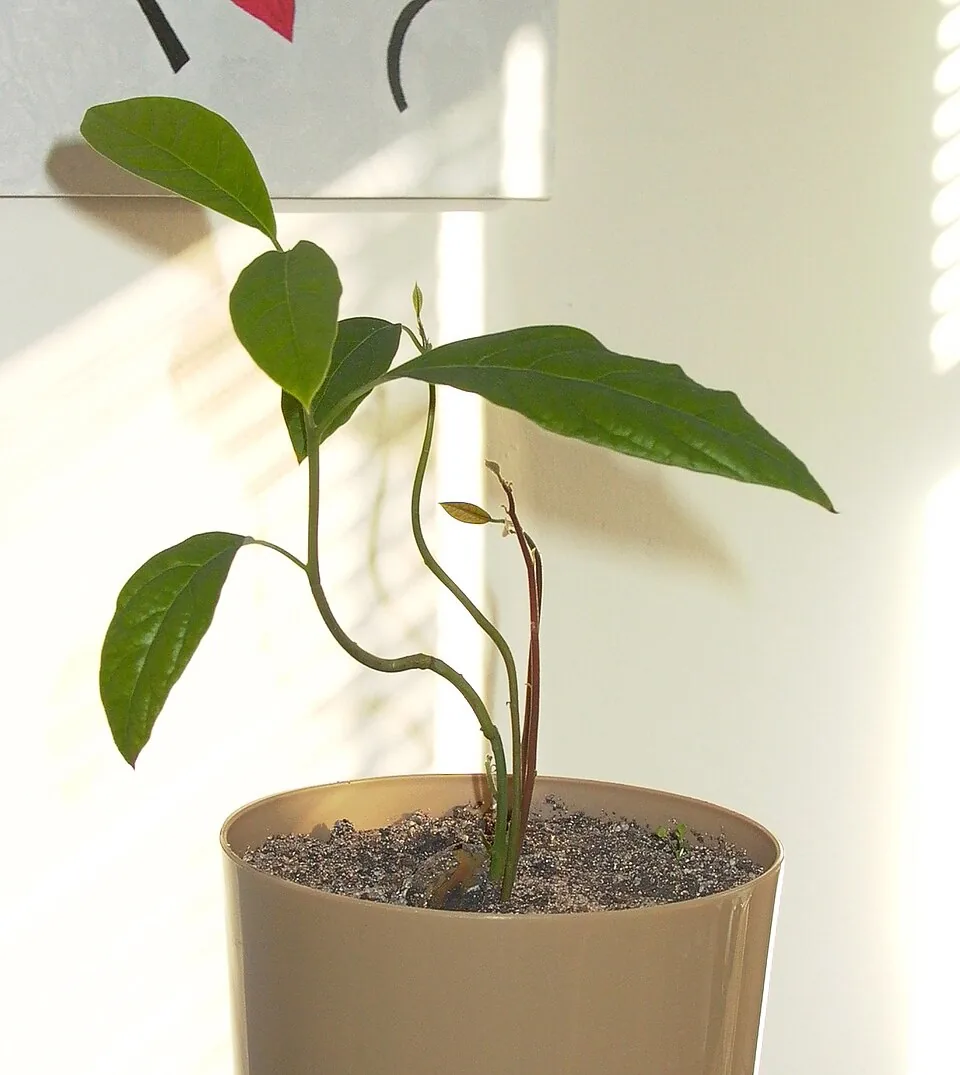
An avocado pit from the kitchen can grow into a handsome houseplant, with a split seed, a long shoot, and glossy leaves. That project is worth doing for the plant itself. It is much less reliable as a way to grow fruit you can eat.
The short answer: you can start the seed in water or in potting mix. Nebraska Extension says either method works, and that soil is usually faster. Set the broad, flat end down and leave the pointed end up. Keep the seed evenly moist, in bright light, and plan on a leafy indoor tree. North Carolina Extension says an avocado grown as a houseplant will not produce fruit. UF/IFAS adds that a seed-grown tree may take four to ten years to flower and fruit and is not likely to give you tasty fruit like the one the pit came from.
Water or Soil: Choose a Starting Method
Both Colorado State University’s PlantTalk and Nebraska Extension describe two starting methods. One suspends the seed over water so you can watch the roots. The other plants it directly in potting mix. The seed’s orientation is the same in both: the broader, flatter end is the bottom, and the pointed end is the top. PlantTalk cautions you not to break a seed that has already split or started a root, and not to break the seed in two, because it will not grow.
| Method | What to expect |
|---|---|
| Water | Toothpicks hold the seed so the bottom half stays wet. You can see the root. Later you pot it up. |
| Soil | The pointed end stays just above the mix. Nebraska Extension says this is usually faster. Keep the mix moist. |
Growing note: you do not need to peel the brown seed coat. Neither PlantTalk nor Nebraska Extension lists that as a step. If the coat loosens or splits on its own as the seed germinates, leave it alone.
How to Start an Avocado Seed in Water
- Rinse the pit after you scoop it out of a ripe avocado, and notice which end is broad and which is pointed.
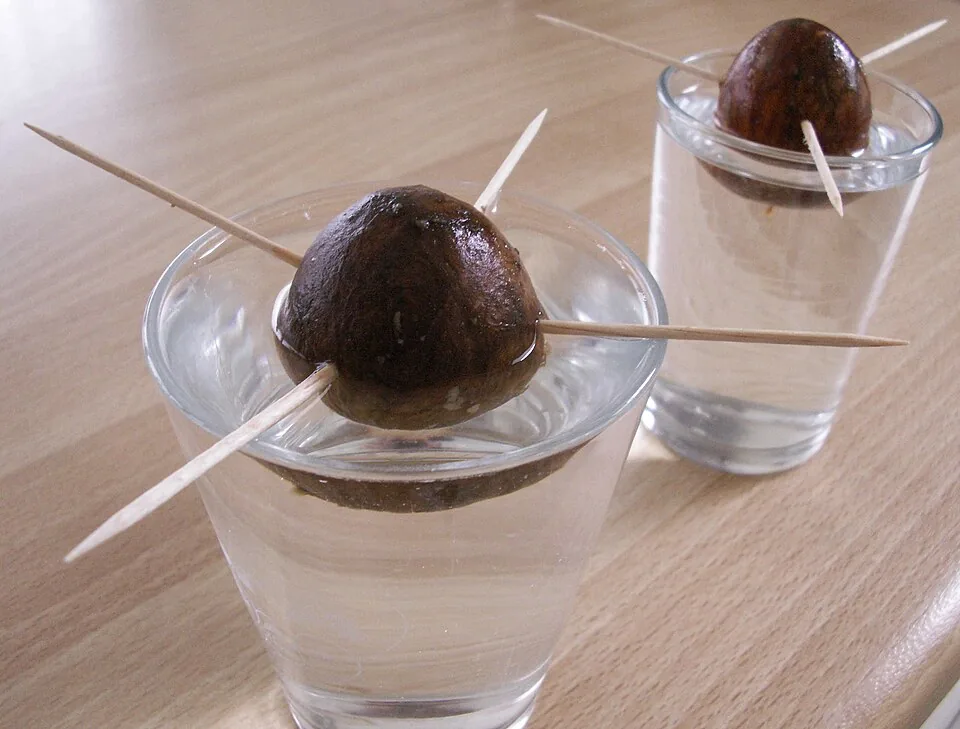
- Insert three or four toothpicks around the middle of the seed, as both PlantTalk and Nebraska Extension describe.
- Set the seed flat end down in a glass or jar. Add enough water to cover the lower half, leaving the pointed half in the air.
- Put the glass in a sunny window or another well-lighted spot. Add water as needed so the bottom half stays wet.
- Wait for a root and a shoot. Both sources say this often takes a few weeks. A root should appear from the flat end, with signs of a shoot at the pointed end. North Carolina Extension gives a wider window of 2 to 6 weeks for the seed to split and roots to appear.
- Pot it up when the stem is growing. PlantTalk says to pot the seed in a well-drained mix after the stem pushes through the top of the seed. Nebraska Extension says to pot it in houseplant potting soil once the main stem has emerged. North Carolina Extension says to transplant when the seed has split and roots have appeared.
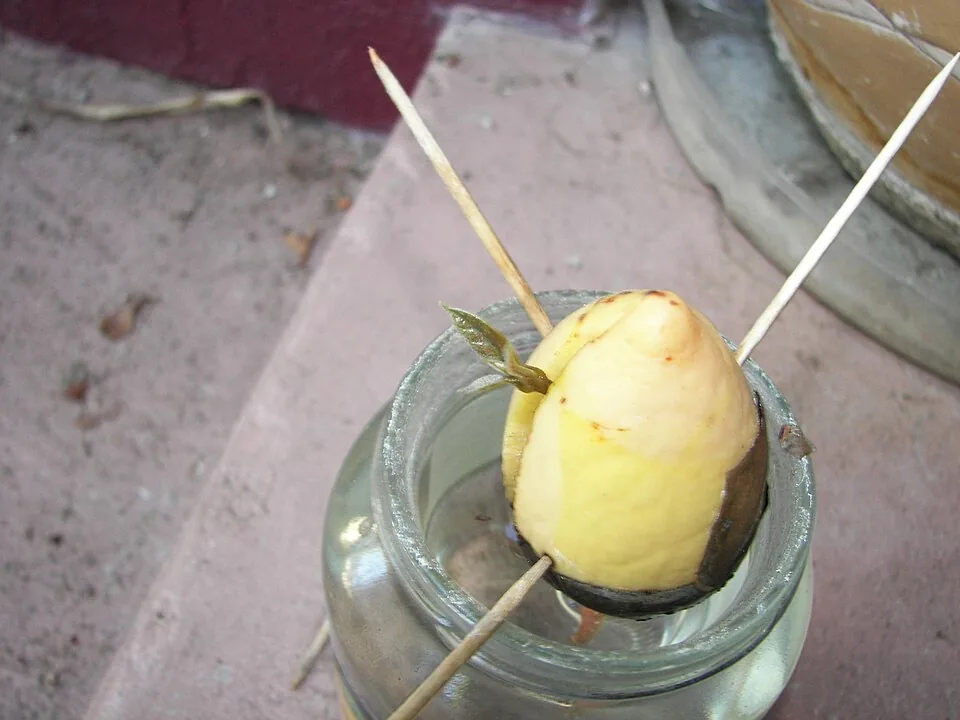
A clear jar makes it easy to see when the water needs topping up and when the roots have filled the glass.

- 【Practical Size Combo】-These plastic planters indoor combines with 6 different sizes, 8 inch 7inch 6.5 inch 6 inch 5.5 inch...
- 【Durability, Light weight, Sturdiness】-Made of durable recyclable plastic, solid plastic plant pots protect plants and soil...
- 【Intriguing Design】-A simple modern aesthetic and clean matte finish planters indoor plants bringing out a minimalistic...
How to Start an Avocado Seed in Soil
If you would rather skip the glass of water, plant the seed directly. PlantTalk suggests soaking the pit overnight first, unless a root has already started. Fill a pot of well-draining potting mix, set the seed large end down, and leave the pointed end above the surface: PlantTalk says about one-half inch, and Nebraska Extension says about an inch. Keep the mix moist until the plant is established.
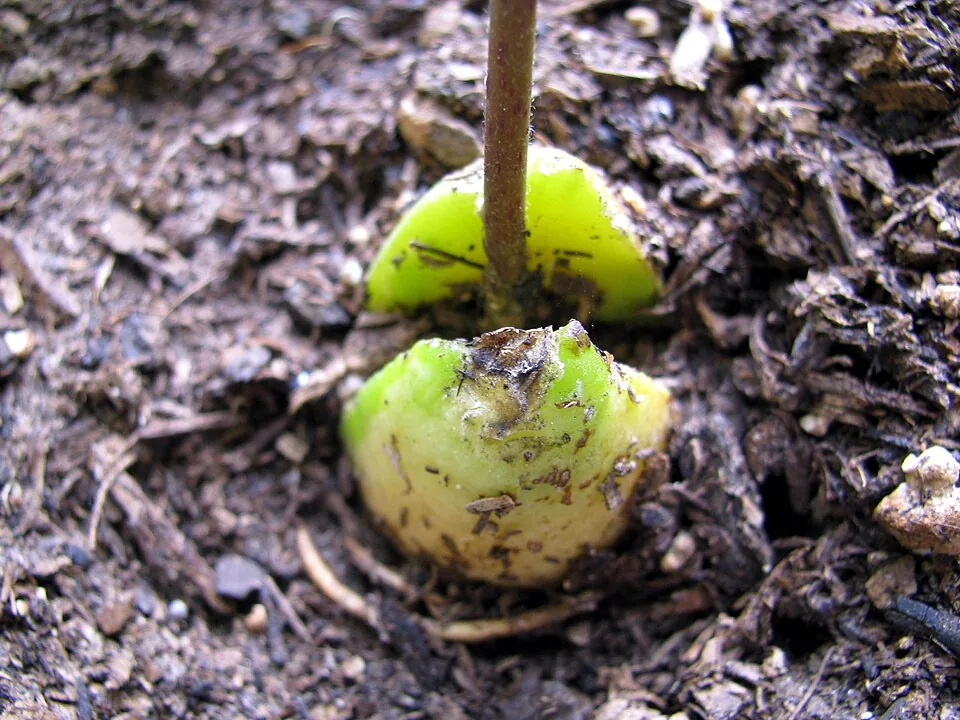
Use a pot with drainage holes so the mix can stay moist without staying soggy. A standard indoor potting mix is enough to start; you can move the plant into a larger pot later as the roots fill the container.

- Miracle-Gro Indoor Potting Mix for All Plants feeds houseplants for up to 6 months and grows healthier, more resilient plants (vs...
- This potting mix contains sphagnum peat moss, coconut coir, and perlite to help with water retention and release so indoor plants...
- Blended potting soil for a wide variety of indoor container plants, including herbs, climbing, foliage, and flowering plants

How to Care for a Young Avocado Plant
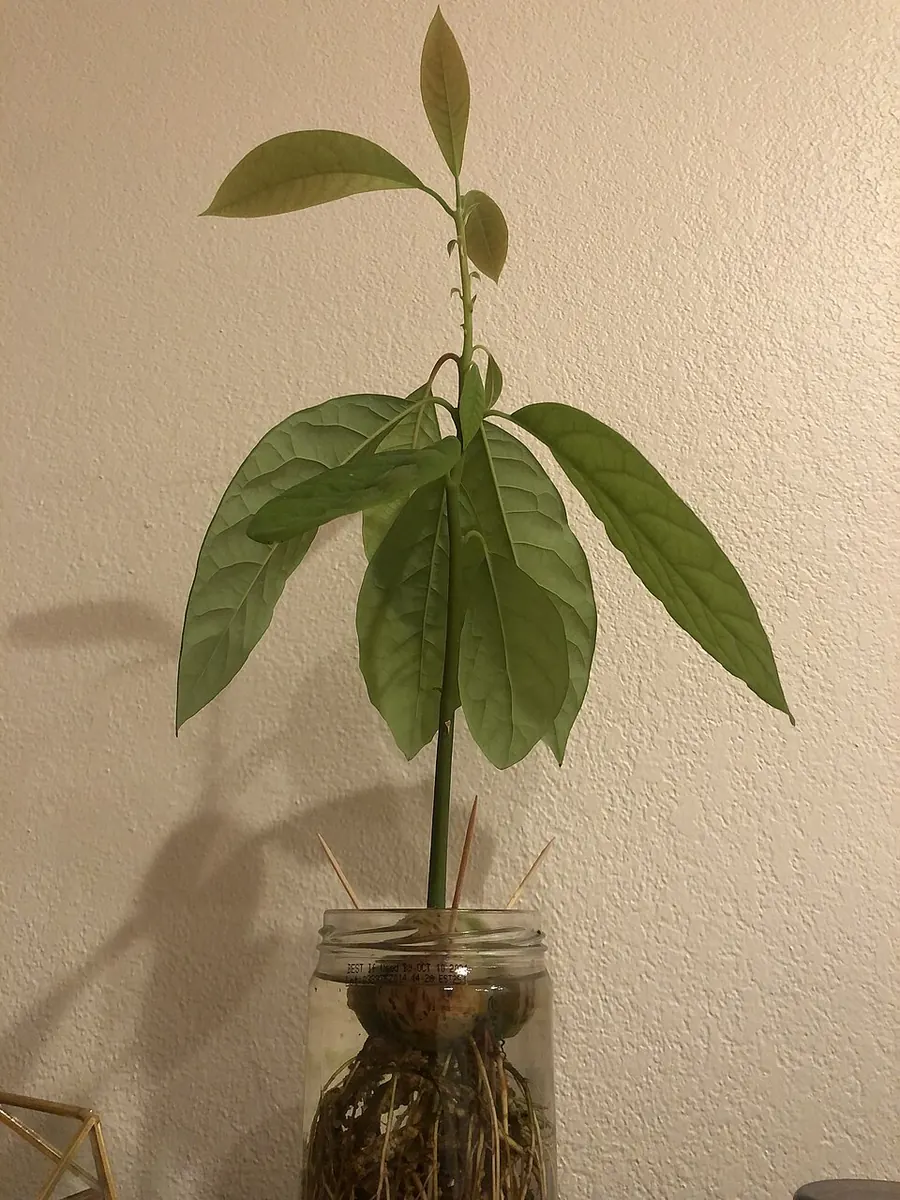
Once the seed is in a pot, PlantTalk and Nebraska Extension give the same basic care:
- Water. Keep the soil evenly moist, not wet and not bone dry. Both sources say overwatering leads to curled leaves and soft stems, and dry soil leads to dried leaves that eventually fall off.
- Light. Give the plant bright, indirect light, or a sunny window. North Carolina Extension also recommends a sunny window after transplanting.
- Fertilizer. PlantTalk and Nebraska Extension both suggest a small amount of a standard houseplant fertilizer every three months. North Carolina Extension says to fertilize regularly in spring and summer.
- Space. Avocado plants grow into trees. Give the pot room, and be ready to move it into a larger container as it grows. PlantTalk notes that if your home is small, you may want to start a new plant every three or four years.
Outdoors, North Carolina Extension lists avocado as a frost-tender tree for USDA zones 9a to 12b, in well-drained soil and sun. In colder climates, this remains a container plant you protect from frost, more like other indoor plants such as a spider plant, a poinsettia, or an amaryllis.
Care tip: if the main stem gets tall and bare, you can pinch out the growing tip after the plant has several leaves, so it branches. Extension sources above do not give a required height for that pinch, so treat it as optional shaping, not a rule.
What to Expect About Fruit
A grocery-store avocado is often from a named or hybrid variety, and a tree grown from its seed will not necessarily match the fruit you ate. UF/IFAS is direct about kitchen-pit avocados: the project is fun, but it is not likely to give you a tree with tasty fruit. UF/IFAS says seed-grown trees may take four to ten years to flower and fruit, and that grafted trees from registered nurseries are the way to get desirable fruit.
North Carolina Extension is even blunter for plants kept indoors: an avocado grown as a houseplant, while attractive, will not produce fruit. PlantTalk says it may take as long as 20 years or more for a tree to bear fruit.
Commercial avocados also have A and B flower types, which affect pollination in an orchard, a point explained by UF/IFAS for named varieties. That is not a reason to expect a supermarket pit, grown in a pot in the living room, to behave like a grafted backyard tree. If you want fruit, plan on a grafted plant and a climate that can support it. If you want a leafy houseplant, the pit in the kitchen is enough.
Avocado and Pets
Avocado is not a harmless snack for every animal in the house. The ASPCA Animal Poison Control Center says the leaves, fruit, seeds, and bark contain persin. In dogs, that can cause vomiting and diarrhea. Birds, horses, and rodents are especially sensitive. In birds, the ASPCA says the biggest concern is cardiovascular damage, and some ingestions may be fatal. Horses, donkeys, and ruminants can develop swelling of the head and neck.
The ASPCA’s people-foods list likewise flags avocado as primarily a problem for birds, rabbits, donkeys, horses, and ruminants, with cardiovascular damage and death the biggest concern in birds and rabbits. The ASPCA plant entry for Persea americana lists persin as the toxic principle and notes toxicity to horses, with clinical signs of respiratory distress, heart failure, and edema. If a pet eats any part of the plant or the fruit, contact a veterinarian or the ASPCA Animal Poison Control Center at (888) 426-4435.
Avocado From Seed FAQ
How long does an avocado pit take to sprout?
PlantTalk and Nebraska Extension say a root and a shoot often appear after a few weeks in water. North Carolina Extension gives 2 to 6 weeks for the seed to split and roots to appear. Cool rooms or a dry seed can take longer. Keep the bottom half wet, or the potting mix moist, and give the seed bright light.
Is the water method or the soil method better?
Both work. Nebraska Extension says the soil method usually gives faster results. The water method is simply easier to watch. Once roots and a stem are growing, the plant belongs in a pot with drainage.
Will a grocery-store avocado seed give me fruit?
Often, no, especially if you keep the plant indoors. North Carolina Extension says a houseplant avocado will not produce fruit. UF/IFAS says a seed-grown tree may take four to ten years and is not likely to produce tasty fruit; grafted nursery trees are the better path if fruit is the goal.
Start the seed, keep it moist and bright, and enjoy the leaves. That is the reliable part of growing an avocado from a pit.