

An amaryllis is one of the easiest ways to get big, bold flowers indoors in the middle of winter. You start with what looks like an oversized onion, and a few weeks later you have a tall stalk topped with trumpet-shaped blooms that can reach about 6 inches across. Because the bulb arrives packed with stored energy, the first bloom is very forgiving.
The short answer: plant the bulb in a sturdy pot only 1 to 2 inches wider than the bulb, leaving the top third to half of the bulb above the soil. Water it well once, then sparingly until growth appears. Give it a sunny window and warm room temperatures, rotate the pot every few days, and move it somewhere a little cooler once it opens so the flowers last longer. Clemson Extension notes that bulbs planted in early to mid-November usually bloom in about 4 to 8 weeks, which is right around the holidays.
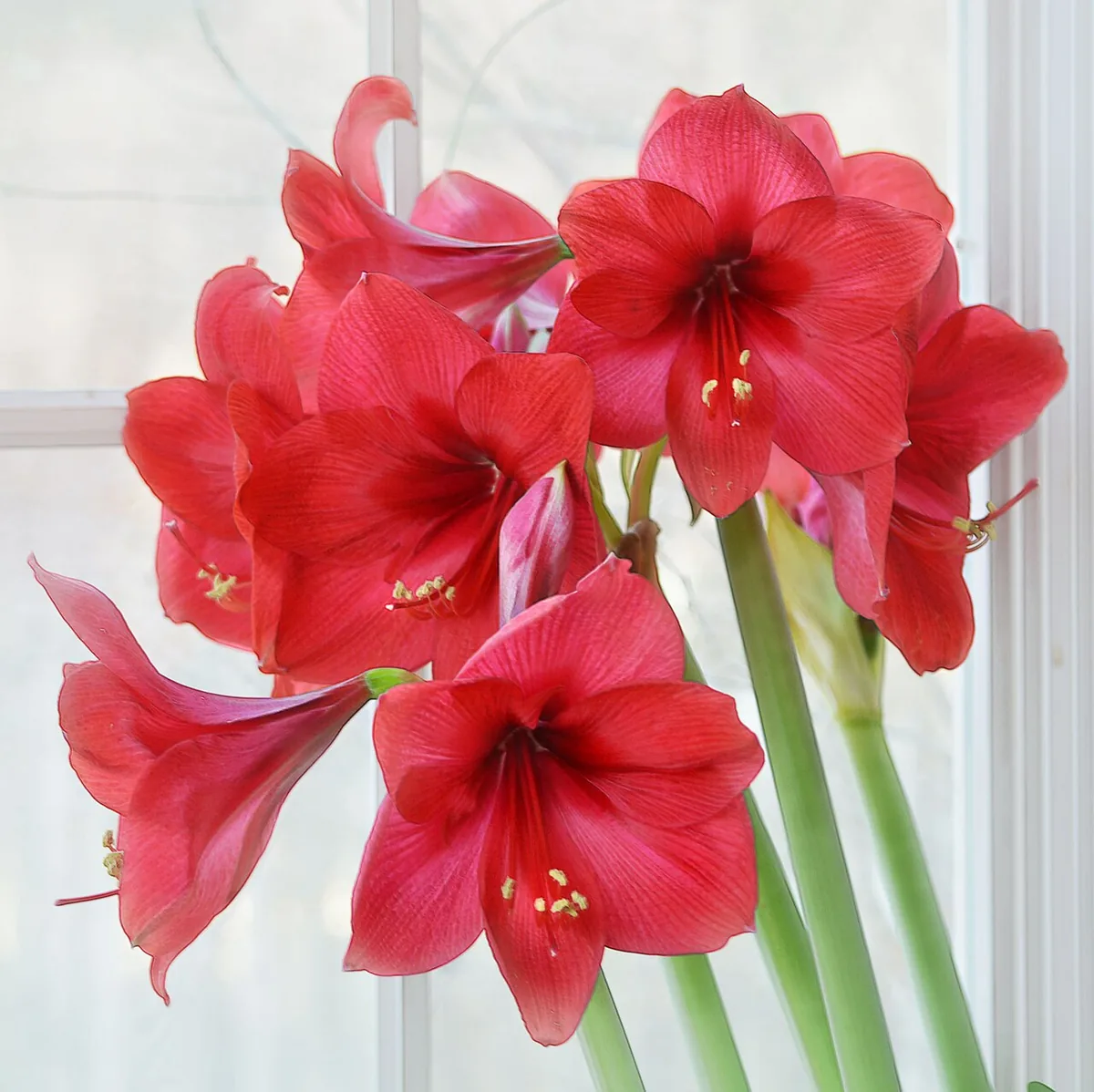
Amaryllis Care at a Glance
| What it needs | In plain terms |
|---|---|
| Pot | Heavy pot with drainage holes, 1 to 2 inches wider than the bulb |
| Planting depth | Top one-third to one-half of the bulb above the potting mix |
| Potting mix | Well-drained, high-quality mix; Clemson suggests equal parts peat and perlite |
| Light | At least 4 hours of direct sun; a south window is best, east or west is second best |
| Temperature | About 70 to 75°F while growing; around 65°F once blooming to make flowers last |
| Water | Soak once at planting, then keep barely moist; water more often once it blooms |
| Fertilizer | None until leaves grow; then a diluted houseplant fertilizer |
| Time to bloom | Roughly 4 to 8 weeks after planting |
| Pets | Toxic if eaten; keep away from dogs, cats, and horses. The bulb is the most toxic part |
Sources: Clemson Cooperative Extension, University of Maryland Extension, and the ASPCA.
Choosing a Good Amaryllis Bulb
Amaryllis bulbs are sold by size, usually labeled in centimeters around the bulb. According to Clemson Extension, a bulb about 30 to 32 centimeters around generally produces two flower stalks with three or four flowers each, and larger, older bulbs can send up three stalks. In other words, bigger bulbs usually mean more flowers.
Clemson also links bulb rot to bruised bulbs and soil that stays too wet, so look over the bulb before you plant. Skip any that are soft, bruised, or moldy. Most holiday amaryllis sold in the U.S. are hybrids of Hippeastrum, native to Central and South America and the Caribbean, even though they are commonly grown in the Netherlands or South Africa.
What about wax-dipped amaryllis?
Waxed amaryllis bulbs need no soil or water, since the bulb already holds enough energy for one season of flowers. They still need light and warmth, and turning them daily helps the stalks grow straight. Clemson Extension notes that waxed bulbs are meant to be discarded after blooming, so choose a regular bulb if you hope to keep it for years.
How to Plant Amaryllis in a Pot
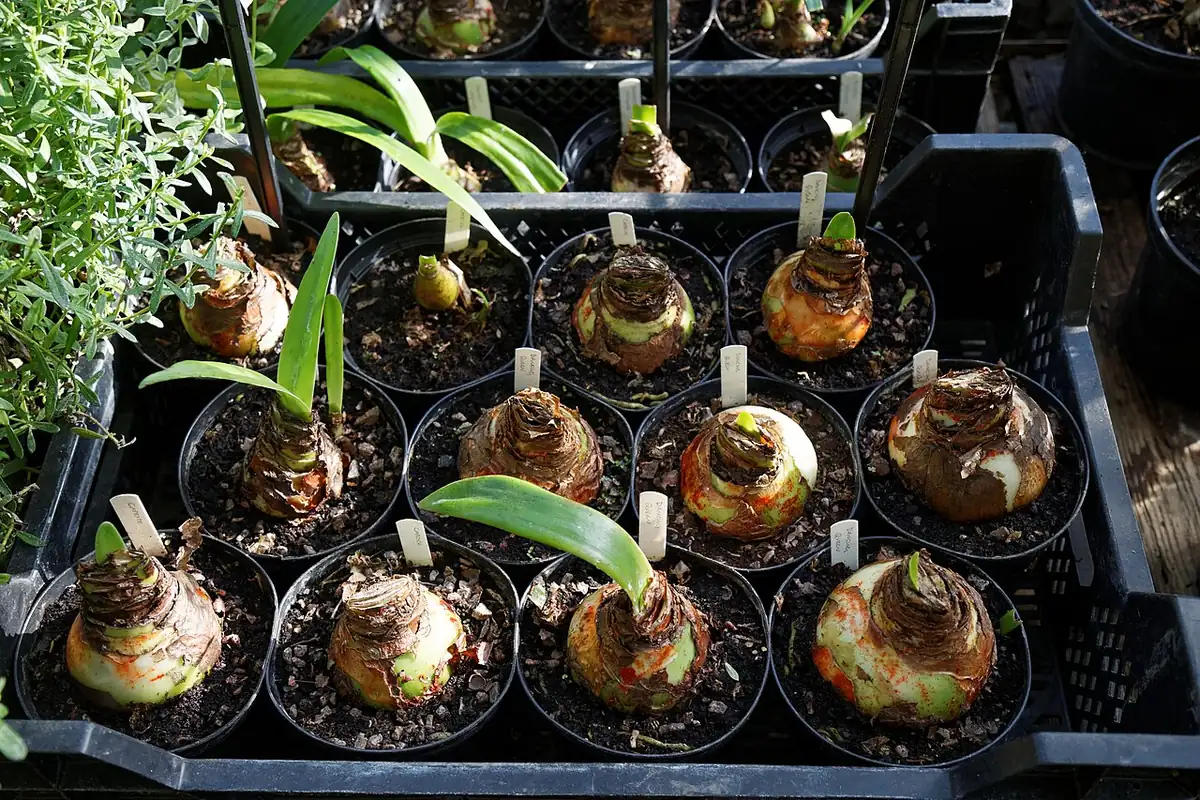
- Pick a snug, heavy pot. Choose one that is only 1 to 2 inches wider than the widest part of the bulb and has drainage holes. Amaryllis does well slightly rootbound, and a heavier clay or ceramic pot is less likely to tip once the tall stalk opens. If you’re unsure about sizing, our guide to choosing the right container size walks through the basics.
- Use a well-drained mix. A good-quality potting mix works; Clemson Extension suggests equal parts peat and perlite as an excellent option.
- Set the bulb high. Position the bulb so that one-third to one-half of it sits above the surface. Clemson explains that keeping the bulb’s nose dry helps reduce red blotch, a fungal disease.
- Water once, thoroughly. Let it drain completely and don’t leave the pot sitting in a full saucer.
- Then wait. Clemson suggests waiting about a week before watering again, then keeping the mix only slightly moist until you see growth.
Planting several bulbs in one container makes a lovely centerpiece. Just choose a heavy, wide-based pot to balance the weight of all those flowers.
Light, Temperature, and Water While It Grows
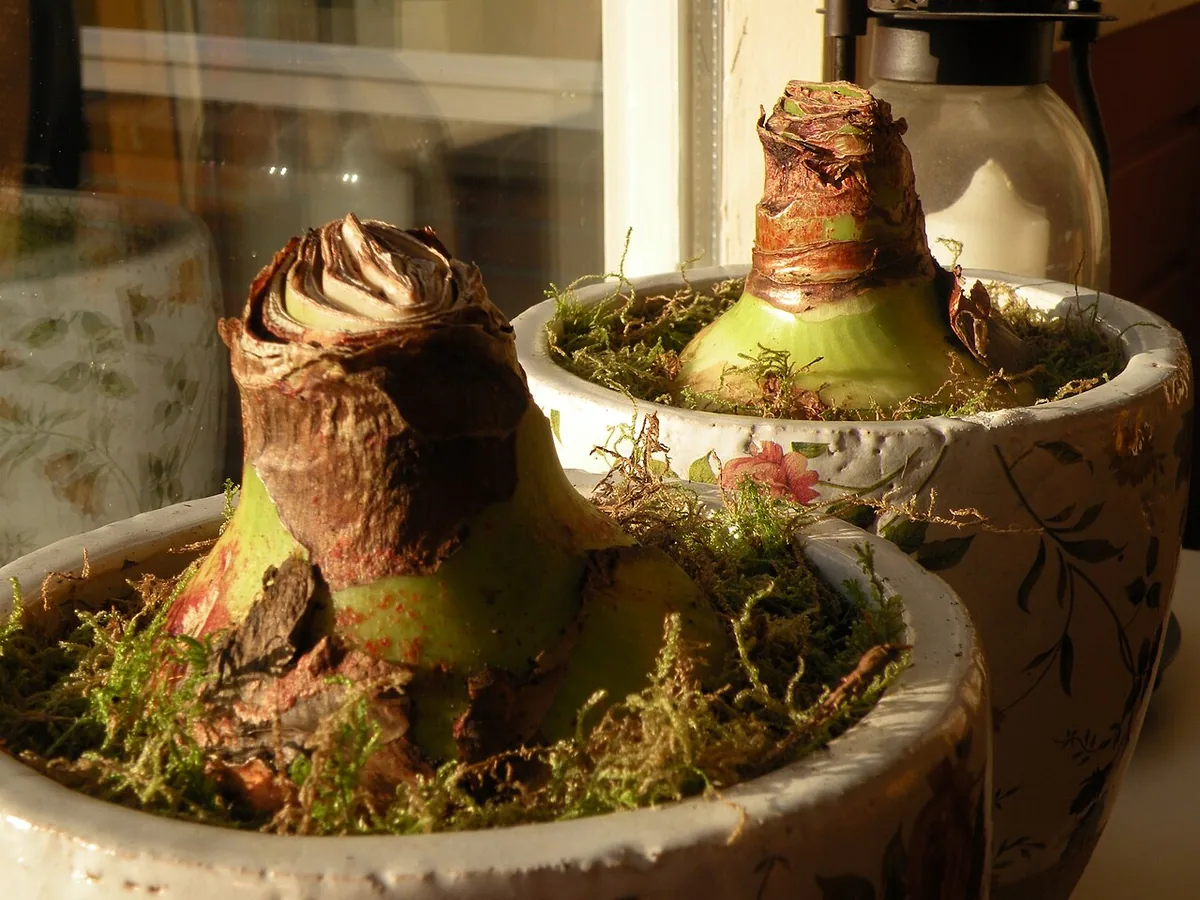
Light: amaryllis loves sun. Clemson Extension recommends a spot with at least four hours of direct sunlight a day, ideally a south-facing window, with east or west windows next best. Turn the pot every few days so the stalk grows straight instead of leaning toward the glass.
Temperature: warm rooms, around 70 to 75°F, help roots form and push the stalk up, according to Clemson. Wisconsin Horticulture Extension adds that keeping the bulb too warm can lead to weak stalks and smaller flowers, and recommends ordinary room temperatures of about 65 to 70°F. Either way, a normal heated home is fine; just avoid parking the pot directly over a heat vent.
Water: overwatering is the main way to lose a bulb. University of Maryland Extension suggests letting the top half inch of soil dry between waterings while it grows. Once the plant starts blooming, it uses more water, so Clemson suggests checking it once or twice a week and watering when the surface feels dry. Always empty the saucer.
Fertilizer: hold off at first. Clemson warns that fertilizing a bulb with no leaves can damage the roots. Once leaves are growing, feed it with a liquid houseplant fertilizer diluted according to the label.
How to Make Amaryllis Flowers Last Longer
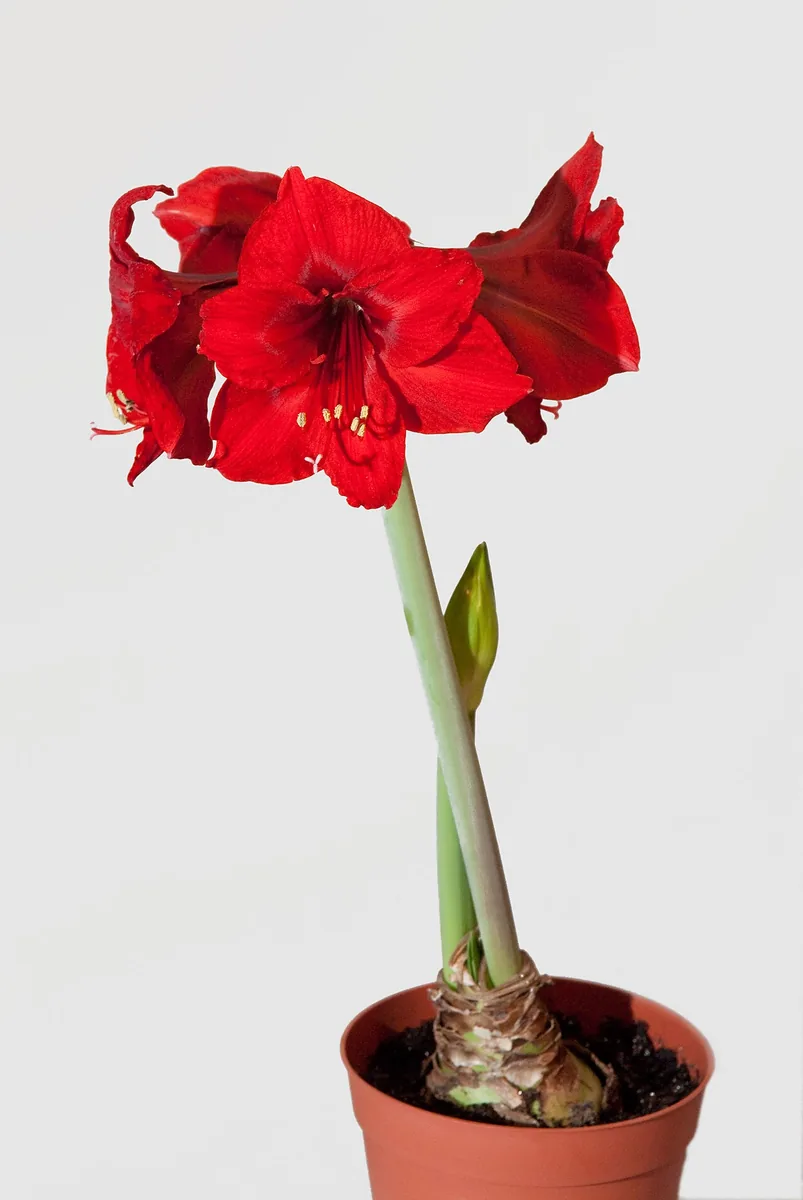
- Move it somewhere cooler once it opens. Clemson notes that a cooler spot, around 65°F, prolongs the flowers, and University of Maryland Extension says temperatures above 65°F shorten the bloom period. Wisconsin suggests 60 to 65°F and keeping the plant out of direct sun while in flower.
- Keep it away from heaters and air vents. Hot, dry air shortens the show.
- Stake tall stalks. The flowers are heavy. Slip a thin stake into the pot without stabbing the bulb and tie the stalk loosely with a soft tie. If a stalk bends too far anyway, Clemson says you can cut it and put it in a vase, where the flowers will keep opening.
- Watch for a second stalk. Larger bulbs often send up another stalk after the first, which stretches the season.
Growing Amaryllis in Water or Pebbles
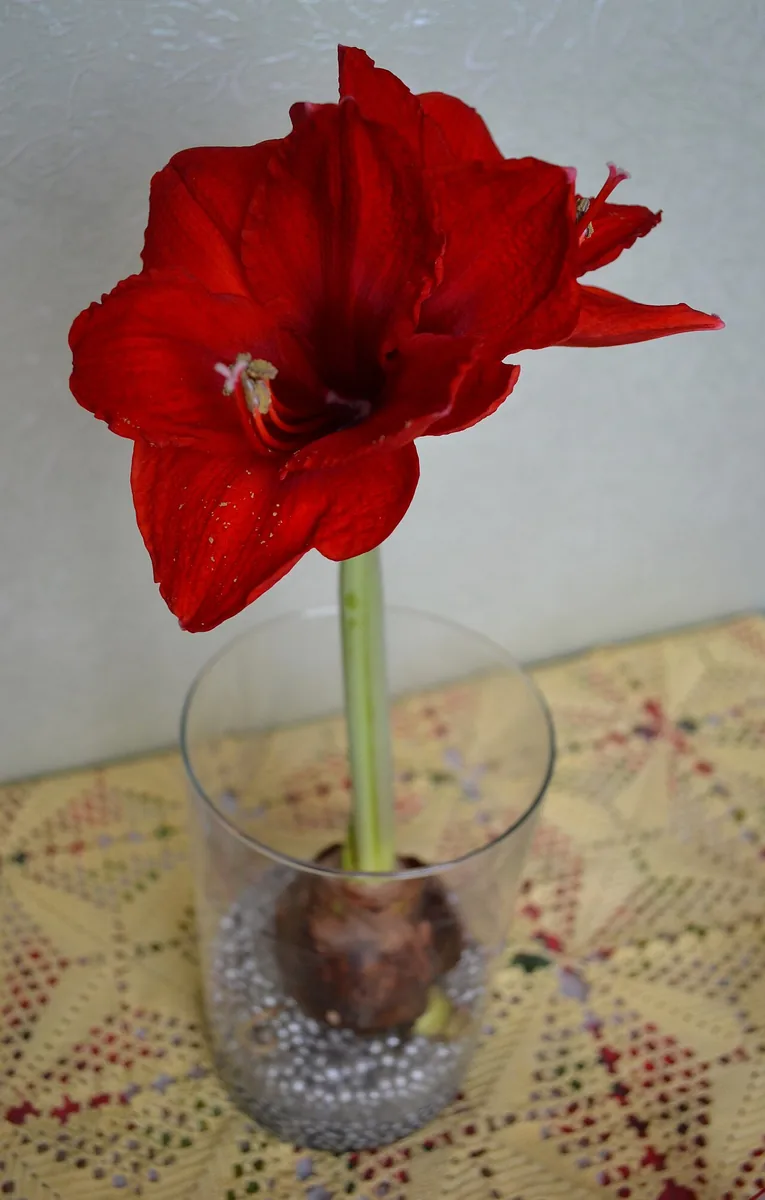
For a pretty, soil-free display, Clemson Extension describes two methods using a clear container, so you can see the water level:
- Forcing vase: fill a bulb vase with water to about 1 inch below the narrow neck and set the bulb in the wide top, roots pointing down toward the water.
- Pebbles in a hurricane or tall glass: add about 3 inches of pebbles, marbles, or river rocks, set the bulb on top, and tuck more pebbles around the sides, leaving the top third of the bulb exposed. Keep the water about 1 inch below the base of the bulb and top it off as needed.
Keeping the bulb itself out of the water is what prevents rot. Clemson notes that bulbs flowered in water will not bloom again in water, so plant them in soil afterward if you want to try keeping them.
Amaryllis Care After Blooming
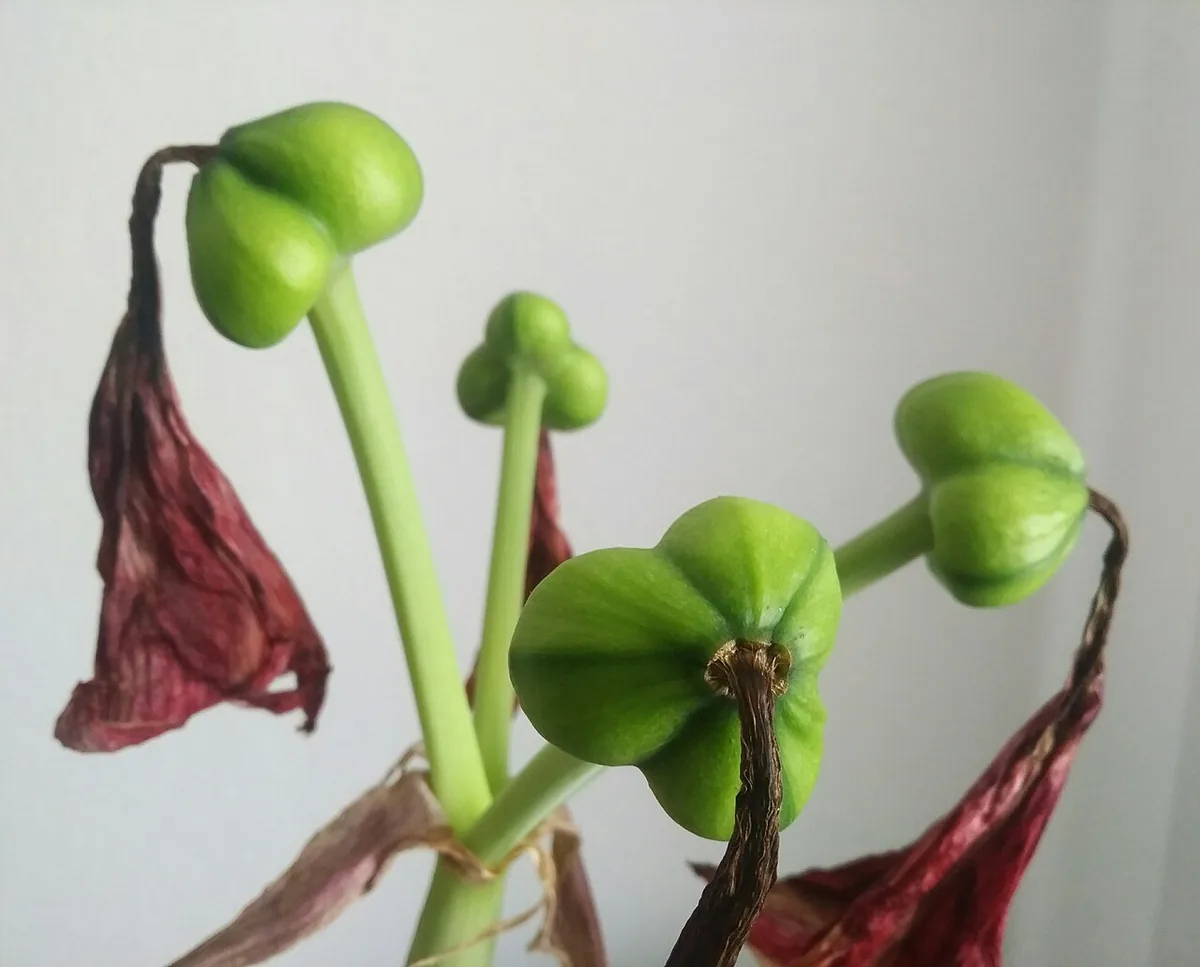
Here is the secret to getting another year out of your bulb: keep the leaves growing after the flowers finish. The strap-like leaves make the food that rebuilds the bulb for next year.
- Remove faded flowers before they form seed pods like the ones above. Illinois Extension explains that letting seeds form uses up energy that could go into future blooms.
- Cut back the flower stalk. Iowa State University Extension suggests cutting it 1 to 2 inches above the bulb after the flowers fade. Illinois Extension prefers waiting until the stalk starts to yellow, since a green stalk can still make food. Either approach works; just don’t cut the leaves.
- Give it a sunny window. Water when the soil surface is nearly dry and fertilize regularly. Iowa State suggests a dilute fertilizer every 2 to 4 weeks, while Illinois suggests an all-purpose houseplant fertilizer about monthly, following the label.
- Summer outdoors, if you like. After frost danger has passed, move it outside gradually, starting in shade and slowly increasing sun over a week or so. Wisconsin Horticulture recommends keeping it in its pot (or sinking the whole pot in the ground) because the roots are brittle. Bring it back inside before frost in fall.
How to Get Amaryllis to Bloom Again
Extension sources describe the same basic cycle, but their numbers vary, so treat these as ranges rather than strict rules:
| Step | What to do | Source notes |
|---|---|---|
| 1. Rest | In late summer or early fall, stop watering and move the pot to a cool spot | Iowa State and UVM suggest starting around late September |
| 2. Cool, dry period | Keep the bulb cool and dry while the leaves yellow; remove them once they wither | About 50–55°F (Iowa State, UVM); 45–55°F (Illinois, Wisconsin); 40–50°F (Maryland) |
| 3. Wait | Leave the bulb resting | 8–10 weeks (Iowa State, UVM, Wisconsin); 8–12 weeks (Illinois); about 6–8 weeks (Maryland) |
| 4. Wake it up | Bring it into a warm, bright spot and resume watering when growth starts or the rest period ends | Iowa State suggests a well-lit 70–75°F spot |
| 5. Bloom | Flowers usually follow a few weeks later | About 4–6 weeks (Illinois, Wisconsin) |
Sources differ on whether the rest period is essential. Iowa State and University of Maryland Extension treat a cool rest period as a necessary step for reblooming, while Illinois Extension and Wisconsin Horticulture say commercial amaryllis can rebloom without one and that resting the bulb mainly helps you control when it flowers. If you want flowers around the holidays, a rest period is the most predictable route, so start it in early fall. Wisconsin Horticulture notes that the bulb keeps getting bigger and needs repotting every few years, ideally after its rest period, into fresh mix in a pot still only an inch or two wider than the bulb. Above all, bright sun during the growing months is what builds a strong bulb.
Common Amaryllis Problems
| What you see | Likely cause | What to try |
|---|---|---|
| Soft, mushy bulb or rotting roots | Soil kept too wet, or a bruised bulb | Discard diseased bulbs and replace the potting mix (Clemson); water less often |
| Reddish-brown spots on bulb, leaves, or stalk | Red blotch, a fungal disease | Plant with the top of the bulb above the soil and keep the nose dry |
| Light-yellow streaks and weaker growth over the years | Mosaic virus | There is no cure; Clemson notes infected bulbs can’t be fixed |
| Stalk leaning hard to one side | Light coming from one direction | Rotate the pot every few days; stake if needed |
| Long, floppy leaves and no flowers the next year | Not enough light during the growing months | More direct sun after blooming; Maryland calls bright sun the single most important factor for repeat bloom |
| Tiny insects, sticky residue, or cottony spots | Scale, mites, thrips, or mealybugs | Isolate the plant and treat early; ask your local extension office for options |
Is Amaryllis Toxic to Pets?
Yes. Clemson Extension notes that all parts of the holiday amaryllis (Hippeastrum) are poisonous to people and pets if eaten in large quantities, and the bulb is the most toxic part. The ASPCA lists amaryllis as toxic to dogs, cats, and horses (its entry is filed under the closely related true amaryllis, Amaryllis spp.), with signs that can include vomiting, diarrhea, abdominal pain, drooling, lack of appetite, depression, and tremors. Keep bulbs and blooming plants out of reach of curious pets and small children, and store resting bulbs somewhere safe. If you think your pet ate any part of an amaryllis, call your veterinarian or the ASPCA Animal Poison Control Center at (888) 426-4435 (a fee may apply).
Looking for a gentler option for homes with pets? The ASPCA lists true Christmas cactus (Schlumbergera bridgesii) as non-toxic to cats and dogs; our Christmas cactus care guide covers how to keep one blooming.
Amaryllis FAQ
When should I plant amaryllis for Christmas?
Clemson Extension says bulbs planted in early to mid-November usually bloom in 4 to 8 weeks, and University of Vermont Extension gives a similar range of five to eight weeks. Timing varies by bulb and room temperature, so planting in early November gives you the best chance of flowers by late December. If you plant a little later, you’ll simply enjoy them in January.
Should I water amaryllis from the top or bottom?
Watering into the soil from the top is fine. The key is not to pour water onto the bulb’s nose, and not to let the pot sit in water. After the first soak, water lightly until you see growth, then more often once it blooms.
Can I plant amaryllis outside?
In warm climates, yes. Clemson Extension says amaryllis is cold hardy through USDA Zone 8 in South Carolina, and recommends a well-drained, sunny spot with some afternoon shade, planting the bulb so only part of its nose shows above the soil. In colder areas, grow it in a pot and keep it indoors in winter. Check with your local extension office for advice specific to your area.
Why is my amaryllis all leaves and no flowers?
Usually the bulb didn’t store enough energy the previous year, most often from too little sun while it was growing, or it did not get a cool rest period, which some extension sources consider necessary for reblooming. Give it a full season of bright light and regular feeding after it blooms, then try the rest period in early fall.
Is an amaryllis the same as a belladonna lily?
Not quite. The big holiday bulbs sold as “amaryllis” are Hippeastrum hybrids. The name Amaryllis technically belongs to a related South African plant, Amaryllis belladonna. Both belong to the amaryllis family (Amaryllidaceae). The ASPCA’s amaryllis entry is listed under Amaryllis spp., and Clemson Extension describes holiday Hippeastrum as poisonous if eaten, so keep both away from pets.
Pair your amaryllis with a poinsettia for a classic holiday windowsill, and you’ll have color well into January. With a snug pot, a sunny window, and a light hand with the watering can, that plain-looking bulb really does do most of the work.
Care information in this guide comes from Clemson Cooperative Extension, Iowa State University Extension and Outreach, University of Illinois Extension, University of Maryland Extension, University of Wisconsin–Madison Extension (Wisconsin Horticulture), University of Vermont Extension, and the ASPCA.