

Soak-off gel is the gentler choice for most healthy nails. Acrylics win when you need added length or serious strength. Both can leave your nails thin and dry, and with either one the removal does as much damage as the product.
The two are less rivals than different tools. Gel polish is a coating that cures under a lamp and keeps your own nail underneath. Acrylic is a sculpted material that can extend the nail past your fingertip and hold a shape your own nail cannot. Choosing well comes down to what you need the set to do, how much upkeep you will accept, and how much removal trauma your nails can take.
By Ashley. Sources cited include the American Academy of Dermatology and Cleveland Clinic.
Key takeaways
- Soak-off gel flexes with the nail, which is why the American Academy of Dermatology recommends it over acrylic for most people.
- Acrylic is stronger and can add length, but it is rigid, needs a fill every two to three weeks, and removal can leave nails weak for months.
- The lamp, the cuticle prep, and the removal decide how much damage your nails take, whichever product you pick.
Gel vs acrylic at a glance
| Criterion | Soak-off gel | Acrylic |
|---|---|---|
| Flexes with the natural nail | ✓ | — |
| Adds length | — | ✓ |
| Extra strength | — | ✓ |
| Cured under a lamp | ✓ | — |
| Needs fills | — | ✓ |
| Comes off with acetone alone | ✓ | — |
The table compares a standard salon gel polish manicure with a standard acrylic set. Hard gel and gel extensions sit between the two: they are gel, but they are filed off like acrylic.
First, which kind of gel?
Salons use one word for three products. Gel polish, also called soak-off gel or gel lacquer, is the thin, glossy color coat cured under a lamp; it is what most people mean by a gel manicure, and it comes off with acetone. Hard gel is a thicker builder gel used to add strength or length, and it usually has to be filed off. Gel extensions are tips or forms bonded with gel, which puts them closer to acrylic in what they do.
This comparison is gel polish against acrylic, because those are the two appointments most people are weighing. If your salon offers a builder gel overlay, treat it as the middle option: more strength than polish, less rigid than acrylic.

Gel vs acrylic, point by point
Seven differences cover most of the practical questions.
01. How each one sets
Gel polish stays wet until a UV or LED lamp cures it, coat by coat. Acrylic is a powder mixed with a liquid monomer into a paste, and it hardens as it sits in the air, so there is no lamp at an acrylic station. The American Academy of Dermatology notes that LED lamps cure faster and give off less UV than older UV bulbs, and advises sunscreen with SPF 30 or higher on your hands before a gel service.
02. How they feel on the nail
Gel is the more flexible of the two. The AAD recommends soak-off gel over acrylic partly for that reason: it moves with your natural nail, so your own plate is less likely to crack underneath. Acrylic sets hard and stays hard. Cleveland Clinic explains that your nail flexes during ordinary tasks such as typing and cooking while the acrylic does not, and that the repeated stress can pull the nail plate away from the nail bed, a separation called onycholysis.
03. Length and shape
Acrylic can be sculpted over a tip or a form, so it can add real length, rebuild a broken corner, and hold a long coffin or stiletto shape. Gel polish adds no length at all; it is a coating on the nail you already have. If length is the point, acrylic or a gel extension is the honest choice, and it is worth browsing long-nail designs before you commit to a shape you will wear for a month.
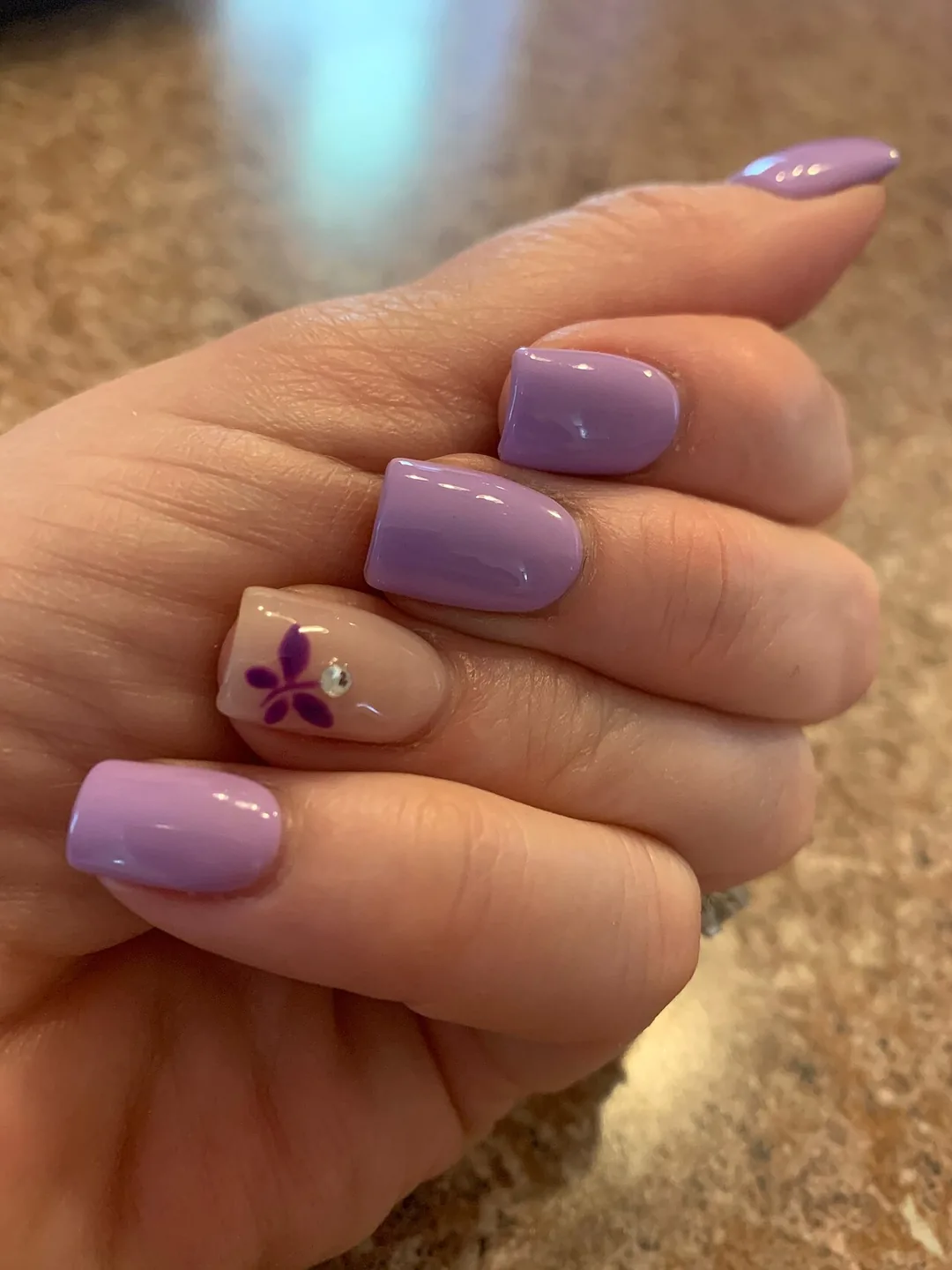
04. Time in the chair and upkeep
A gel polish application is quicker than an acrylic build, according to Cleveland Clinic, and the color change is the whole appointment. The trade-off is that gel is redone rather than filled: when it lifts or the growth line shows, the old coat is soaked off and a new one applied. An acrylic set can last up to eight weeks, but it needs a fill every two to three weeks as the nail grows out. Skipping fills lets the set lift at the cuticle, which traps water and loosens the product further. The AAD also suggests a week or two without polish between gel sets so the nail can recover.
05. How each one comes off
Removal is where most of the damage happens, and the two products come off differently. Soak-off gel dissolves in acetone. The AAD’s home method is a cotton pad soaked in acetone, wrapped in plastic film for about ten minutes, then any leftover polish rubbed away with a warm, wet washcloth. Acrylic is soaked for around 15 minutes and the remaining product filed off; hard gel is filed off entirely. Cleveland Clinic warns that taking acrylics off can damage or even remove the top plate of the nail. Our step-by-step gel removal guide walks through the acetone method without picking.
06. Cost
Acrylic is generally the less expensive option, Cleveland Clinic notes, which is part of why it remains the standard for full sets. Gel costs more per appointment and is usually a full redo rather than a fill, so the difference widens over a year. Ask what removal costs before you book, because it is often charged separately, and it is the appointment that decides how your nails look a month later.
07. Damage and allergy risk
Both services rough up the surface of the nail so the product can bond, and both are removed with solvent or a file. Acrylic removal is the harsher of the two: Cleveland Clinic notes that nails can stay weak or brittle for about six months until healthy nail grows out. Gel is not harmless either. Continuous wear can leave nails brittle, and picking it off strips layers. Both contain acrylates, which can cause allergic contact dermatitis; Cleveland Clinic says the first rash often shows up on the eyelids, the thinnest skin on the body. Stop and see a dermatologist if that happens. Peeling that starts after a removal is usually trauma rather than a vitamin deficiency, and it has its own repair plan.
Which should you choose
If your own nails are healthy and chip polish: gel
Book soak-off gel. It is the AAD’s first choice among artificial options because it flexes with the nail, it keeps your own length, and it comes off with acetone rather than a file. Keep it short if you type or work with your hands all day, and take a week off between sets.
If your nails are short, weak, or bitten: acrylic
Book acrylic. It can build the length and strength your own nail does not have, and it holds a shape gel polish cannot. Plan fills every two to three weeks, and plan breaks: the AAD suggests time without artificial nails so the plate can recover.
Skip both if you have sensitive skin or a known acrylate allergy, because regular polish avoids the acrylate system entirely. If you are booking a holiday set, the product matters less than the color and finish, and our Christmas nail colors guide has palettes that hold up in photos.
Can you switch between them?
Yes, in either direction, but the removal comes first. Going from acrylic to gel, wait until the acrylic is completely off and the nail has recovered; if it is thin or peeling, give it a few weeks with regular polish and cuticle oil. Going from gel to acrylic, the soak-off coat has to come off cleanly, because acrylic will not bond evenly to a slick gel surface.
Do not book a new set on top of a lifted one. Lifted product traps water against the nail, and that is how infections start. If you are starting from gel, our gel removal guide covers the at-home soak; if the set is acrylic and thick, pay for a salon removal rather than filing it yourself.
How to protect your nails either way
A few habits do more for nail health than the choice between gel and acrylic.
- Ask for an LED lamp. It cures faster and emits less UV than an older UV bulb, per the AAD.
- Leave your cuticles alone. The AAD advises against pushing or cutting them, because broken skin around the nail is an open door for infection.
- Do not pick. Lifting polish comes off in a salon, not with your other thumbnail; picking takes layers of nail with it.
- Protect the skin during removal. Petroleum jelly on the cuticle and surrounding skin, and acetone on the nail only.
- Take a break. A week or two without polish, with petroleum jelly rubbed into the nails several times a day, gives the plate time to rehydrate.
Can you do either one at home?
Gel is realistic at home with a lamp and a kit: the coats are thin, the lamp does the curing, and a bad coat soaks off. Acrylic is a different proposition. The powder-to-liquid ratio and the shape you build decide whether the set stays on, both take practice, and a lifting set can trap water against the nail. Most people are better off paying for their first few acrylic sets rather than learning on their own nails.
For gel at home: a starter kit with a lamp and soak-off colors

- 80Pcs Gel Nail Kit: This Beetles gel nail polish set includes 55 Colors x 5ml trendy colors gel polish, 1 bottle of base coat...
- One Set for All Nail Art: Beetles gel polish starter kit suitable for spring, summer, autumn, and winter, You can Choose nail...
- Long-Lasting Shine & Friendly to Beginners: Beetles Gel nail polish has vibrant colors and can be full of gloss. We make the nail...
Whichever route you take, keep the removal as gentle as the application. That is the part your nails remember, and it is also what decides how soon you can book the next set. If your nails already peel or split, read our guide to peeling nails before booking anything new.
Frequently asked questions
Is gel better than acrylic for your nails?
For most healthy natural nails, soak-off gel is the gentler option, and that is the AAD’s recommendation. It flexes with the nail and comes off with acetone rather than a file. It is still a coating that involves filing and solvent, so it is not damage-free.
Do acrylics or gel damage nails more?
Acrylic removal carries the bigger risk. Cleveland Clinic notes that removing acrylics can take the top plate of the nail and leave nails weak for about six months. Gel damage tends to come from picking it off or over-filing during prep, both of which are avoidable.
How long do gel and acrylic nails last?
An acrylic set can last up to eight weeks with a fill every two to three weeks, according to Cleveland Clinic. Gel polish lasts until it lifts or the growth line shows, which is when it is soaked off and replaced; the AAD suggests a one- to two-week break between sets.
Can I soak off acrylics at home?
Acrylic can be soaked in acetone for about 15 minutes and the residue filed off, but over-soaking and over-filing are exactly what thin the nail. If the set is thick, lifted, or applied over a tip, a salon removal is safer.
Which is cheaper, gel or acrylic?
Acrylic is generally less expensive, per Cleveland Clinic. Add up the fills every two to three weeks and the removal appointment, and the gap narrows for gel, which is a full redo each time.
Sources
- American Academy of Dermatology. Artificial nails: Dermatologists’ tips for reducing nail damage. Accessed 28 November 2026.
- American Academy of Dermatology. Gel manicures: Tips for healthy nails. Accessed 28 November 2026.
- American Academy of Dermatology. Dermatologist’s secret for removing gel nail polish at home. Accessed 28 November 2026.
- Cleveland Clinic. Are acrylic nails bad for your nails and skin? Amy Kassouf, MD. 24 April 2024.
- Cleveland Clinic. Understanding the pros and cons of dip powder, gel and acrylic nails. Amy Kassouf, MD. 11 December 2023.
More nail-care guides, from removal to repair, live in our Nails section.