

Dry skin in winter usually comes down to two things at once: cold outdoor air that holds very little water, and indoor heating that dries the air further. The fastest fix is a fragrance-free cream or ointment, smoothed onto skin that is still damp.
Key takeaways
- Cold air and heated rooms both lower the humidity around your skin, so it loses water faster than the deeper layers can replace it.
- Creams and ointments hold water in better than lotions do; apply one within three minutes of washing, while skin is still damp.
- Hot showers, foaming cleansers and extra exfoliation usually make winter dryness worse, not better.
This guide draws on guidance from the American Academy of Dermatology, the NHS, and a National Library of Medicine review of xeroderma. Sources are listed at the end.
What causes dry skin in winter
The outer layer of your skin, the stratum corneum, is built to hold water. It is 15 to 20 layers of flattened cells sitting in a lipid mix of ceramides, cholesterol and fatty acids, and it works best when its water content stays between 10% and 30%. When that level falls, the cells stop shedding evenly, gaps open in the barrier, and more water escapes. That is the tight, rough, flaky feeling people mean by dry skin in winter.
01. The air itself is drier
Cold air holds far less water vapor than warm air. Water leaves the stratum corneum fastest in low humidity, so the same face that felt fine in September starts losing moisture on the walk to the car. Exposed skin — cheeks, nose, lips, hands — feels it first, because nothing covers it.
02. Indoor heating pulls moisture out of the room
Heating warms the air without adding water to it, so relative humidity indoors drops just as the outdoor air is already dry. This is why dermatologists recommend a humidifier for winter: the AAD suggests a portable unit in the bedroom, run overnight, and cleaned regularly so it does not grow mold.
03. Long, hot showers strip the lipids
Hot water and a long soak lift the oily layer that keeps water in. The AAD’s advice is a five- to ten-minute bath or shower in warm rather than hot water, and patting dry with a towel instead of rubbing.
04. Harsh cleansers and soap
Deodorant soaps, foaming gels and heavily fragranced body washes take lipids off along with dirt. Use a fragrance-free cleanser, and only as much as you need to remove dirt and oil — a thick lather is a sign you have used too much. For skin that is already dry, the NHS suggests using a leave-on emollient as a soap substitute instead.
05. Too many acids and retinoids
The AAD lists retinoids with fragrance and alcohol among the products to stop when skin is dry. Exfoliating acids act faster still: they loosen the dead cells that are already struggling to shed evenly, and what is left underneath is a thinner, more reactive barrier. Stinging, flaking or redness after a product is the signal to take it out, not to add a second product to calm it.
06. Age, medication and skin conditions
Skin gets thinner and drier with age, and the AAD’s guidance for skin in the 60s and 70s is more emollient, gentler washing, and a moisturizer within three minutes of bathing. Dryness is also a symptom of conditions such as atopic dermatitis, psoriasis and ichthyosis, and of some medicines. If the dryness is new, severe, or confined to one patch, it is worth having it looked at rather than treating it as weather.
What actually helps
The order matters less than the principle: put water into the outer layer, then seal it there. Everything below follows from that.
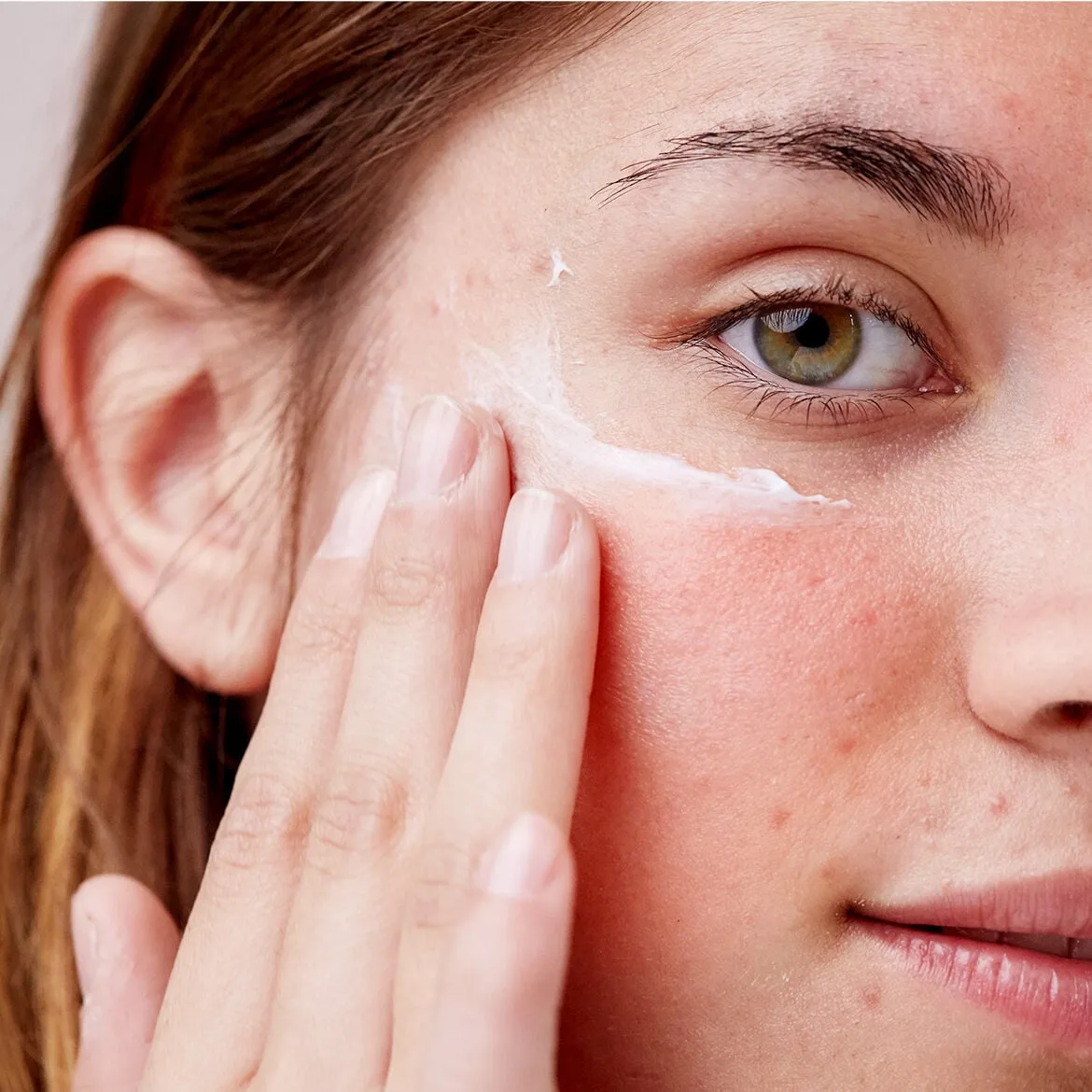
01. Shorten and cool the shower
Five to ten minutes, warm water, and a gentle cleanser only where you need it. Close the bathroom door while you shower: the AAD notes that the steam adds moisture to the air around you. Pat dry, then move straight on to the next step.
02. Moisturize within three minutes
Apply a cream or ointment while skin is still damp — within three minutes of getting out, according to the AAD — and again after washing your hands and whenever skin feels tight. The NHS puts the ideal frequency for an emollient at three or four times a day, and notes that you cannot overuse one.
03. Choose the right form
A lotion is mostly water and evaporates with it. A cream or an ointment holds more moisture in, and the thicker the form, the longer it stays. The AAD’s summary is blunt: ointments and creams are more effective than lotions for dry skin.
| Form | What it is | Best for | When to use it |
|---|---|---|---|
| Lotion | Thin, spreads easily, mostly water | Hairy areas, quick top-ups | Daytime, reapplied often |
| Cream | Water and oil, absorbs quickly | Most dry skin, face and body | Morning and after washing |
| Ointment | Thick, greasy, usually preservative-free | Very dry, cracked or thickened skin | Night, and on hands and heels |
A practical split is a cream in the morning, under makeup, and an ointment at night on the driest areas: hands, heels, the sides of the nose. The NHS notes that ointments are usually free of preservatives, which suits sensitive skin, but they should not be used on weeping eczema.
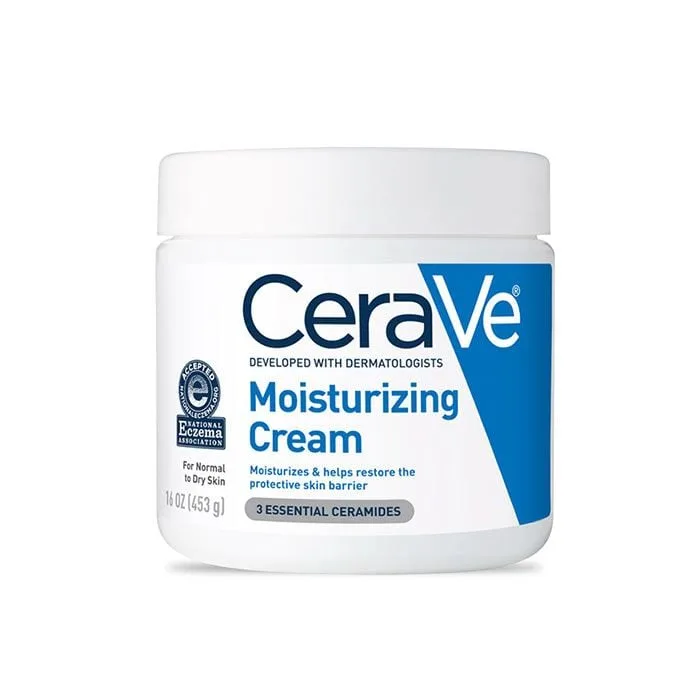
For a cream that suits most dry skin: a fragrance-free ceramide moisturizer

- [ HYALURONIC ACID MOISTURIZER ] With hyaluronic acid, ceramides and MVE technology for 24 hour hydration. Rich, velvety texture...
- [ MOISTURIZER FOR DRY SKIN ] A deficiency of ceramides in skin can often be associated with dry skin, which can feel itchy and...
- [ GENTLE DAILY MOISTURIZER ] For face and body or can be used as a hand cream for dry skin relief. Holds National Eczema...

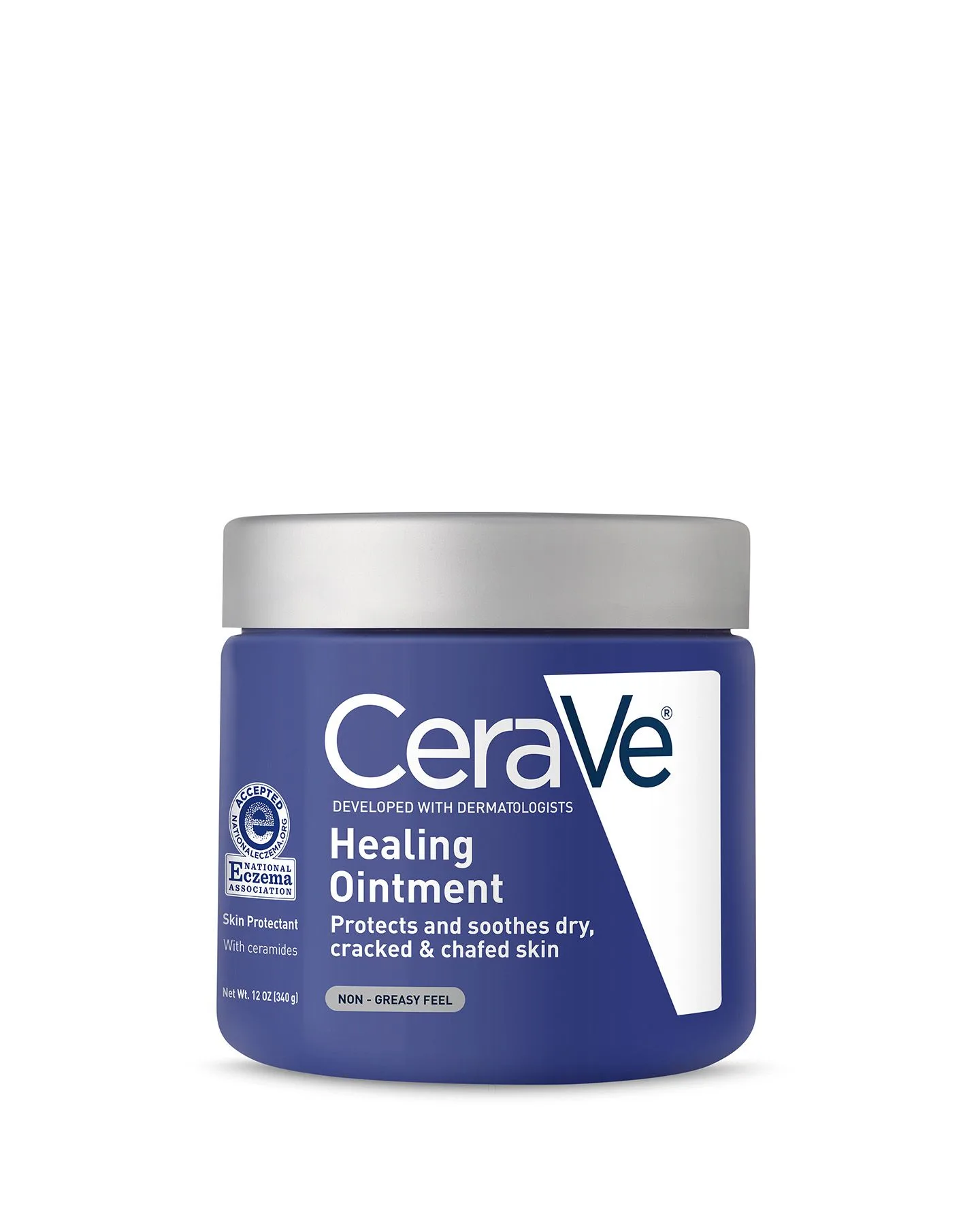
For cracked hands and heels: a thick healing ointment

- [ HEALING OINTMENT & SKIN PROTECTANT ] Offers cracked skin treatment and anti chafe benefits. It's a non-comedogenic healing balm...
- [ HYDRATING INGREDIENTS ] Formulated with Petrolatum and Hyaluronic Acid, this healing ointment retains natural moisture...
- [ 3 ESSENTIAL CERAMIDES ] With Ceramides 1, 3, 6-II, this cracked heel treatment and skin repair formula helps maintain the skin's...
04. Add a humidifier
A humidifier in the bedroom keeps the air from pulling water out of your skin all night. Run it while you sleep and clean it regularly. The same dry indoor air is behind static hair in winter, so the humidifier earns its place twice.
05. Change the cleanser, not the moisturizer
If skin still feels tight after washing, the cleanser is usually the culprit. A fragrance-free, non-foaming wash, or a leave-on emollient used as a soap substitute, removes less lipid. Change one thing at a time so you can tell what helped.
06. Protect hands and cover up
Hands are usually the first place dryness shows, because they are washed and wet all day. Wear gloves for dishes and cleaning, keep a hand cream by the sink, and choose loose cotton next to the skin — the AAD warns that wool and polyester against dry skin cause irritation. If you wear gel polish, remove it gently: dry nails chip more easily, and harsh removal makes the damage worse.
07. Keep wearing sunscreen
Winter sun still reaches skin, and snow reflects it. The AAD recommends a broad-spectrum, water-resistant sunscreen of SPF 30 or higher, reapplied every two hours outdoors. A moisturizer with SPF is a reasonable two-in-one for a short commute, but it is not a substitute for sunscreen on a day outside.
What does not help
01. Scrubbing the flakes off
A scrub or a rough cloth takes off the flakes and some of the barrier with them. The AAD’s guidance is a soft cloth and gentle products, not a buff puff or a bath brush.
02. Aqueous cream as a leave-on moisturizer
The NHS no longer recommends aqueous cream as an emollient, because it contains sodium lauryl sulphate, which can cause burning, stinging, itching and redness. Some people still use it as a soap substitute, which is a different job.
03. Choosing “unscented” over “fragrance-free”
Unscented products can contain chemicals that mask the smell of other ingredients, and those can irritate dry skin. Look for “fragrance-free” on the label instead.
04. Layering more products
When skin stings, the instinct is to add a serum, then an essence, then a mask. A dry, cracked barrier does better with fewer products: a gentle wash, one moisturizer, and time. The AAD’s list of things to stop includes fragrance, alcohol and retinoids until skin recovers.
When to see a doctor
Dry skin usually responds to the routine above. See a doctor or a dermatologist if:
- the skin cracks and bleeds, or itches enough to disturb sleep
- a rash spreads, or the skin oozes, crusts or feels warm, which can signal an infection
- dryness is severe, sudden, or limited to one patch
- it does not improve with consistent moisturizing
- it started with a new medicine
The AAD recommends seeing a dermatologist for excessively dry skin, and the NHS advises talking to a GP if a skin condition is severe.
Frequently asked questions
Why is my skin drier in winter than in summer?
Cold air holds less water, and heating dries the air indoors, so more water leaves your skin than in summer. The fix is the same in both seasons — a cream or ointment on damp skin — but winter usually needs a thicker form and a humidifier.
Is lotion or ointment better for dry skin in winter?
Ointment, for very dry or cracked skin, especially at night. Creams are the practical daytime choice because they absorb faster. Lotions are the weakest of the three and are best for hairy areas or quick top-ups.
Can I still exfoliate in winter?
Only if skin is not stinging, flaking or red, and then less often. Stop retinoids while the barrier is compromised — the AAD lists them among the products to drop when skin is dry — and go easy on acids.
Do humidifiers really help dry skin?
They help the air, which helps your skin. The AAD recommends one in winter, ideally in the bedroom overnight and cleaned regularly. A humidifier is not a substitute for a moisturizer.
Is dry skin in winter a sign of eczema?
Not on its own. Winter dryness is usually seasonal and improves with moisturizer. Eczema, psoriasis and ichthyosis cause persistent dryness, often with redness, itching or scaling, and need treatment; the NHS lists emollients as the base of that treatment.
Sources
- American Academy of Dermatology. Dermatologists’ top tips for relieving dry skin.
- American Academy of Dermatology. Dry skin: Overview.
- American Academy of Dermatology. Cold weather and your skin.
- American Academy of Dermatology. How to care for your skin in your 60s and 70s.
- NHS. Emollients.
- StatPearls Publishing. Xeroderma. NCBI Bookshelf.
More from the Beauty section: Beauty. If you are getting ready for a party, our holiday party makeup looks cover how to prep dry skin before base makeup.