

The roast is carved, the plates are cleared, and a container of turkey is waiting in the fridge. This guide is about leftover turkey that has already been cooked, cooled, and stored — not the 20-minute rest after roasting, which is a different step (see how to carve a turkey).
The short answer: refrigerate leftovers within 2 hours (1 hour if the air is over 90°F), cut the turkey into smaller pieces in shallow containers, and use it within 3 to 4 days, or freeze it. When you reheat leftover turkey, USDA FSIS and FoodSafety.gov say leftovers must reach 165°F as measured with a food thermometer; bring gravies, soups, and sauces to a rolling boil. For the oven, the USDA Meat and Poultry Hotline, as reported by University of Nebraska–Lincoln Extension, says to set the oven no lower than 325°F, add a little broth or water, and cover so the meat stays moist, then check 165°F. No official leftover-turkey air-fryer time was found; use the 165°F endpoint, do not overfill the basket, and follow the appliance manufacturer. The methods below come from USDA and extension sources, not from kitchen tests on this site.
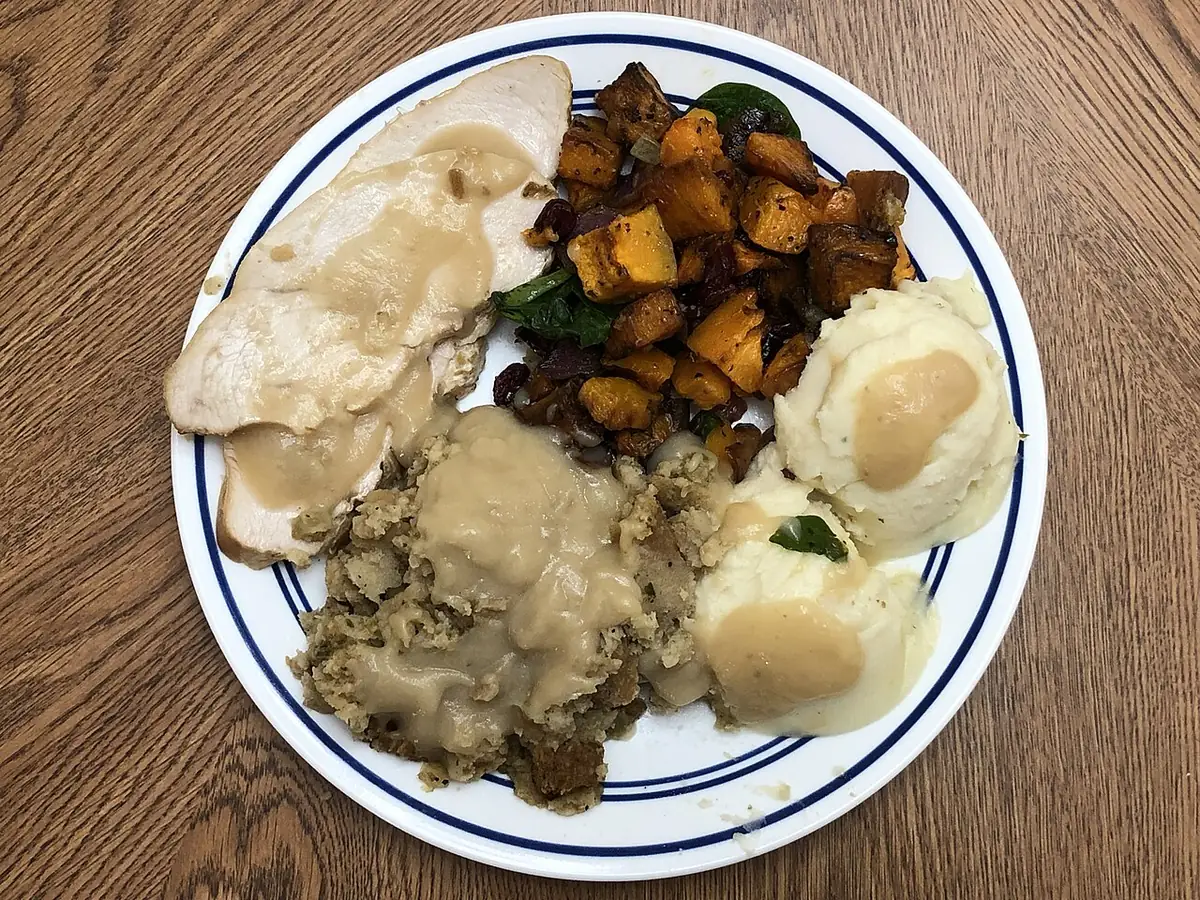
A Quick Leftover Turkey Checklist
| Step | What to do |
|---|---|
| Get it cold | Refrigerate within 2 hours, or 1 hour if the air is over 90°F (USDA FSIS) |
| Pack it | Cut into smaller pieces; slice the breast; legs and wings may stay whole; use shallow containers (USDA FSIS) |
| How long | Cooked turkey, cooked dishes, and gravy: 3 to 4 days in the fridge at 40°F or below (USDA FSIS) |
| Reheat turkey | 165°F in the thickest piece, checked with a food thermometer (USDA FSIS; FoodSafety.gov leftovers row) |
| Gravy or soup | Bring sauces, soups, and gravies to a rolling boil (USDA FSIS) |
| Stuffing or a casserole | 165°F in the center (USDA FSIS stuffing page; FoodSafety.gov casserole row) |
A food thermometer is the only reliable way to know leftover turkey is hot enough. Color or steam alone is not enough. Those temperatures and times come from USDA FSIS leftovers guidance (last updated July 31, 2020) and from Turkey Basics: Handling Cooked Dinners (last updated September 25, 2024), plus the FoodSafety.gov temperature chart (last reviewed November 21, 2024).
How to Store Leftover Turkey (and How Long It Keeps)
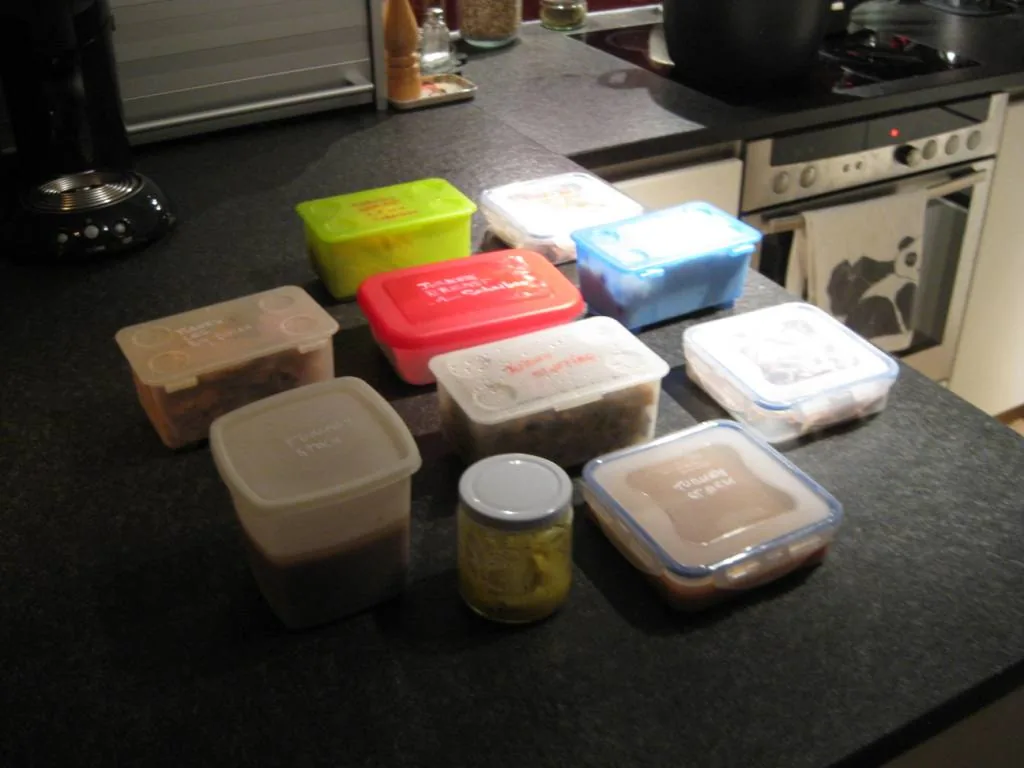
USDA FSIS says bacteria grow rapidly between 40°F and 140°F. After the meal, leftovers must be refrigerated within 2 hours of cooking, or after the food is taken off a warmer — and within 1 hour if the air is over 90°F, such as at an outdoor picnic. Throw away perishable food that has been left out longer than that.
Cool leftovers quickly. Divide large amounts into shallow containers so they reach 40°F or below as soon as possible. For turkey, FSIS is specific: “Cut turkey into smaller pieces and refrigerate. Slice breast meat; legs and wings may be left whole.” Store stuffing and gravy apart from the meat, also in shallow containers, as the cooked-dinners page describes for potatoes, gravy, and vegetables. Cover or wrap leftovers so they stay moist and do not pick up other odors in the fridge.
In the refrigerator at 40°F or below, the FSIS cooked-dinners storage table gives these rows in full: cooked turkey, 3 to 4 days; cooked dishes and gravy, 3 to 4 days. You can freeze leftover turkey and trimmings. FSIS says freezer times are for quality only — food kept frozen at 0°F or below remains safe indefinitely — and lists turkey, plain, slices or pieces, 4 months; turkey covered with broth or gravy, 6 months; cooked poultry dishes, stuffing, and gravy, 4 to 6 months. The FoodSafety.gov cold storage chart (last reviewed September 19, 2023) has a general leftovers row for cooked meat or poultry of 3 to 4 days in the refrigerator and 2 to 6 months in the freezer. This article uses the turkey-specific FSIS rows above for leftover turkey and does not combine those freezer ranges into one number.
Cooked turkey may be eaten cold, straight from the refrigerator, as the USDA Meat and Poultry Hotline advises through UNL Extension. If you freeze leftovers, you can thaw them in the refrigerator, in cold water, or in the microwave. FSIS says it is also safe to reheat frozen leftovers without thawing first; they will just take longer to heat through. After a refrigerator thaw, use the food within 3 to 4 days, or you may refreeze it.
The Reheating Rule: 165°F, Checked with a Thermometer
FoodSafety.gov lists leftovers of any type at 165°F, and meat or meatless casseroles at 165°F. USDA FSIS says the same leftover endpoint: “When reheating leftovers, be sure they reach 165° F as measured with a food thermometer.” Check the thickest piece and avoid bone. The cooked-dinners page also says to reheat thoroughly to 165°F “or until hot and steaming.” Appearance is not a substitute for a thermometer.
Gravy is a different row. FSIS says to “reheat sauces, soups and gravies by bringing them to a rolling boil,” and the cooked-dinners page repeats: “Bring gravy to a rolling boil.” If you are reheating leftover turkey gravy, use that boil, not a guess from the surface.
A thermometer is the tool this step actually depends on. If you keep one in the kitchen, an instant-read model is the usual match for checking leftovers in several spots.

- 【8X Faster + 4X More Precise】: Upgraded with an industrial-leading professional thermocouple sensor, Themomonster meat...
- 【Temperature Lock & Long Probe】: With a 4 inch long probe and the temperature lock, you can easily measure and read the...
- 【Auto Flip Large LCD Display】: Features an innovative auto flip large LCD screen with exceptional brightness, this food...
How to Reheat Leftover Turkey in the Oven (Without Drying It Out)
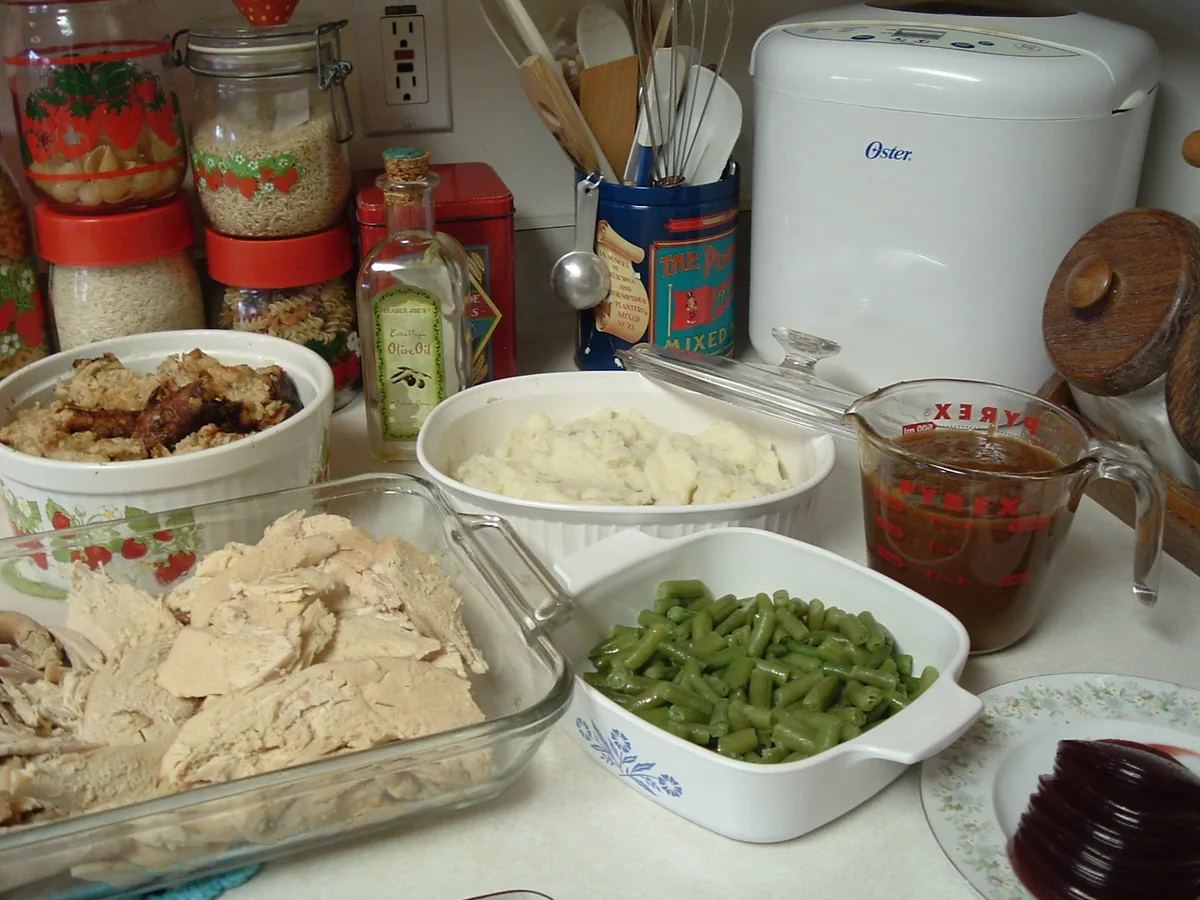
This is the method most searchers are looking for, and it is also the one official sources describe in the most detail. UNL Extension presents these as USDA Meat and Poultry Hotline recommendations for reheating cooked turkey:
- Set the oven temperature no lower than 325°F.
- To keep the turkey moist, add a little broth or water and cover.
- Reheat the turkey to an internal temperature of 165°F, checked with a food thermometer.
Nebraska Extension in Buffalo County gives the same oven temperature, moisture step, and 165°F endpoint. A 2013 USDA FSIS blog post on delayed Thanksgiving guests says to “sprinkle with a little broth, cover with foil and heat in a 325 °F oven,” and to reheat the food to 165°F “or until hot and steaming.” Illinois Extension also lists a leftover-safe oven as “no lower than 325°F,” and says to preheat the oven, use an oven-safe pan or dish, and cover with foil so the food does not dry out.
None of those official pages gives a number of minutes for leftover turkey in the oven. Time depends on how thick the pieces are, how full the dish is, and whether the meat started refrigerated or frozen. Use 165°F in the thickest piece as the stopping point, not a clock. Frozen leftovers may go into the oven without thawing, according to FSIS, but they will take longer.
Preheat the oven before the dish goes in; Illinois Extension says to preheat when reheating this way, and glass bakeware makers say the same. Pyrex’s current FAQ says to always fully preheat first, because glass can break if it is exposed to the heating element while the oven is still preheating. That FAQ currently has two answers about refrigerator- or freezer-to-oven use: a longer one says a refrigerated dish may go into a completely preheated conventional or convection oven, but a frozen dish should be thawed completely first; a shorter answer to a nearly identical question says to let the dish come to room temperature first. Anchor Hocking says to use its bakeware in a preheated oven (up to 425°F) and not to take a dish directly from the freezer to a preheated oven or microwave; thaw food first. Iowa State Extension also says to follow the manufacturer, preheat fully, and not move glassware directly from the freezer to the oven. If the leftover is frozen and in glass, thaw it first unless your dish’s own instructions clearly allow freezer-to-oven use. Do not put a plastic storage lid in a conventional oven.
A lidded glass baking dish is one way to cover leftover turkey in a 325°F oven; foil also works if that is what your sources and your bakeware allow. The box below is a keyword search, not a specific product we selected or tested.

- 9x13 INCH: Includes (1) 9x13x2.75 inch glass baking dish with BPA-free plastic lid. This deep baking dish is essential to have in...
- GO DEEPER: At up to 50% deeper than the Pyrex basics dishes you know and love, there’s more room to get creative. Deeper size...
- SNUG FIT LID: Perfectly fitting and BPA-free plastic lid is freezer, microwave, and top-rack dishwasher safe. No need to hold back...

How to Reheat Leftover Turkey in an Air Fryer
An air fryer can be used for leftover turkey, but there is no official USDA or FSIS time chart for leftover turkey in an air fryer. FSIS’s air-fryer food safety page (last updated June 24, 2024) says air fryers can be used for “baking, roasting and reheating food,” that poultry should reach 165°F, and that you should not overfill the basket, because overcrowding can lead to uneven heating. For large amounts, it may be better to work in batches. The same page says cooking times vary by the size and power of the appliance, and that you should follow the manufacturer’s instructions whether the meat is raw or pre-cooked. “The safe internal temperature is always the same.”
FSIS also notes, as a general description of how air fryers typically cook, that foods often take 5 to 25 minutes at 350°F to 400°F. That is not a leftover-turkey time or temperature, and it is not used here as one. Check the thickest piece and stop at 165°F. The official moisture step described above — a little broth or water and a cover — belongs to the oven and microwave methods. Do not leave cooked food sitting in the air fryer; the 2-hour refrigeration rule still applies.
How to Reheat Leftover Turkey in the Microwave
USDA FSIS says to cover leftovers when you reheat them, which retains moisture and helps the food heat all the way through. In the microwave, cover and rotate the food for even heating. Arrange the turkey evenly in a covered microwave-safe glass or ceramic dish, and add some liquid if needed. The covering should be microwave safe, and the lid or wrap should be vented so steam can escape. Because microwaves have cold spots, check the temperature in several places and allow a standing time before you take the reading. The cooked-dinners page adds: follow the microwave manufacturer’s instructions.
UNL Extension, again citing USDA, gives the same outline for leftover turkey: use a microwave-safe container, add a little broth or water and cover, rotate for even heating, consult the owner’s manual for times and power levels, allow standing time, and confirm 165°F. No wattage or minute chart is given in those sources, so none is invented here.
Slices, Breast, and Dark Meat
Official leftover guidance is organized around piece size, not a separate untested timetable for every cut. FSIS says to cut leftover turkey into smaller pieces before you store it or reheat a whole bird, to slice the breast meat, and that legs and wings may be left whole. Smaller, even pieces will generally heat more evenly; a whole drumstick or a thick stack of slices will take longer to reach 165°F in the center. Check the thickest part of whatever you are reheating, and keep pieces from stacking into a cold center in the microwave. There is no official leftover-turkey minute chart that splits breast, slices, and legs, so this article does not invent one.
Stuffing, Casseroles, and Gravy
Use the correct row for each leftover, not a single temperature for the whole plate. FSIS stuffing guidance says leftover cooked stuffing should be cooled in shallow containers, refrigerated within 2 hours, used within 3 to 4 days, and reheated to 165°F, “just as for all leftovers.” Do not stuff a whole bird with leftover cooked stuffing. FoodSafety.gov lists casseroles, meat or meatless, at 165°F. Gravies, soups, and sauces go to a rolling boil, as FSIS states.
If you are reheating a refrigerated stuffing or leftover casserole in glass or ceramic, preheat the oven and follow the bakeware notes in the oven section above. The FSIS 20-minute stand after roasting a stuffed bird is for removing stuffing from a freshly cooked turkey, not for reheating leftovers.
What Not to Do
- Do not leave leftovers out past the 2-hour rule (1 hour if it is over 90°F). FSIS says to throw away perishable food that has been left out longer than that.
- Do not reheat a whole unsliced leftover turkey. The FSIS cooked-dinners page says, “Reheating a Whole Turkey is NOT Recommended.” Cut the meat into smaller pieces first; slice the breast, and legs and wings may be left whole. (Cooked turkeys that carry a USDA inspection seal should follow their package directions.)
- Do not use a slow cooker or a chafing dish to reheat leftovers. Illinois Extension lists those as not safe for reheating, while a preheated slow cooker may be used only to keep already-hot food hot. Never start leftovers in a cold slow cooker.
- Do not guess doneness from color. Check 165°F with a thermometer, and bring gravy to a rolling boil.
UNL Extension also advises, “For best safety and quality, avoid reheating and cooling turkey multiple times.” That is quality-and-safety advice from that page. Separately, FSIS says it is safe to refreeze food that remains after previously frozen leftovers have been reheated to 165°F, and that you may thaw a large frozen container in the refrigerator, take what you need, and refreeze the rest without reheating it. Reheat only what you plan to serve when you can.
After You Reheat It
Serve reheated turkey promptly. The same 2-hour rule applies to food sitting out after the second meal. If you have leftover leftovers from a previously frozen batch, FSIS says they may be refrozen after they have been reheated to 165°F. Plan to finish refrigerated cooked turkey within the 3-to-4-day window that started when the turkey was first cooked and stored, or freeze it sooner.
Leftover Turkey Reheating FAQ
How long does leftover turkey take in the oven, and at what temperature?
Official USDA and extension pages used here do not give a leftover-turkey oven time. Set the oven no lower than 325°F (USDA guidance as reported by UNL Extension; USDA FSIS blog; Illinois Extension), add a little broth or water, cover, and heat until the thickest piece reaches 165°F.
How do I keep leftover turkey from drying out?
Cover it, and add a little broth or water — or, in the USDA blog’s wording, sprinkle with broth and cover with foil. FSIS says covering leftovers “retains moisture and ensures that food will heat all the way through.” The endpoint is still 165°F.
Can I reheat leftover turkey in an air fryer?
FSIS says air fryers can be used for reheating and that poultry should reach 165°F, but it does not give leftover-turkey minutes. Do not overfill the basket, follow the manufacturer, and check the thickest piece.
Can leftover turkey be eaten cold, or reheated from frozen?
Yes to both, with the usual storage rules. The USDA Meat and Poultry Hotline, as reported by UNL Extension, says cooked turkey may be eaten cold or reheated. FSIS says frozen leftovers may be reheated without thawing first, though they take longer; confirm 165°F, and follow glass-bakeware thawing guidance if the dish itself was frozen.
How long does leftover turkey last?
FSIS cooked-dinners rows: cooked turkey, 3 to 4 days in the refrigerator; cooked dishes and gravy, 3 to 4 days. For freezer quality, plain slices or pieces, 4 months; turkey covered with broth or gravy, 6 months; cooked poultry dishes, stuffing, and gravy, 4 to 6 months. Food kept at 0°F or below remains safe indefinitely.
From Leftover Meat to Another Meal
Once the leftover turkey is safely hot — or served cold from the refrigerator — you can turn the rest of the meat into another meal. For ideas, see easy leftover turkey recipes. If you still need gravy, how to make turkey gravy is the earlier pan-juice step. For the roast itself, how to brine a turkey, how to thaw a turkey, how long to cook a turkey, and how to carve a turkey are the steps that come before leftovers ever reach the fridge.