

Every November, the same small panic shows up a few days before Thanksgiving: the turkey is still a rock-solid block in the freezer, and dinner is on Thursday. A frozen turkey takes much longer to thaw than most of us expect, and the safe ways to do it are not the ones that feel fastest.
The short answer: the safest way to thaw a turkey is in the refrigerator, allowing about 24 hours for every 4 to 5 pounds, so a 16-pound bird needs about 4 days. If you’re short on time, thaw it in cold water: keep it wrapped, submerge it in cold tap water, change the water every 30 minutes, and allow about 30 minutes per pound. Never thaw a turkey on the counter. These timings come from the USDA Food Safety and Inspection Service (FSIS).
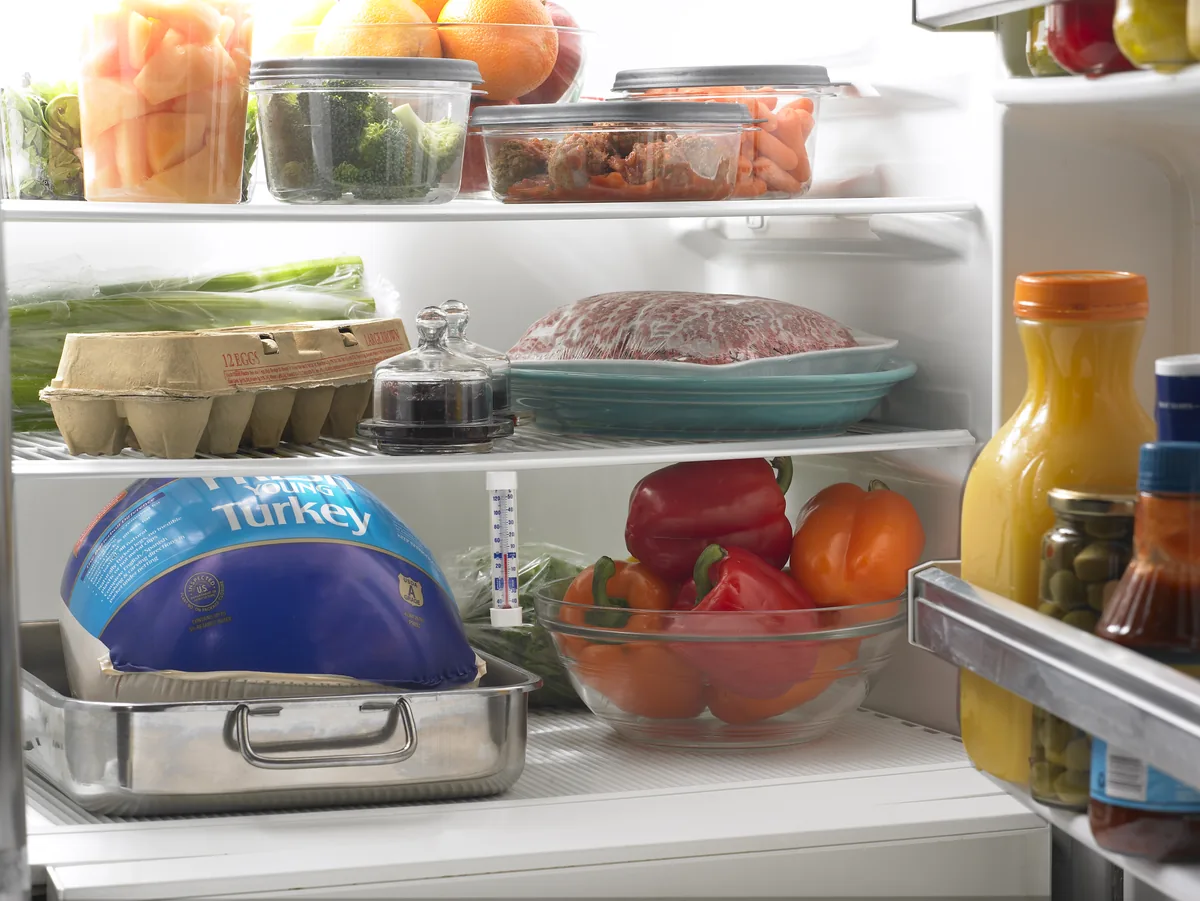
Turkey Thawing Times at a Glance
Here is USDA’s thawing chart for a whole turkey. Times are approximate, so check the bird before you plan to cook it.
In the refrigerator (40°F or below)
| Turkey weight | Thawing time |
|---|---|
| 4 to 12 pounds | 1 to 3 days |
| 12 to 16 pounds | 3 to 4 days |
| 16 to 20 pounds | 4 to 5 days |
| 20 to 24 pounds | 5 to 6 days |
In cold water (changed every 30 minutes)
| Turkey weight | Thawing time |
|---|---|
| 4 to 12 pounds | 2 to 6 hours |
| 12 to 16 pounds | 6 to 8 hours |
| 16 to 20 pounds | 8 to 10 hours |
| 20 to 24 pounds | 10 to 12 hours |
Source: USDA FSIS, Turkey Basics: Safe Thawing. Rule of thumb: about 24 hours per 4 to 5 pounds in the fridge, or about 30 minutes per pound in cold water.
When to move it to the fridge for a Thursday Thanksgiving
Count back from the longer end of the range, so the turkey is fully thawed with a little cushion. A turkey thawed in the fridge can stay there for 1 to 2 days before cooking, according to USDA.
- 4 to 12 pounds: Monday
- 12 to 16 pounds: Sunday
- 16 to 20 pounds: Saturday
- 20 to 24 pounds: Friday, the week before
If your fridge runs crowded the week of Thanksgiving, clear the bottom shelf before the turkey comes out of the freezer. A big bird in a pan takes up more space than you’d think.
Method 1: Thaw the Turkey in the Refrigerator (Safest)
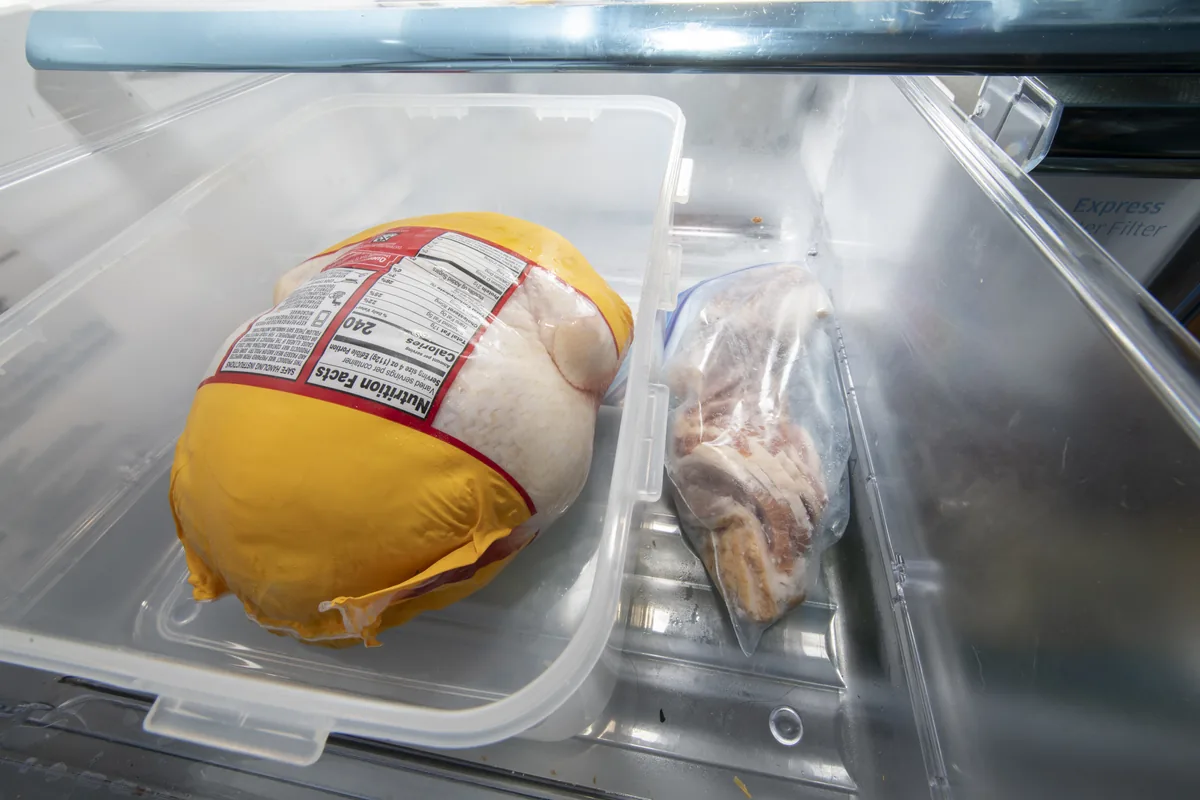
Fridge thawing takes the longest, but it is the method USDA calls the safest, because the bird stays at 40°F or below the whole time. It also gives you the most flexibility once it’s thawed.
- Check your fridge temperature. It should be 40°F or below. An inexpensive appliance thermometer takes the guesswork out of it.
- Leave the turkey in its original wrapper and set it in a roasting pan, rimmed sheet pan, or large tray to catch any juices that leak.
- Put it on the bottom shelf. Keeping raw poultry below ready-to-eat food means any drips can’t land on it.
- Give it time: about 24 hours for every 4 to 5 pounds.
- Check that it’s thawed. When it’s ready, the giblets and neck can be pulled out of the cavities. Remove them and cook them separately or set them aside for gravy.
Good to know: once it’s thawed in the fridge, the turkey can wait 1 to 2 more days before cooking. A turkey thawed in the refrigerator can also be refrozen without cooking, although USDA notes there may be some loss of quality.

- 【8X Faster + 4X More Precise】: Upgraded with an industrial-leading professional thermocouple sensor, Themomonster meat...
- 【Temperature Lock & Long Probe】: With a 4 inch long probe and the temperature lock, you can easily measure and read the...
- 【Auto Flip Large LCD Display】: Features an innovative auto flip large LCD screen with exceptional brightness, this food...
Method 2: Thaw the Turkey in Cold Water (Faster)
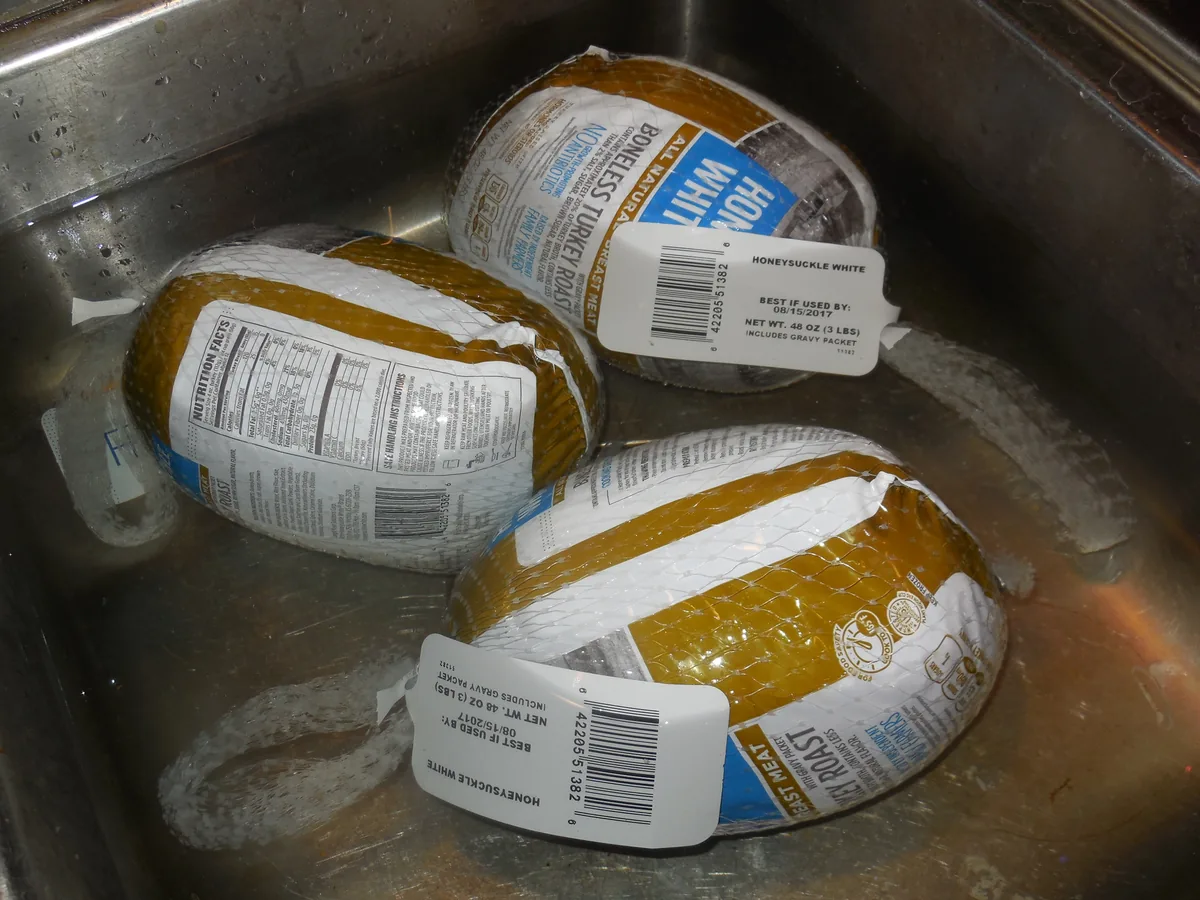
Cold water thaws a turkey much faster than the fridge, because water moves heat into the frozen bird more efficiently than air does. The trade-off is attention: you’ll be changing the water every half hour, so this works best on a day you’re home.
- Make sure the wrapping is leakproof. If the original wrapper is torn, seal the turkey in a large leakproof bag. This keeps water out of the meat and raw juices out of the sink.
- Submerge the wrapped turkey in cold tap water in a clean sink or a large container. Not warm, not hot: cold.
- Change the water every 30 minutes so it stays cold.
- Allow about 30 minutes per pound, so roughly 8 hours for a 16-pound turkey.
- Cook it right away once it’s thawed. Don’t put a cold-water-thawed turkey back in the fridge to cook later, and don’t refreeze it raw.
When you’re done, wash the sink and anything the wrapper touched with hot, soapy water. USDA also suggests sanitizing surfaces that touched raw turkey; its Safe Thanksgiving Guide gives a solution of 1 tablespoon unscented liquid chlorine bleach per 1 gallon of water.
Method 3: Thaw a Small Turkey or Breast in the Microwave
Microwave thawing is safe, but a whole turkey rarely fits. It’s more practical for a turkey breast or a small bird. USDA says to check your microwave manual for the size that fits and the minutes per pound and power level, remove all the outside wrapping, and set the turkey on a microwave-safe dish.
Cook it immediately afterward. Some areas can start to warm or even cook during microwave thawing, so a microwave-thawed turkey should not be refrigerated or refrozen raw.
Ways Not to Thaw a Turkey
USDA lists only three safe methods: the refrigerator, cold water, and the microwave. Anything else leaves part of the turkey sitting in the “Danger Zone” between 40°F and 140°F, where bacteria multiply quickly. Even when the center is still frozen, the outer layer can be warm enough for bacteria to grow.
- On the kitchen counter. USDA says a package of frozen meat or poultry left thawing on the counter for more than 2 hours is not at a safe temperature.
- In hot or warm water. USDA specifically lists hot water as unsafe for thawing a turkey.
- In the garage, car trunk, basement, or on the back porch. USDA warns against leaving a frozen turkey anywhere the temperature can’t be constantly monitored. A cooler isn’t one of USDA’s three methods either, so if you’re out of fridge space, the cold-water method is the sanctioned backup.
It’s Thanksgiving Morning and the Turkey Is Still Frozen
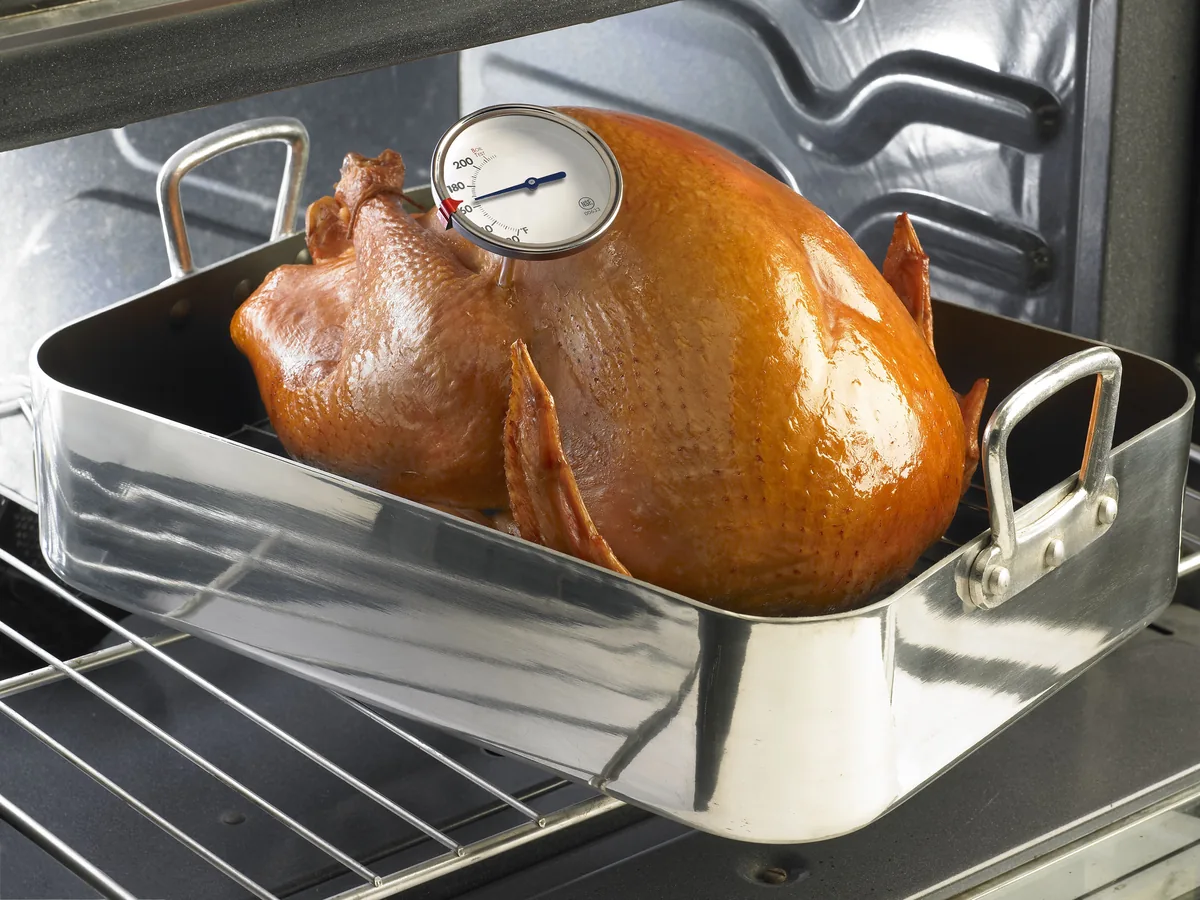
Take a breath: you can still cook it. According to USDA, it is safe to cook a turkey straight from frozen. It just takes longer.
- Plan for at least 50 percent more time for a solidly frozen turkey than for a thawed one. A partially frozen bird needs less extra time than that.
- Roast at 325°F or higher. USDA’s roasting guide recommends an oven temperature no lower than 325°F.
- Pull out the giblets partway through. Once the turkey has thawed enough, remove the giblet package and neck carefully with tongs or a fork.
- Check the temperature in three places. The turkey is safe when it reaches 165°F in the innermost part of the thigh, the innermost part of the wing, and the thickest part of the breast. Check with a food thermometer even if the bird has a pop-up indicator.
If it’s only partly thawed and you have a few hours, you can also finish the job with the cold-water method, then cook it right away.
What if the giblet bag cooked inside the bird?
It happens. Nebraska Extension explains that paper-wrapped giblets are not a safety concern if they cook completely inside the turkey. If the giblets were packed in a plastic bag and the bag melted or changed shape during cooking, don’t use the giblets or the turkey. If the plastic bag was unaltered, the giblets and turkey should be safe to use.

- SUPERIOR CONSTRUCTION: Crafted from aluminized steel, this nonstick roasting pan offers unmatched durability, exceptional heat...
- FAST AND EVEN HEATING: Heavy duty steel construction allows a home cook to roast tender, moist, and evenly cooked foods on all...
- LARGE ROASTING PAN: With an external angled handle, this turkey pan for oven provides more space than traditional designs with...

After the Turkey Thaws: Quick Safety Reminders
- Don’t rinse the raw turkey. Washing raw poultry can splash bacteria around the sink and onto nearby food, so USDA and the CDC both say it’s safest not to wash it. Cooking it to 165°F is what kills bacteria.
- Keep raw turkey away from everything else. Use a separate cutting board, and wash boards, knives, and counters with hot, soapy water after handling it.
- Cook stuffing to 165°F too. USDA recommends baking stuffing in a separate dish for more even cooking. If you do stuff the bird, the center of the stuffing must reach 165°F.
- Let it rest. USDA suggests letting the turkey stand for 20 minutes before carving so the juices set and it carves more easily.
Need ideas for everything around the bird? Browse these side dishes for turkey, a few more Thanksgiving side dish recipes, a pot of homemade cranberry sauce, and these stuffing recipes.
Leftovers: The 2-Hour Rule
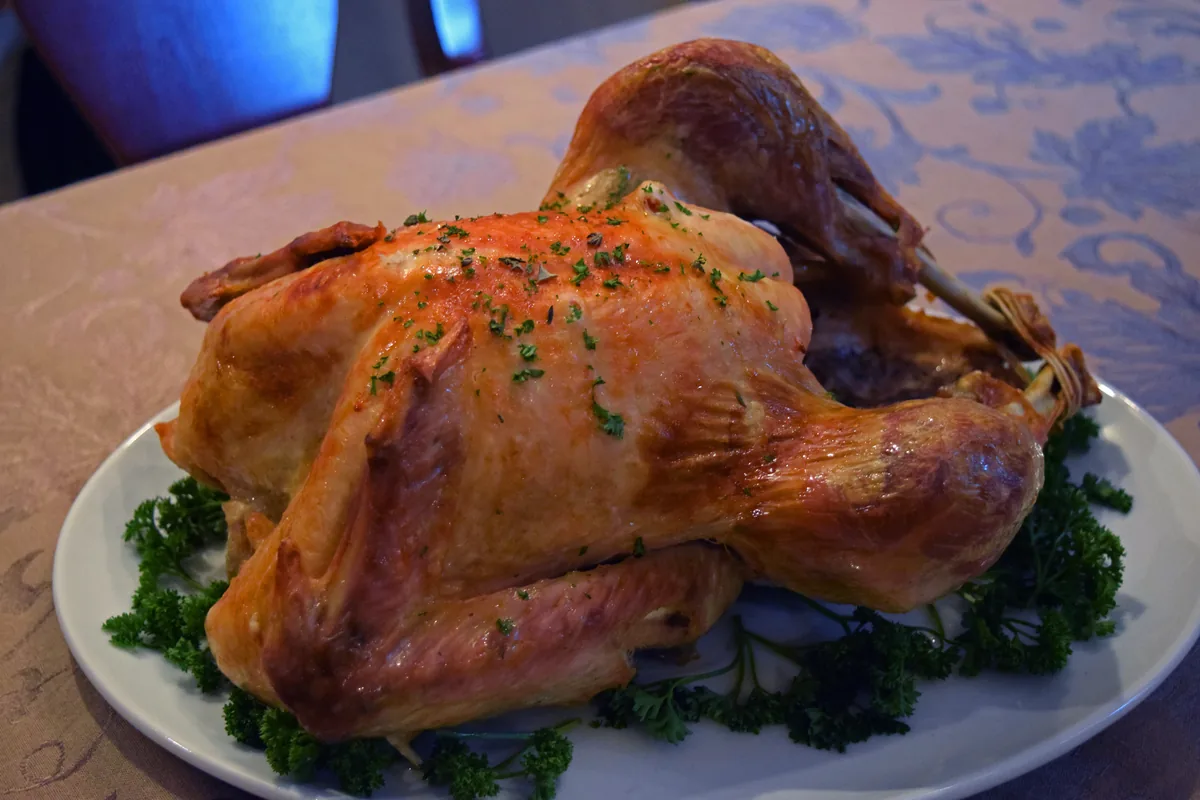
Once dinner is on the table, the clock starts again. USDA’s Thanksgiving guide says to refrigerate leftovers, including the turkey, within 2 hours of cooking (1 hour if the room is above 90°F).
- Carve before you store. Cut the meat off the bone and divide it into smaller portions in covered, shallow containers so it cools quickly.
- Use refrigerated leftovers within 3 to 4 days, or freeze them for later.
- Reheat leftovers to 165°F.
Then the fun part: turn the extras into something new with these leftover turkey recipes, and save room for one of these make-ahead Thanksgiving desserts.
Turkey Thawing FAQ
How long does it take to thaw a 20-pound turkey?
In the refrigerator, plan on 4 to 5 days for a 16- to 20-pound turkey, per USDA’s chart. In cold water, it’s about 30 minutes per pound, so roughly 10 hours, changing the water every 30 minutes.
Can I thaw a turkey in the fridge and then finish it in cold water?
Yes. If it’s still icy on cooking day, switching to the cold-water method is a safe way to finish. Just remember that once you use cold water, the turkey needs to be cooked right after it thaws.
Can you refreeze a thawed turkey?
It depends on how it was thawed. A turkey thawed in the refrigerator can be refrozen without cooking, though the quality may suffer. A turkey thawed in cold water or the microwave should be cooked before freezing. Cooked turkey meat can be frozen.
How long can a thawed turkey stay in the fridge?
A turkey that was thawed in the refrigerator can stay there for 1 to 2 days before you cook it.
How do I know the turkey is fully thawed?
A practical check: you should be able to reach into the cavity and pull out the neck and giblet package. If they’re still frozen in place or the cavity feels icy, give it more time, or finish with the cold-water method.
A little planning on the calendar is really all it takes. Pick your method, mark the day the turkey moves to the fridge, and Thursday gets a lot calmer.