

Few things make a room feel like the holidays faster than a real Christmas tree. The scent, the soft needles, the way the lights glow through the branches… and then, a couple of weeks later, the needles start raining onto the tree skirt. The good news is that most of that early drying is preventable.
The short answer: start with a fresh tree, give the trunk a fresh straight cut right before it goes into the stand, use a stand that holds about 1 quart of water for every inch of trunk diameter, and never let the water drop below the base of the trunk. Plain tap water is all it needs. Keep it at least 3 feet from heat sources, and a well-watered tree can stay fresh for weeks. University of Illinois Extension notes that many properly cared-for cut trees last at least five weeks.
Real Christmas Tree Care at a Glance
| Step | What to do |
|---|---|
| Pick a fresh tree | Needles should bend and stay put when you gently pull a branch through your hand |
| Get it home | Keep it out of sun and wind; if it waits, stand it in a bucket of water somewhere sheltered |
| Fresh cut | Saw a straight disk off the trunk right before it goes in the stand |
| Stand size | About 1 quart of water per inch of trunk diameter (a 4-inch trunk needs about 1 gallon) |
| Water | Plain tap water; check daily, twice a day for the first couple of days |
| Placement | At least 3 feet from fireplaces, heat vents, radiators, candles, and space heaters |
| Lights | Use cool-running LED or mini lights in good condition; turn them off at bedtime |
| When to take it down | When needles drop easily and branches feel brittle |
Sources: National Christmas Tree Association, University of Illinois Extension, UF/IFAS Extension, and the National Fire Protection Association (NFPA).
1. Start With a Fresh Tree
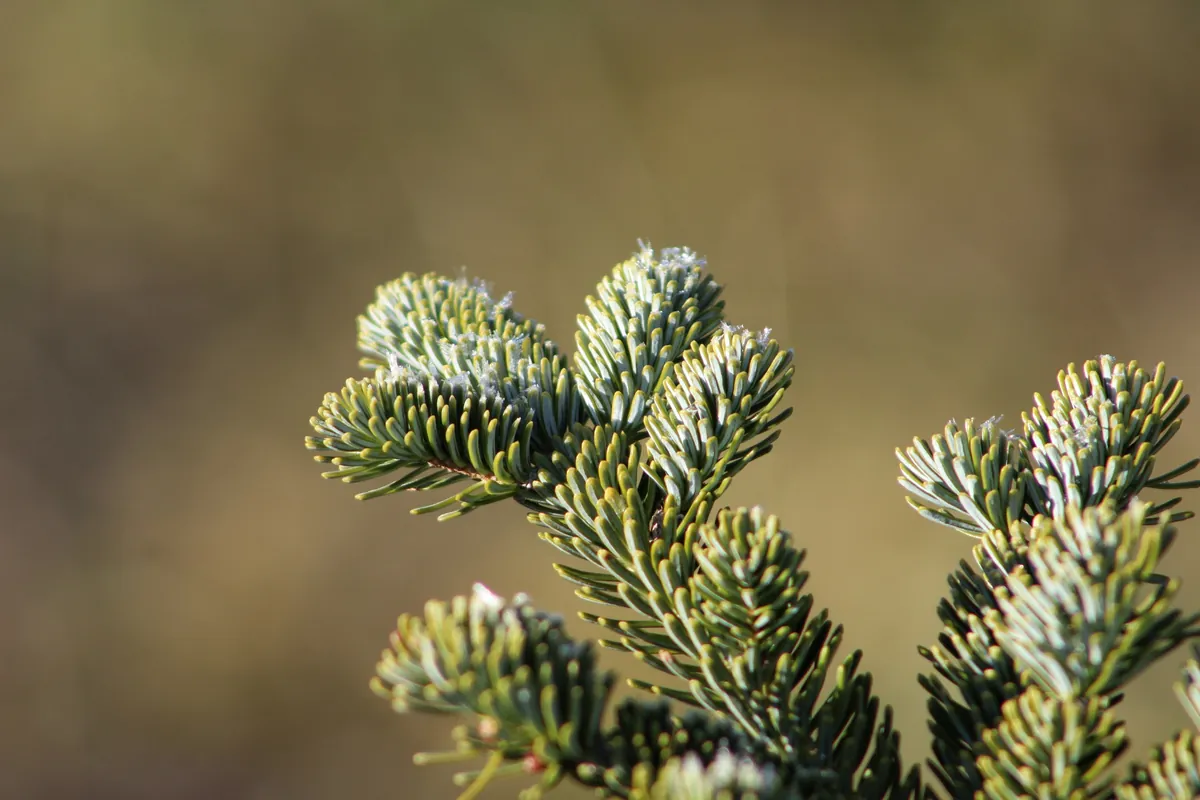
No amount of watering can bring back a tree that was already dry when you bought it, so the freshness check matters most. Purdue Extension describes a fresh tree as having branches that aren’t crumpled or drooping, tight needles, and good color. Gently pull a branch through your loosely closed hand: on a fresh tree, the needles stay on.
- Bend a needle. Penn State Extension suggests looking for flexible needles that stay firmly attached. Needles that pull out easily or look a dull, lifeless green suggest the tree is past its prime.
- Don’t panic about a few brown inner needles. All needled evergreens shed their oldest needles every year, so some brown needles falling from the inside of the tree is normal, according to Penn State. Just shake them out before the tree comes inside.
- Look at the ground. Mississippi State University Extension notes that lots of dropped needles at the base, or twigs that snap instead of bend, are signs of a dry tree.
Choose-and-cut or pre-cut?
Cutting your own tree at a farm gives you the freshest possible start. Pre-cut trees from a lot can be just as lovely; the trick is to check them carefully and get them into water quickly once you’re home.

Which Christmas Trees Hold Their Needles Best?
Every species can stay fresh with good watering, but some naturally hold their needles longer than others. Here’s how Iowa State University Extension rates several popular choices:
- Fraser fir: Needle retention excellent; aroma very good. Stiff branches; one of the most popular species.
- Balsam fir: Needle retention excellent; aroma excellent. Dense, dark needles.
- Concolor (white) fir: Needle retention excellent; aroma very good. Soft needles with a bluish color.
- Noble fir: Needle retention excellent; aroma very good. Known for its beauty; also used for wreaths and garlands.
- Scotch pine: Needle retention excellent; aroma good. Needles stay on even when dry.
- White pine: Needle retention excellent; aroma little. Long, soft needles; not for heavy ornaments.
- Douglas fir: Needle retention very good; aroma very good. Branches can bend under heavy ornaments.
A quick note on that Scotch pine detail: because its needles cling even when the tree is dry, needle drop alone won’t tell you when it’s thirsty. Keep up with the water no matter which tree you choose.
2. Get It Home Without Drying It Out
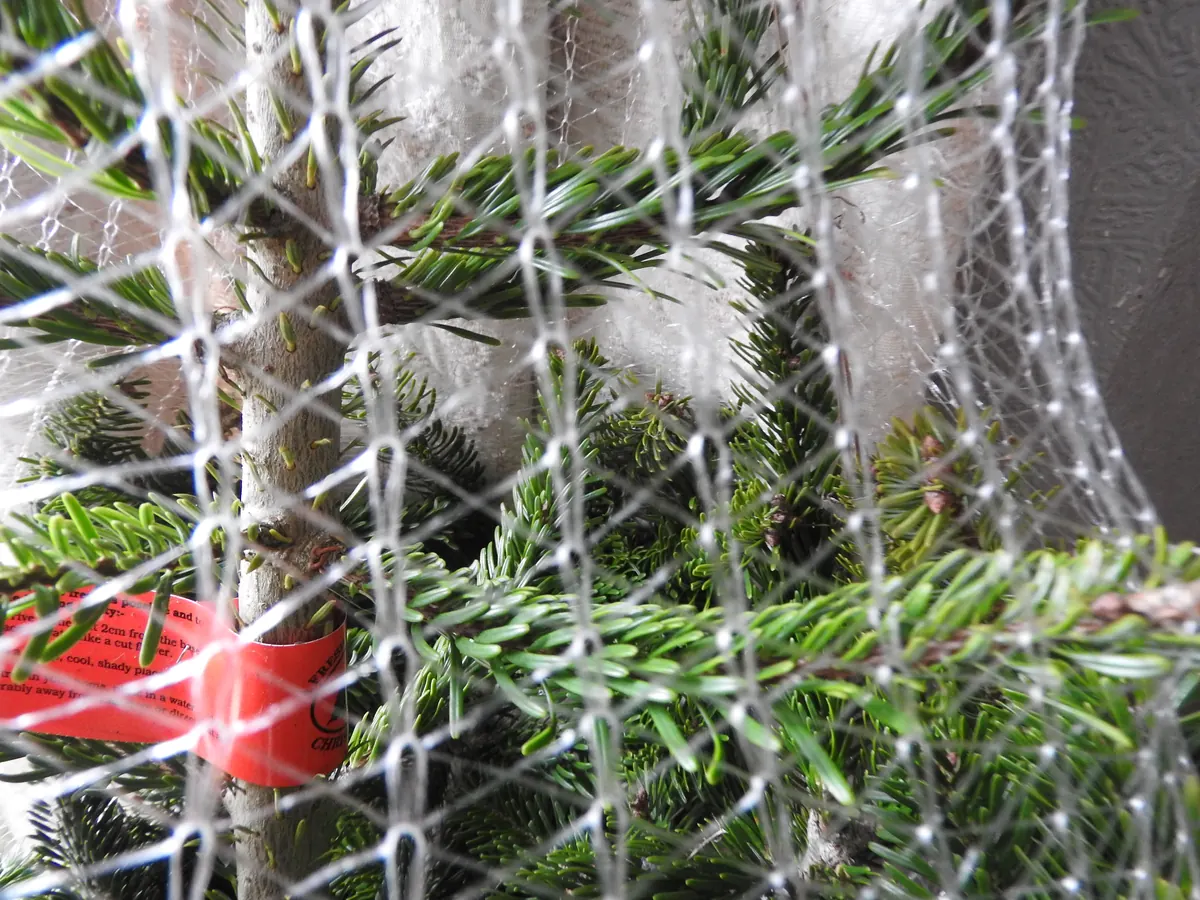
Sun and wind dry a cut tree quickly. Purdue Extension advises against tying a tree to the roof of your car for long drives, since the wind can dry it out, and warns that covering a tree with plastic can bake it if the sun comes out. For a longer trip, ask to have it bundled and carried inside a truck bed or SUV.
If you’re not ready to set it up right away, University of Illinois Extension suggests storing it in an unheated garage or another spot out of the wind and freezing temperatures, with a fresh cut on the trunk and the base standing in a bucket of water.
3. Make a Fresh Cut Right Before It Goes in the Stand
Once a tree is cut, sap seals the end of the trunk, and air gets into the wood. The National Christmas Tree Association says this happens within about 3 to 6 hours and reduces how well the tree can absorb water. A fresh cut reopens the wood so the tree can drink again.
- How much to cut: sources vary. The National Christmas Tree Association says half an inch is enough; University of Illinois and Mississippi State extension suggest about 1 inch; NFPA’s safety tips say 2 inches. Any of these removes the sealed end, so choose what suits your tree’s height and stand.
- Keep it straight. Skip V-shaped, angled, or tapered cuts. The National Christmas Tree Association explains that they reduce the surface that takes up water and make the tree less stable.
- Don’t whittle the trunk to fit. Trimming bark off the sides to squeeze into a stand is also discouraged. Choose a stand that fits instead.
- Get it into water fast. UF/IFAS Extension recommends placing the tree in water within 15 to 30 minutes of the fresh cut.
4. Use a Stand That Holds Enough Water
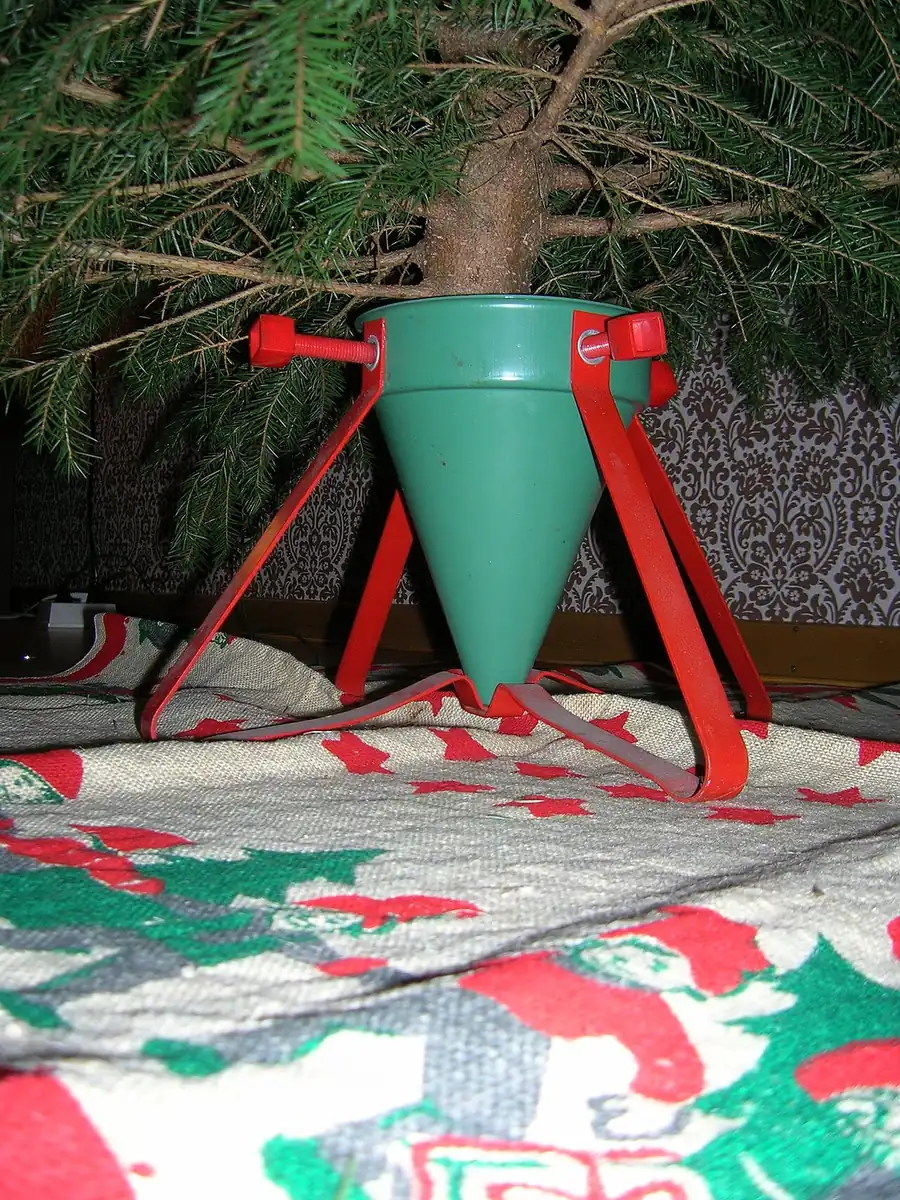
Water capacity is the most important thing to look for in a stand. The rule of thumb from the National Christmas Tree Association is 1 quart of water per inch of trunk diameter, so a tree with a 4-inch trunk needs a stand that holds at least 1 gallon of water with the tree in it. Skip tiny “coffee cup” stands, and make sure the stand fits the trunk; one that’s too big or too small can let the tree tip.
Purdue Extension adds that bigger trees need sturdier stands. If you have pets or a tall tree, consider anchoring it with a thin wire tied to a window frame or wall hook for extra stability.
5. Water Every Day With Plain Water
This is the step that makes the biggest difference. Penn State Extension calls keeping the tree’s moisture high the single most important factor in reducing needle loss, and that comes down to keeping the stand topped up.
- Expect a thirsty first week. Purdue Extension says a 7-foot tree may easily use 2 quarts of water a day for the first week, then slow down. UF/IFAS suggests checking twice a day for the first 48 hours.
- Never let the base dry out. If the water drops below the trunk, Illinois Extension notes that resin forms over the cut end, and the tree can no longer absorb water.
- Skip the additives. Sugar, aspirin, bleach, and commercial preservatives aren’t necessary. The National Christmas Tree Association says research shows plain tap water is best, and some additives can actually increase needle loss.
- Make it easy. Illinois Extension suggests tucking a funnel attached to 3 to 4 feet of vinyl tubing into the branches, running the tube down into the reservoir so you can water without crawling under the tree.
6. Place It Away From Heat and Light It Safely
Warm, dry air shortens a tree’s life and raises the fire risk. NFPA recommends keeping the tree at least 3 feet from any heat source, including fireplaces, radiators, candles, heat vents, and lights, and making sure it doesn’t block an exit. UF/IFAS adds that a cooler room, ideally around 60 to 72°F, helps slow drying.
- Choose cooler lights. Illinois Extension notes that miniature lights produce less heat and reduce drying, and UF/IFAS recommends LED lights, which stay cool.
- Check every strand. Use lights listed by a qualified testing laboratory, and replace any with worn or broken cords or loose bulb connections (NFPA).
- Turn them off. Switch off the tree lights before you leave home or go to bed. A plug-in timer makes this automatic.
- No lit candles on or near the tree. NFPA is clear on this one.

- 90% Energy Saving: Compared to traditional Christmas incandescent lights (typically consuming 40 watts), our mini LED lights...
- End-to-End Extendable: Each set of lights has male and female plugs, allowing you to connect up to 30 sets (Max 3000 bulbs). The...
- Clear Christmas StringLights: Measure 20 ft with 100 mini LED bulbs (2.4" bulb spacing, 18" lead wire, and 3" end connector). It...

- 【Daily Repeating Light Timer】: 48 ON/OFF setting options in 24 hours; each pins means 30 minutes interval; daily repeat your...
- 【Compact Design Plug Timer】:This product minimizes size while maintaining functionality and safety, with the output ports...
- 【Automate Your Home】: Set the time of day when you want to turn your device on and off, the timer will help you to control...
Keeping the tree watered is a safety step, too. The U.S. Fire Administration warns that a dry Christmas tree can burn very hot and very fast.
Real Christmas Trees and Pets
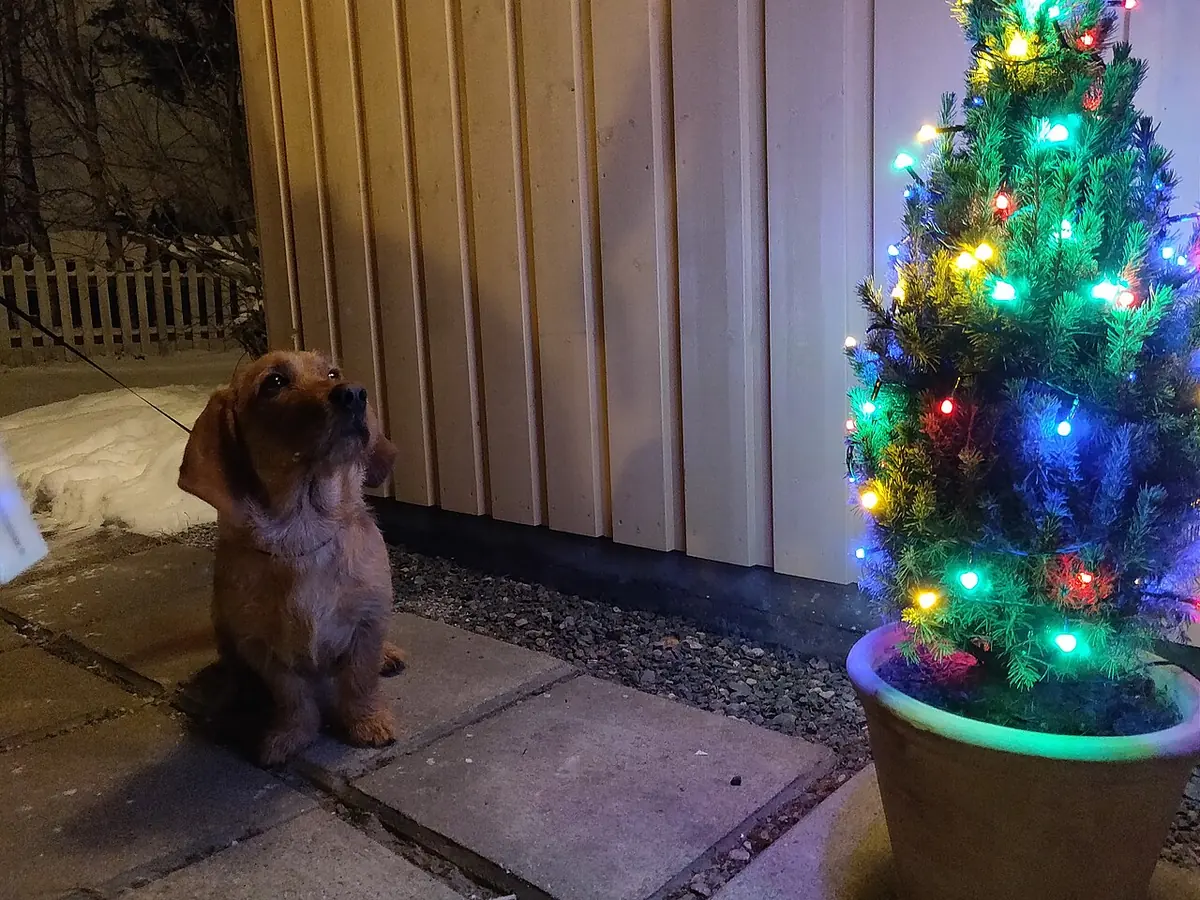
The ASPCA recommends securing the tree tightly so it can’t tip onto a curious pet, and keeping the tree water covered or out of reach. Tree water can harbor bacteria that may cause nausea, diarrhea, or stomach upset, according to the ASPCA. A tree skirt or towel tucked over the stand helps. The ASPCA also suggests skipping tinsel, which can cause serious digestive problems if swallowed, especially for cats. If you think your pet swallowed something harmful, call your veterinarian or the ASPCA Animal Poison Control Center at (888) 426-4435.
How Long Does a Real Christmas Tree Last?
With good care, a long time. University of Illinois Extension says many properly cared-for fresh-cut trees last at least five weeks before drying out. Watch for these signs that it’s time to take it down, from UF/IFAS Extension:
- Needles fall off in large amounts
- Branches feel brittle
- The tree stops drinking water for several days
NFPA advises getting rid of the tree after Christmas or as soon as it’s dry. Don’t store a dried-out tree in the house or garage or lean it against the outside of your home.
Recycling your tree
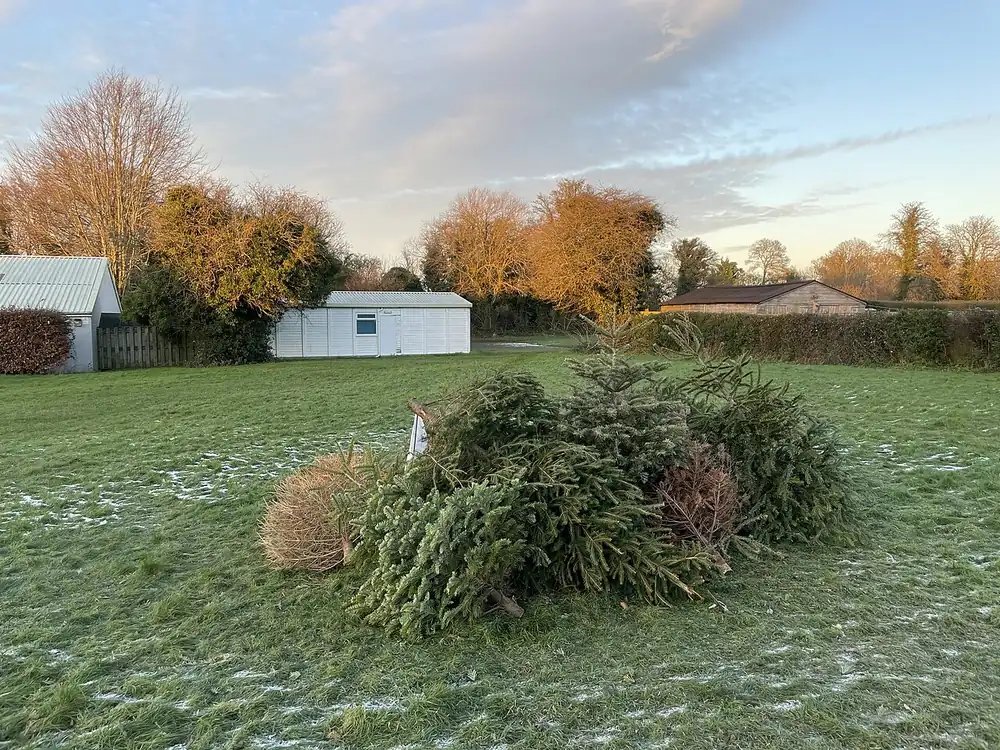
Many communities collect trees after the holidays and chip them into mulch, so check your local program. Illinois Extension also suggests setting the tree up in the backyard and adding bread and suet to the branches for the birds.
Christmas Tree Care FAQ
Should I add sugar, aspirin, or bleach to the water?
No. University of Illinois Extension, UF/IFAS Extension, and the National Christmas Tree Association all say plain water is enough, and the National Christmas Tree Association adds that some additives can actually make needle loss worse.
I forgot to make a fresh cut. Is my tree doomed?
Not at all. The National Christmas Tree Association says the tree will still take up water, just more slowly. It also notes that hot tap water in the stand increases water uptake in some trees. Keep the stand full and check the needles every few days.
Why did my tree stop drinking water?
Most often, the water level dropped below the trunk at some point and the cut end sealed over. A tree also drinks the most in its first week or two and less after that, according to Purdue Extension. If it has stopped taking water for several days and the needles are dropping, treat it as drying out.
How often should I water a Christmas tree?
Check it every day. NFPA recommends adding water daily, and UF/IFAS suggests checking twice a day for the first 48 hours, when the tree is thirstiest.
For more holiday greenery that lasts well past December, our guides to poinsettia care, growing amaryllis indoors, and Christmas cactus care pair beautifully with a fresh tree. A full stand, a cool spot, and a quick daily check are really all your tree asks of you.
Tree care and safety information in this guide comes from the National Christmas Tree Association, University of Illinois Extension, Purdue Extension, Penn State Extension, Iowa State University Extension and Outreach, UF/IFAS Extension Hillsborough County, Mississippi State University Extension, the NFPA, the U.S. Fire Administration, and the ASPCA.