

A Thanksgiving turkey can turn out dry if the timing or the oven gets away from you, and brining is one of the most common ways cooks try to keep the meat juicy and well seasoned. There are two main approaches: a wet brine, where the bird sits in salted water, and a dry brine, where salt is rubbed over the surface and the turkey rests in the refrigerator.
The short answer: for a wet brine, the USDA Food Safety and Inspection Service (FSIS) uses ¾ cup of table salt per 1 gallon of water (or 3 tablespoons of salt per quart). Submerge the turkey completely in a food-grade container and refrigerate it at least overnight. For a dry brine, USDA uses 1 tablespoon of kosher salt or seasoned salt for every 5 pounds, then refrigerates the turkey in a food-grade bag for up to 2 days. Do not brine a pre-basted or self-basted turkey, according to Illinois Extension. After brining, cook the turkey until it reaches 165°F in the innermost thigh, the innermost wing, and the thickest part of the breast.
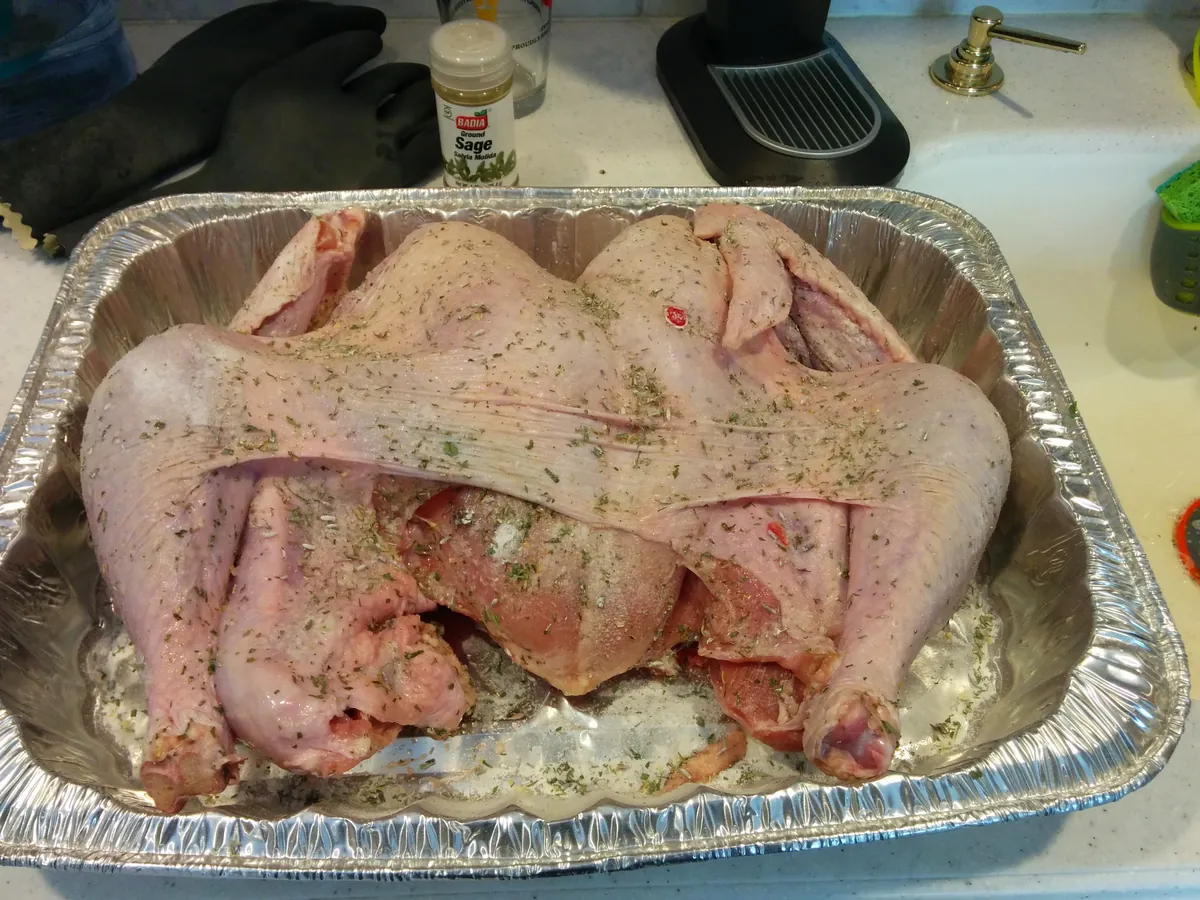
What You Should Not Brine
Before you mix any salt, check the label. Illinois Extension says not to brine a pre-basted or self-basted turkey. Those birds are already injected with broth, spices, seasoning, or flavor enhancers, and the solution may already contain salt. Brining one of them can make the meat too salty. If the turkey has taken up too much salt, Illinois Extension notes that the salt can draw moisture out of the flesh, which works against the reason most people brine in the first place.
Start with a fresh turkey, or a fully thawed turkey, that is not basted or self-basted. If the packaging mentions an added solution, self-basting, or a similar wording, skip the brine and season the bird more lightly instead. A frozen turkey should be thawed first; for safe thawing times and methods, see how to thaw a turkey.
One more safety note that applies whether you brine or not: USDA’s Safe Thanksgiving Guide says the safest approach is not to wash a raw turkey, because rinsing can splash bacteria around the sink. Cooking the turkey to 165°F is what makes it safe.
Brining Times and Safety at a Glance
These figures come from USDA FSIS and, for the pre-basted warning, from Illinois Extension. Keep the turkey refrigerated the whole time it is in the brine.
| Question | Guidance |
|---|---|
| Wet brine salt | ¾ cup table salt per 1 gallon of water, or 3 tablespoons of salt per quart (USDA FSIS) |
| Dry brine salt | 1 tablespoon kosher salt or seasoned salt per 5 pounds (USDA FSIS) |
| How long | Wet: at least overnight for best results. Dry: up to 2 days, massaging every 8 to 12 hours. Poultry may be left in the refrigerator up to 2 days after it is thawed or purchased fresh. |
| Container | Food-grade plastic, stainless steel, or glass. Food-grade bags are fine; household trash bags are not. Store covered in the refrigerator, or in a cooler with ice. |
| Do not brine | A pre-basted or self-basted turkey (Illinois Extension) |
Sources: USDA FSIS, Poultry: Basting, Brining, and Marinating; USDA FSIS, Your Safe Thanksgiving Guide; Illinois Extension Turkey FAQs.
How to Wet Brine a Turkey
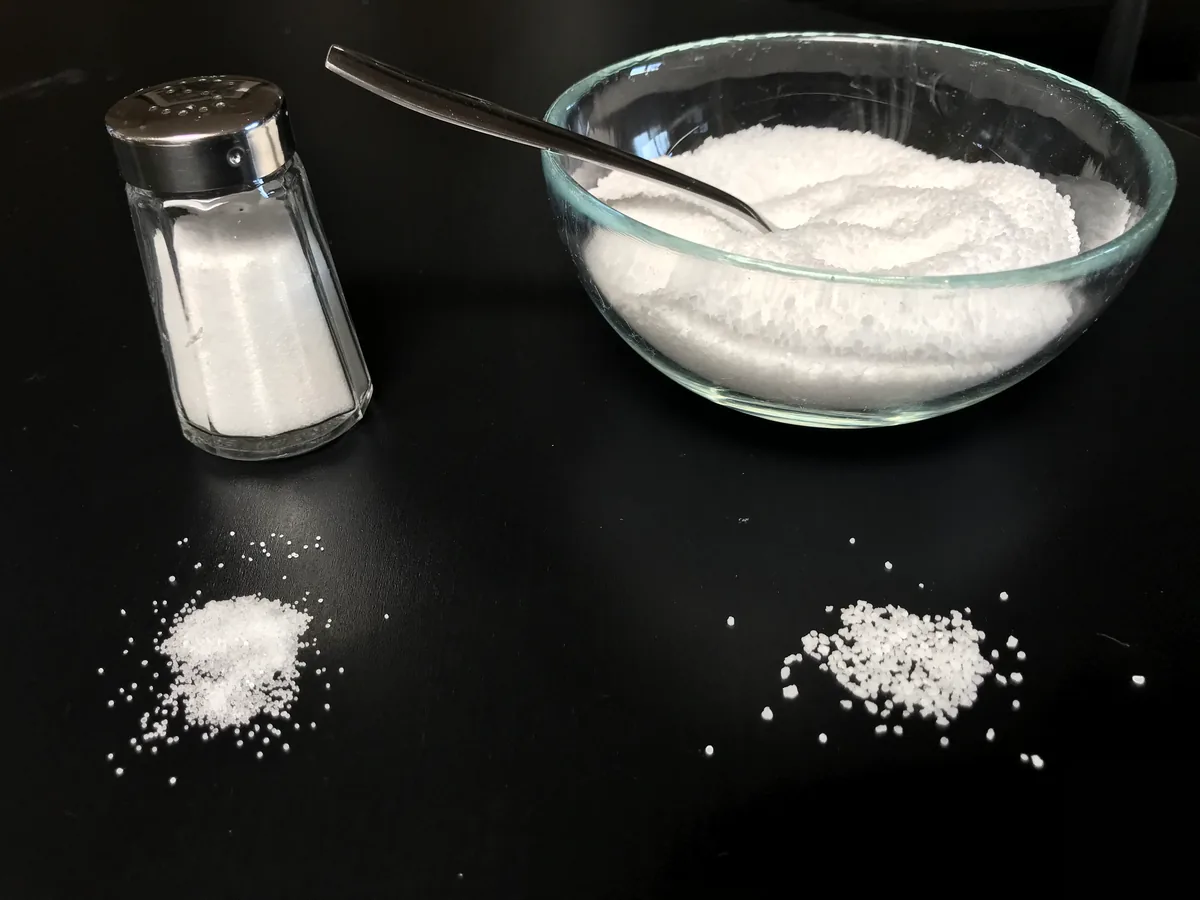
A wet brine is a saltwater bath. USDA’s basic solution is simple: ¾ cup of salt per 1 gallon of water, or 3 tablespoons of salt per quart. For the best flavor, USDA recommends sodium chloride-table salt. A sweetener is optional; USDA does not require one.
Use a container that is food-grade plastic, stainless steel, or glass, large enough that the turkey can be completely covered by the solution. USDA also says food-grade plastic bags can be used for brining, but do not use a household trash bag.
- Mix the brine. Stir the salt into the water until it dissolves, using the USDA ratio above. Add a sweetener only if you want one.
- Submerge the turkey completely in the solution. If the bird floats, weight it down gently so no part sits above the liquid.
- Store it cold. Cover the container and refrigerate it, or set it in a cooler with ice. The turkey should stay fully submerged the whole time.
- Leave it at least overnight for best results, according to USDA. Poultry may be left in the refrigerator up to 2 days after it is thawed or purchased fresh.
- Lift the turkey out and discard the brine. Do not reuse the solution. If you plan to stuff the bird, USDA says to brine it first, then cook it immediately after stuffing.
A brining bag can make it easier to keep a large turkey fully covered without tying up a huge pot in the fridge. Look for a bag sold for food use, not a trash bag.

- Proven Technique: Brining helps achieve a juicy, flavorful turkey by allowing it to absorb moisture and seasoning; the process...
- Everything Included: This set includes two extra-large brining bags with wide gusseted bottoms for added stability, double-track...
- Free from Breakage: Made from heavy-duty, BPA-free, food-grade materials, these brining bags feature thick seams for durability...
How to Dry Brine a Turkey
A dry brine skips the water. You rub salt directly on the turkey and let it rest in the refrigerator, so the salt has time to work into the meat.
To prepare a dry brine, USDA says to measure 1 tablespoon of kosher salt, or seasoned salt, for every 5 pounds of poultry. You may add aromatic ingredients such as herbs, spices, citrus, or garlic.
- Mix the salt with any herbs, spices, citrus, or garlic you want to include.
- Rub the mixture over the entire surface of the turkey.
- Place the turkey in a food-grade plastic bag, press out the air, and seal it tightly.
- Refrigerate for up to 2 days for best results, and massage the mixture into the skin every 8 to 12 hours.
- Remove the turkey from the bag, pat it dry with a paper towel, and cook it to a safe internal temperature of 165°F.
How Long to Brine a Turkey
USDA does not give a separate brining schedule by weight, the way it does for roasting. The timing it publishes is the same for a smaller bird and a larger one, as long as the turkey stays refrigerated and, in a wet brine, fully submerged.
- Wet brine: refrigerate at least overnight for best results. Poultry may be left in the refrigerator up to 2 days after it is thawed or purchased fresh.
- Dry brine: refrigerate for up to 2 days, massaging the salt into the skin every 8 to 12 hours.
That 2-day window is the longest USDA gives here. Some other guides suggest leaving a dry brine on for as long as 72 hours; this article stays with USDA’s “up to 2 days” and does not stretch it.
After the Brine: Cooking and Leftovers
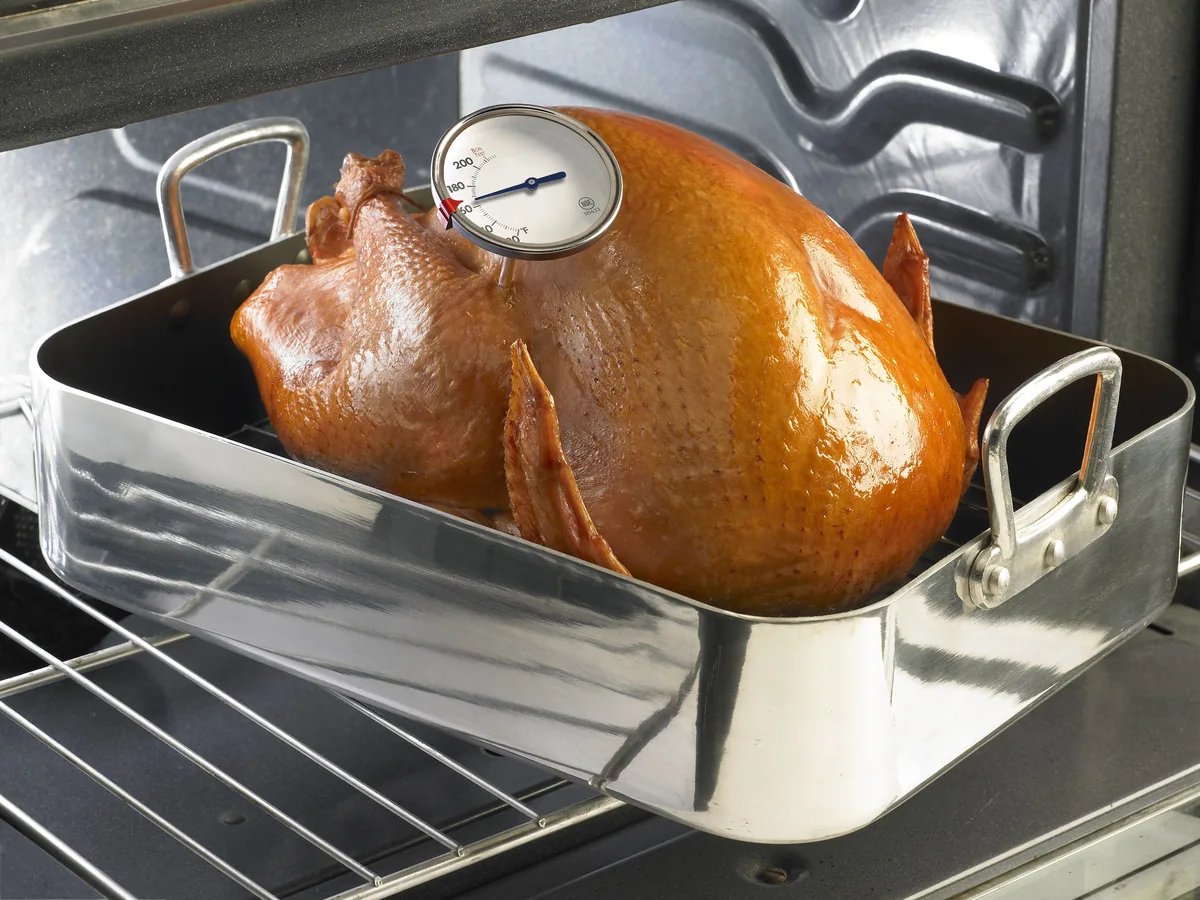
Once the turkey is out of the brine, roast it the way you usually would, following USDA’s cooking temperatures. Set the oven no lower than 325°F. The turkey is safe when a food thermometer reads 165°F in the innermost part of the thigh, the innermost part of the wing, and the thickest part of the breast.
For roasting times by weight, stuffing rules, and how long to let the turkey rest, see how long to cook a turkey. USDA prefers not to stuff a whole turkey; if you do stuff it, brine first, put the stuffing in just before the bird goes into the oven, and cook until the center of the stuffing also reaches 165°F.

- Instant Read Meat Thermometer | Our instant read thermometer features a temperature probe and advanced, highly accurate technology...
- Multi-Use | From bbq thermometer to baking thermometer, our digital food thermometer for cooking is perfect for meats, liquids...
- Easy-Read Digital Thermometer For Cooking | Large instant thermometer dial with bright blue backlight means you can always read...
When dinner is over, the clock starts again. USDA says to refrigerate leftovers within 2 hours of cooking (1 hour if the room is above 90°F). Cut the meat into smaller pieces, pack it in shallow containers, use it within 3 to 4 days, and reheat it to 165°F. Then put the extras to work with these leftover turkey recipes.
Turkey Brining FAQ
How long should I brine a turkey overnight?
For a wet brine, USDA says to refrigerate the turkey in the solution at least overnight for best results. You can leave poultry in the refrigerator up to 2 days after it is thawed or purchased fresh. For a dry brine, USDA’s guidance is to refrigerate for up to 2 days, massaging every 8 to 12 hours.
Is a wet brine or a dry brine better?
USDA describes both methods and does not rank one above the other. A wet brine uses a measured saltwater solution and needs a container large enough to submerge the bird. A dry brine uses less equipment: salt is rubbed on the surface, the turkey goes into a food-grade bag, and you massage it a few times while it rests in the fridge. Either way, keep the turkey cold and cook it to 165°F.
Can I brine a turkey in a cooler?
Yes. USDA says to store a brining turkey covered in the refrigerator or in a cooler with ice. The important part is that the turkey stays fully submerged (for a wet brine) and stays cold.
Should I rinse the turkey after brining?
USDA’s wet-brine steps are to remove the poultry and discard the brine. For a dry brine, USDA says to take the turkey out of the bag and pat it dry with a paper towel before cooking. This article does not add a rinse step, and USDA also advises against washing raw turkey in general.
Can I brine a turkey breast the same way?
USDA’s brining ratios and times are written for poultry, so the same salt measurements and refrigerator times apply to a turkey breast as to a whole bird: ¾ cup of table salt per gallon of water for a wet brine, or 1 tablespoon of kosher or seasoned salt per 5 pounds for a dry brine, kept refrigerated, then cooked to 165°F. Use a container or bag that fits the breast and still lets you keep it fully covered (wet) or sealed (dry).
Once you have checked the label, mixed the salt, and cleared a cold spot in the fridge, the rest is mostly waiting. Keep the turkey cold, give it at least overnight, and let the thermometer tell you when it is done.