

African violets (Saintpaulia) have won over indoor gardeners for generations with their velvety leaves and cheerful clusters of purple, pink, blue, or white flowers. Native to Eastern Africa, they’ve adapted beautifully to life on a windowsill, and with the right setup they can bloom several times a year, even in the middle of winter.
The short answer: give African violets bright light without hot afternoon sun, normal room temperatures around 65 to 75°F, and a light, well-drained mix in a small pot with drainage holes. Water with room-temperature water when the soil is just starting to dry, keep water off the leaves, never let the pot sit in water, and feed lightly. Most flowering problems come down to too little light, and most deaths come down to too much water.
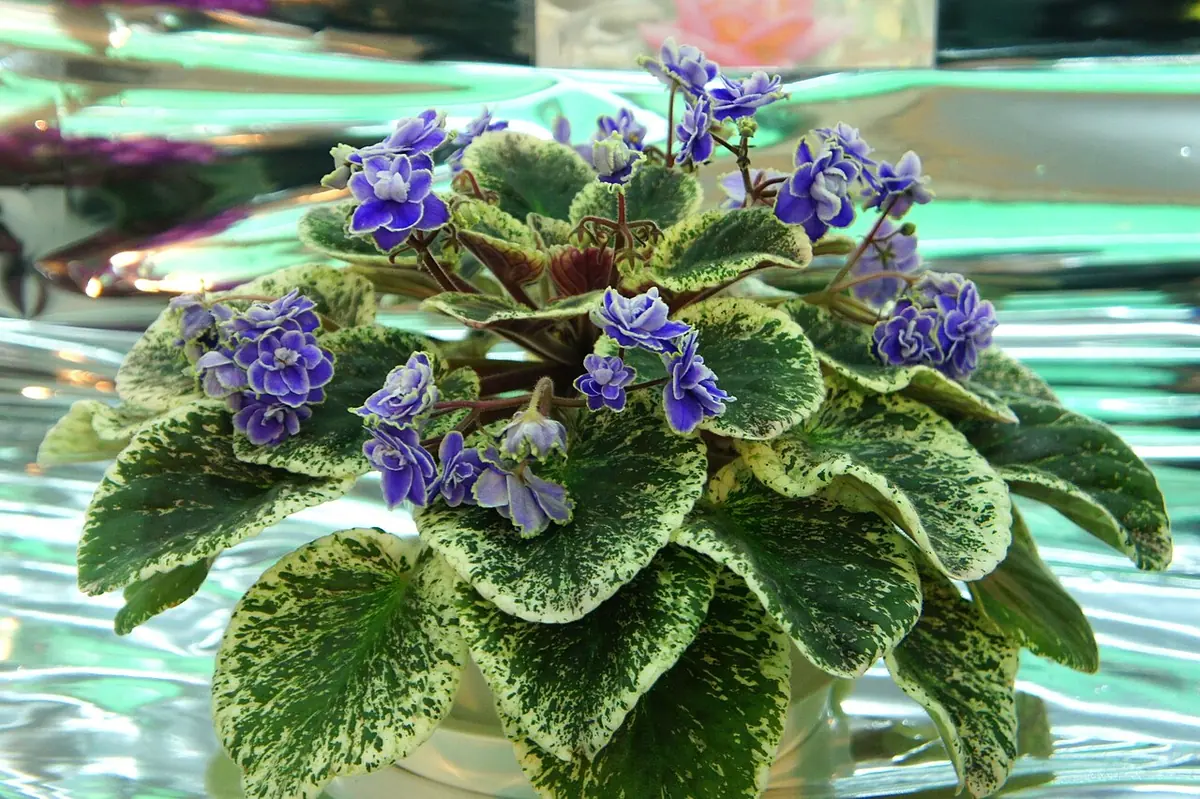
African Violet Care at a Glance
| What it needs | In plain terms |
|---|---|
| Light | Bright, indirect light; north, northeast, or east windows, or within about 3 feet of a sunny window without afternoon sun |
| Day length | 14 to 16 hours of light and 8 to 10 hours of darkness to flower (grow lights help in winter) |
| Temperature | About 60 to 80°F, ideally near 70°F; avoid cold drafts |
| Humidity | About 40 to 60 percent; a pebble tray or grouping plants helps |
| Potting mix | Light, airy, well-drained mix made for African violets, or a peat-based mix lightened with perlite |
| Pot | Drainage holes; about one-third the width of the leaf rosette |
| Water | Room-temperature water; keep the mix moist, not soggy, and keep leaves dry |
| Fertilizer | Mild, frequent feeding with an African violet fertilizer; flush with plain water monthly |
| Pets | Non-toxic to dogs, cats, and horses (ASPCA) |
Sources: University of Minnesota Extension, Clemson Cooperative Extension, University of Vermont Extension, and the ASPCA.
How to Choose a Healthy African Violet
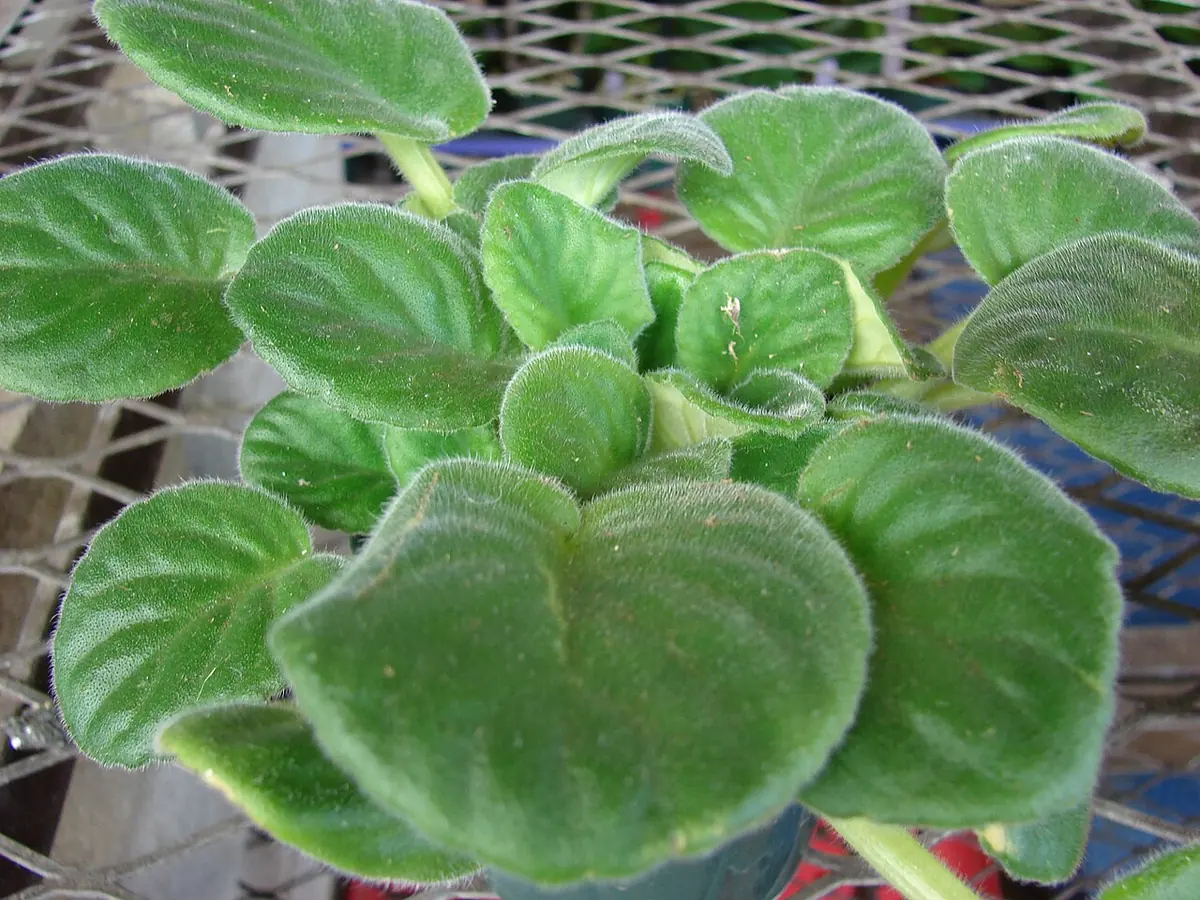
When you’re shopping, look for a plant with a single, tidy rosette of firm, evenly colored leaves and plenty of buds, not just open flowers. Check the undersides of the leaves and the center of the plant for pests. Clemson Extension notes that pests and diseases spread easily between African violets, and specifically warns to watch for tight, crinkled centers, a possible sign of cyclamen mites, as well as mealybugs. If you already have violets at home, it’s wise to keep a new plant apart for a little while before grouping it with the others.
African violets come in a range of sizes. The University of Minnesota Extension describes miniatures and semi-miniatures as under 8 inches wide, standards as 8 to 16 inches wide, and large types as more than 16 inches across, which is helpful to know before you pick a spot or a pot.
The Best Light for African Violets
Light is the number one reason African violets do or don’t bloom. Clemson Extension calls lack of flowering one of the most common problems and says it is generally due to inadequate light.
- Windows: University of Minnesota Extension recommends a bright, cool spot, with north, northwest, or northeast windows working well. Clemson suggests placing plants within about 3 feet of a large south-, east-, or west-facing window, but out of direct afternoon sun.
- Signs of too little light: thin, dark green leaves on long stems and few or no flowers.
- Signs of too much light: pale, bleached-looking leaves. Move the plant back from the glass.
- Grow lights: fluorescent or LED grow lights can be used alone or to top up winter daylight. UMN says African violets need 14 to 16 hours of light and 8 to 10 hours of darkness each day to flower. University of Vermont Extension suggests placing lights about 12 inches above standard plants and about 8 inches above miniatures.
Turning the pot a little every week or so keeps the rosette growing evenly instead of leaning toward the window.
Temperature and Humidity
The University of Minnesota Extension puts it simply: if you are comfortable, your African violet is comfortable. It recommends about 60 to 80°F, ideally around 70°F. Clemson Extension’s ideal range is 65 to 70°F at night and up to 80 to 85°F during the day. In winter, keep plants away from cold windowpanes, exterior doors, and blasts from heat vents.
Humidity of about 40 to 60 percent helps them thrive. To raise humidity around the plant, UMN suggests grouping plants together or setting them on a tray of pebbles and water, as long as the bottom of the pot sits above the water rather than in it.
Soil and Pots
African violets have fine roots that rot easily in heavy, wet soil, so they need a light, airy mix.
- Easy option: a commercial African violet potting mix. UMN notes that some growers blend it half-and-half with perlite for extra drainage.
- Mix your own: University of Vermont Extension suggests lightening regular potting soil with coarse perlite at about two parts soil to one part perlite, and says some growers use equal parts peat, perlite, and vermiculite.
- Pot size: African violets like to be slightly snug. A pot about one-third the width of the leaf rosette is the usual rule. The Smithsonian Gardens care sheet gives a handy example: a plant with a 12-inch leaf span needs about a 4-inch pot. For more help with sizing, see our guide to choosing the right container size.
- Drainage: always choose a pot with holes. Clemson Extension advises against decorative glazed pots without drainage.
- Clay vs. plastic: clay pots dry out faster, so they need more frequent watering. Clemson also notes that leaf stems resting on the rim of a clay pot can be damaged by built-up fertilizer salts.
When and how to repot
UMN recommends repotting into fresh mix about once a year. Move up only if the plant has truly outgrown its pot, and keep the one-third rule in mind. If your violet has developed a second crown (a “sucker”) beside the main one, University of Vermont Extension suggests removing small suckers with tweezers, or separating a larger one with its own roots and potting it up as a new plant. Trailing varieties are the exception; they’re meant to have several crowns.
How to Water African Violets
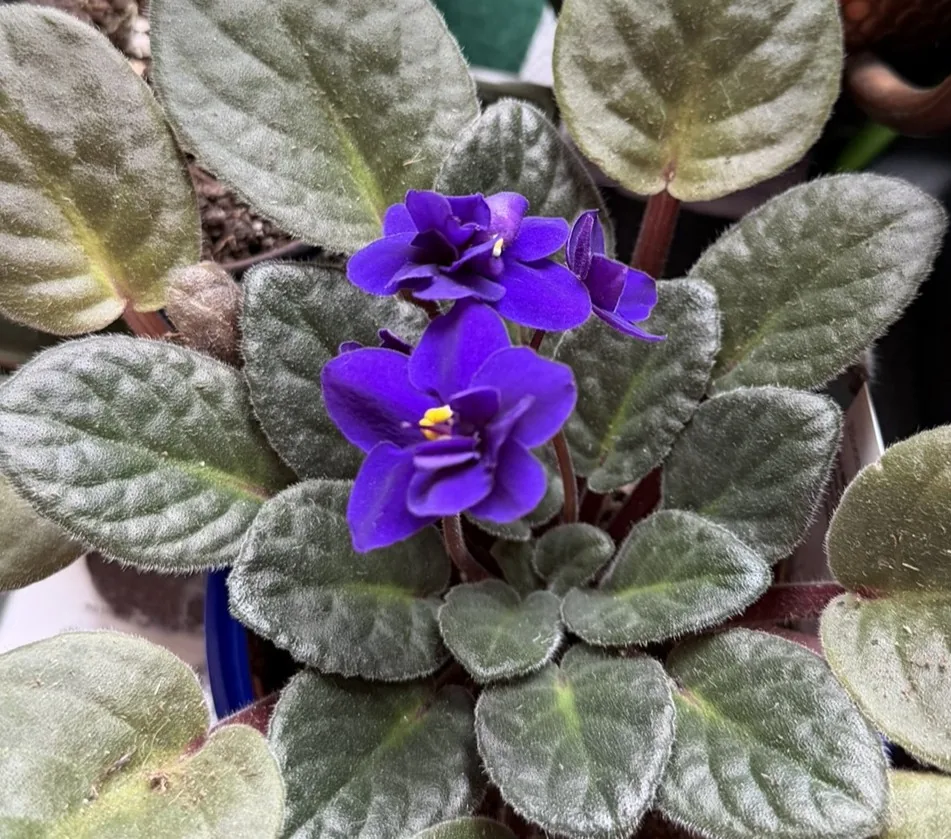
Overwatering is the most common way African violets are lost. UMN says root rot from overwatering is one of the most common reasons they die, and Clemson notes they are very susceptible to crown and root rot. Aim for soil that stays lightly moist, not wet.
- Use room-temperature water. Cold water that touches the leaves can cause pale rings, lines, and blotches, according to Clemson Extension. UMN also suggests avoiding softened or chlorinated water and using room-temperature distilled water, rainwater, or reverse-osmosis water.
- From the top: use a narrow-spouted can, baster, or squeeze bottle and water just the soil. Gently brush off any drops that land on the leaves.
- From the bottom: set the pot in about 1 inch of room-temperature water. When the soil surface feels moist, lift it out and let it drain. University of Vermont Extension recommends pouring off any water still in the saucer after 30 minutes.
- Wick watering: a nylon or polyester string threaded through the drainage hole into a water reservoir gives steady moisture. UMN describes this method and suggests adding fertilizer to the reservoir at about one-eighth strength.
- Self-watering pots: pots designed for African violets can be helpful, especially if you tend to forget, but still check that the soil isn’t staying soggy.
Fertilizing for More Flowers
African violets bloom best with a little food, often. UMN recommends a fertilizer formulated for African violets, added at about one-quarter of the label’s recommended amount each time you water. Always moisten dry soil with plain water first to avoid burning the roots, and flush the pot with plain water once a month to rinse out built-up salts.
Clemson Extension notes that older lower leaves turning yellow along with slow growth usually indicate it’s time to feed. On the other hand, UMN says tight centers and rusty-colored leaves can mean you’re overdoing it; flush with plain water and cut back to every other watering.
Why Won’t My African Violet Bloom?
If your plant looks healthy but has no flowers, work through this list:
- More light. This is the most common fix. Move it to a brighter window or add a grow light, aiming for the 14 to 16 hours of light per day UMN recommends.
- A little more warmth. UMN notes that long, narrow leaves and no flowers can mean too little light and a room that’s too cool, and suggests daytime temperatures in the 70s with nights around 65 to 70°F.
- Regular, mild feeding. Pale leaves and little growth can point to a nutrient shortage.
- A snug pot. African violets prefer to be slightly rootbound, according to Smithsonian Gardens, and an oversized pot holds extra wet soil around the fine roots.
- One crown. University of Vermont Extension notes that a sucker left in place can grow large enough to compete with the main crown, so remove small ones early.
Pinching off spent flowers and their stems, and removing any yellowed or damaged outer leaves, keeps the plant tidy. UMN suggests using tweezers or a small pointed pruner, and a soft, dry paintbrush or cloth to gently brush dust off the fuzzy leaves.
Common African Violet Problems
| What you see | Likely cause | What to try |
|---|---|---|
| Limp, wilted plant even though the soil is moist | Overwatering, poor drainage, root rot | Repot into a well-draining pot and mix; never let it sit in water. If roots are brown and mushy, the plant may not recover (UMN) |
| Pale rings, lines, or blotches on leaves | Cold water touching the leaves | Use room-temperature water and keep leaves dry (Clemson) |
| Spots on leaves | Water left on the foliage | Water from below or at the soil only (UMN) |
| Long leaf stems, thin dark leaves, no flowers | Not enough light | Brighter spot or grow lights |
| Pale, bleached leaves | Too much direct light | Move the plant back from the window |
| Tight, crinkled center leaves | Possible cyclamen mites (Clemson calls them incurable) or excess fertilizer | Isolate the plant; flush with plain water; contact your local extension office about mites |
| White cottony bits in leaf joints | Mealybugs | Isolate the plant and treat promptly; ask your local extension office for options |
How to Propagate African Violets From a Leaf
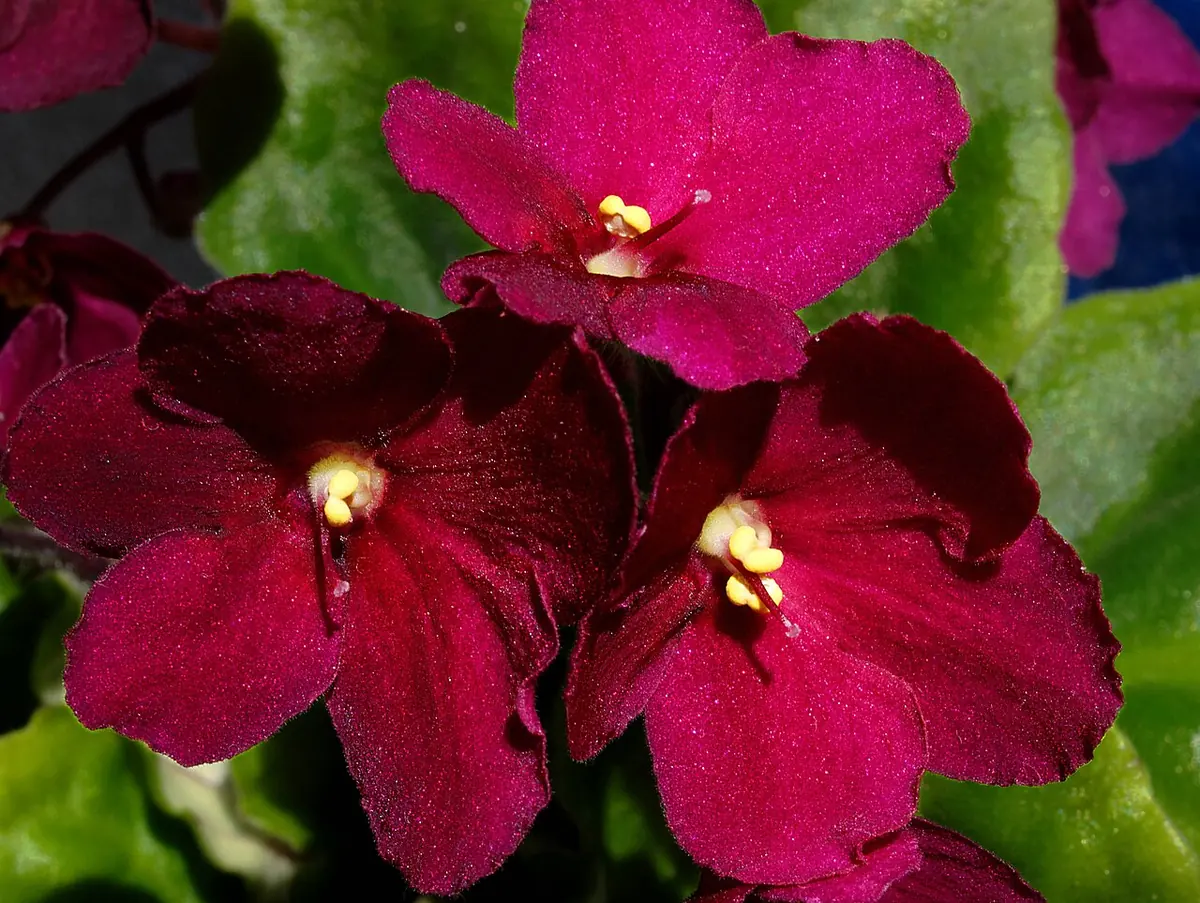
One of the most delightful things about African violets is that a single leaf can grow into a whole new plant. Here’s the method Iowa State University Extension describes:
- Choose a firm, healthy leaf and cut it off with a sharp knife, leaving 1 to 1½ inches of leaf stem (petiole) attached.
- Fill a small pot with a moistened 50:50 mix of vermiculite and coarse sand. (University of Vermont Extension notes moistened potting mix also works.)
- Insert the stem at about a 45-degree angle and firm the mix around it. Water lightly and let it drain.
- Cover the pot with a clear plastic bag to hold in humidity, and set it in bright, indirect light.
- Be patient. Iowa State says roots usually form in three to four weeks and new leaves usually appear in six to eight weeks; the Smithsonian Gardens care sheet allows up to two to six months for plantlets.
- When the baby plants are big enough to handle (University of Vermont Extension suggests about the size of a dime), gently separate them and pot each one individually in a well-drained mix.
Are African Violets Safe for Cats and Dogs?
Yes. The ASPCA lists African violet (Saintpaulia spp.) as non-toxic to dogs, cats, and horses, which makes them one of the friendlier flowering houseplants for homes with pets. A nibbling cat can still ruin a rosette quickly, so a shelf out of reach is a good idea.
African Violet FAQ
How often should I water an African violet?
There’s no fixed schedule. Water when the surface of the mix starts to feel dry to the touch, and expect to water more often in warm, bright rooms and in clay pots. The goal is evenly moist, never soggy, soil.
Should I water African violets from the bottom?
Bottom watering is a great way to keep water off the leaves. Set the pot in about an inch of room-temperature water until the surface feels moist, then lift it out and let it drain, and don’t leave it standing for more than about 30 minutes. Careful watering at the soil from the top also works, as UMN and Clemson Extension describe; either way, flush the pot with plain water about once a month to rinse out salts.
How long do African violet flowers last?
Clemson Extension says individual flower clusters may last three to six weeks under good growing conditions, and plants can flower year-round when light, temperature, and feeding are right.
Can I use banana peel water or eggshell water as fertilizer?
We no longer recommend homemade “fertilizer” waters for African violets. The extension sources in this guide recommend a fertilizer formulated for African violets at reduced strength, which gives the plant a balanced, predictable amount of nutrients. If you’d like a gentler approach, simply dilute a commercial African violet fertilizer more and use it consistently.
Why are the leaves on my African violet curling or turning yellow?
A few yellowing lower leaves are normal as the plant ages; remove them. Widespread yellowing along with slow growth often means the plant needs feeding, while tight, curled center leaves can point to too much fertilizer or cyclamen mites. Check your light, water, and feeding routine first.
Give your African violets a bright, cool windowsill and a light touch with the watering can, and they’ll reward you with color right through the gray months. If you’re adding more easy houseplants this season, our Christmas cactus care guide pairs beautifully with a windowsill of violets.
Care information in this guide comes from University of Minnesota Extension, Clemson Cooperative Extension, University of Vermont Extension, Iowa State University Extension and Outreach, Smithsonian Gardens, and the ASPCA.