

Few things say “the holidays are here” like a red poinsettia by the front window. And few things are more disappointing than watching it drop leaves a week before Christmas. Poinsettias are tropical plants, so most trouble comes from cold, drafts, and soggy roots, not from anything you did “wrong” in a big way.
The short answer: keep your poinsettia in bright, indirect light at normal room temperature (roughly 60 to 72°F), away from drafts and cold glass. Water thoroughly only when the soil feels dry, and never let it sit in water trapped by a foil wrap. Skip fertilizer while it is in color.
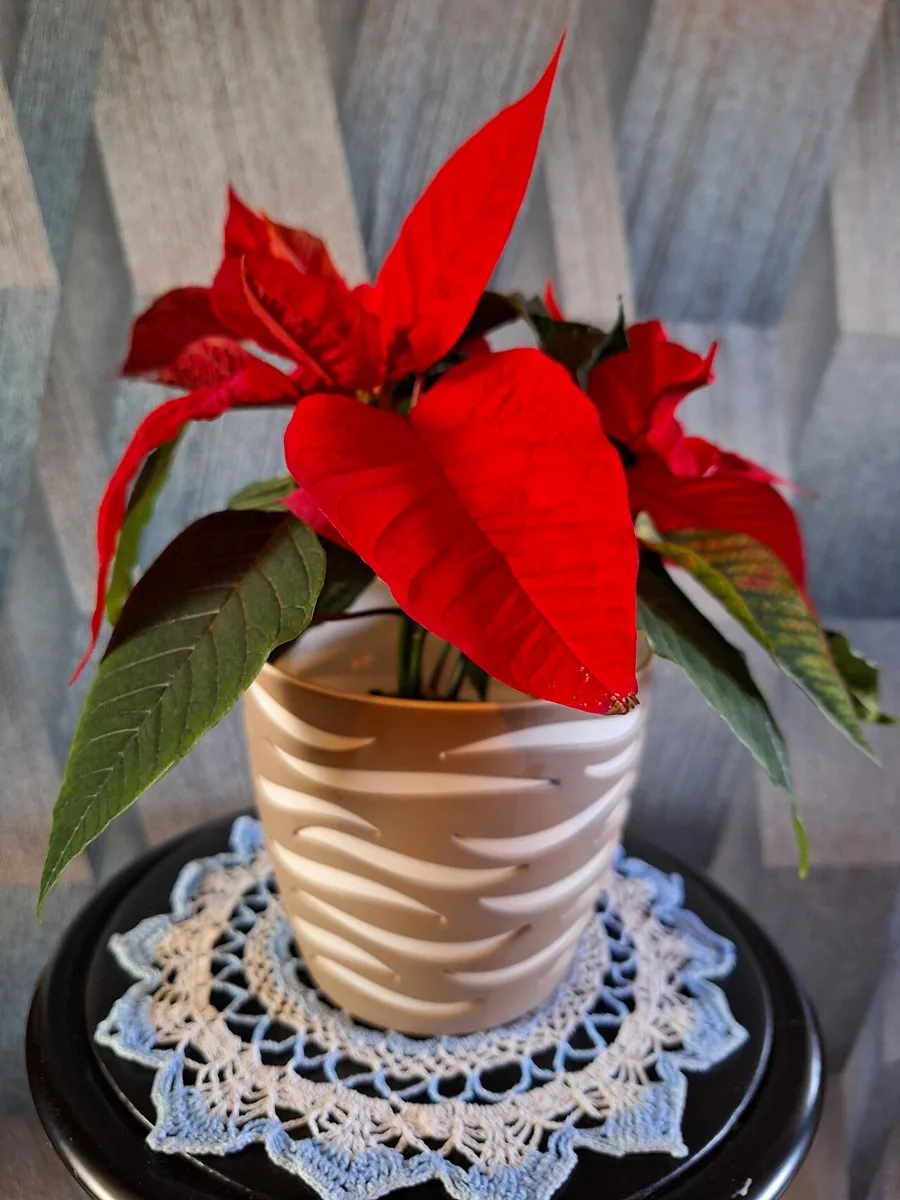
Poinsettia Care at a Glance
| What it needs | In plain terms |
|---|---|
| Light | Bright, indirect light, at least about 6 hours a day; a sheer curtain softens direct sun |
| Temperature | About 67–72°F by day and 60–65°F at night; keep it above 50°F |
| Water | Water thoroughly when the soil feels dry, then empty the saucer or foil |
| Drafts | Keep away from heat vents, heaters, exterior doors, and cold windowpanes |
| Fertilizer | None while in bloom; monthly houseplant fertilizer after the holidays if you keep it |
| Pets | Mildly irritating if chewed; place it out of reach of pets and small children |
Sources: Mississippi State University Extension, Colorado State University Extension, and NC State Extension.
How to Pick a Healthy Poinsettia
A long-lasting poinsettia starts at the store. Those colorful “petals” are actually bracts, modified leaves. The true flowers are the tiny yellow-green buds in the center, called cyathia, and they are your best freshness clue.
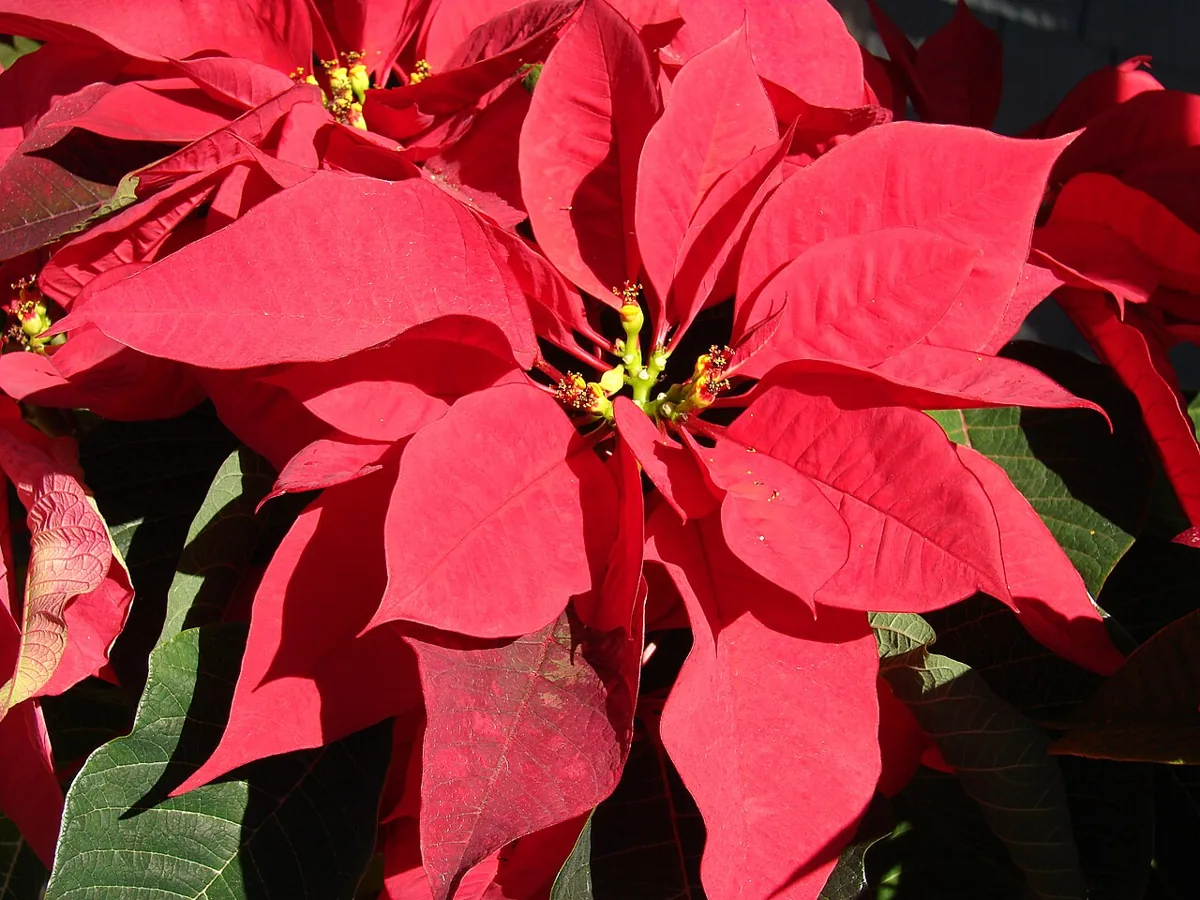
Mississippi State University Extension suggests looking for:
- Brightly colored bracts with unopened or just-opening yellow cyathia in the center (little pollen showing).
- Dark green leaves all the way down the stems to the soil line, with no missing lower leaves.
- No drooping, wilting, fading, or torn bracts.
- No whiteflies or aphids on the undersides of the leaves.
- A plant that has not been sitting in its plastic sleeve for days.
Shopping note: pale, yellowing, or fallen leaves can point to root problems or a watering mishap at the store, according to Colorado State University Extension. It is worth skipping that one.
Getting It Home Safely
Poinsettias are sensitive to cold. NC State Extension notes that temperatures below 50°F cause chilling injury, which can show up as blue or white discoloration on the bracts and leaf drop. On a cold day, ask for a sleeve or cover, carry the plant in the warm car rather than the trunk, and make your poinsettia the last stop on your errands.
Once you are home, take the sleeve off promptly. Colorado State University Extension explains that leaving plants sleeved can cause the leaf stalks to bend downward. Cut or tear the sleeve away instead of sliding it up and off, which can snap the fragile stems.
Where to Put Your Poinsettia
Think “comfortable room, bright window, no breezes.” Poinsettias do best near a bright window where they get several hours of indirect light. Very strong direct sun can fade the bract color, so a sheer curtain helps.
- Keep it away from: heat vents, radiators, fireplaces, space heaters, and doors that open to the cold.
- Do not let it touch the glass: leaves and bracts pressed against a cold windowpane can be damaged.
- Moving it for a party? That is fine for a day or two. The University of Delaware suggests simply returning it to its bright spot afterward.
Decor note: poinsettias look lovely grouped on a dining table or hearth, but a mantel above a working fireplace is too hot and dry. A side table near a bright window gives you the same holiday glow without the stress.
How to Water a Poinsettia (and the Foil Problem)
Overwatering is a major cause of early leaf and bract drop, and decorative foil is often the culprit. Water runs through the pot, collects in the foil, and the roots sit in it.
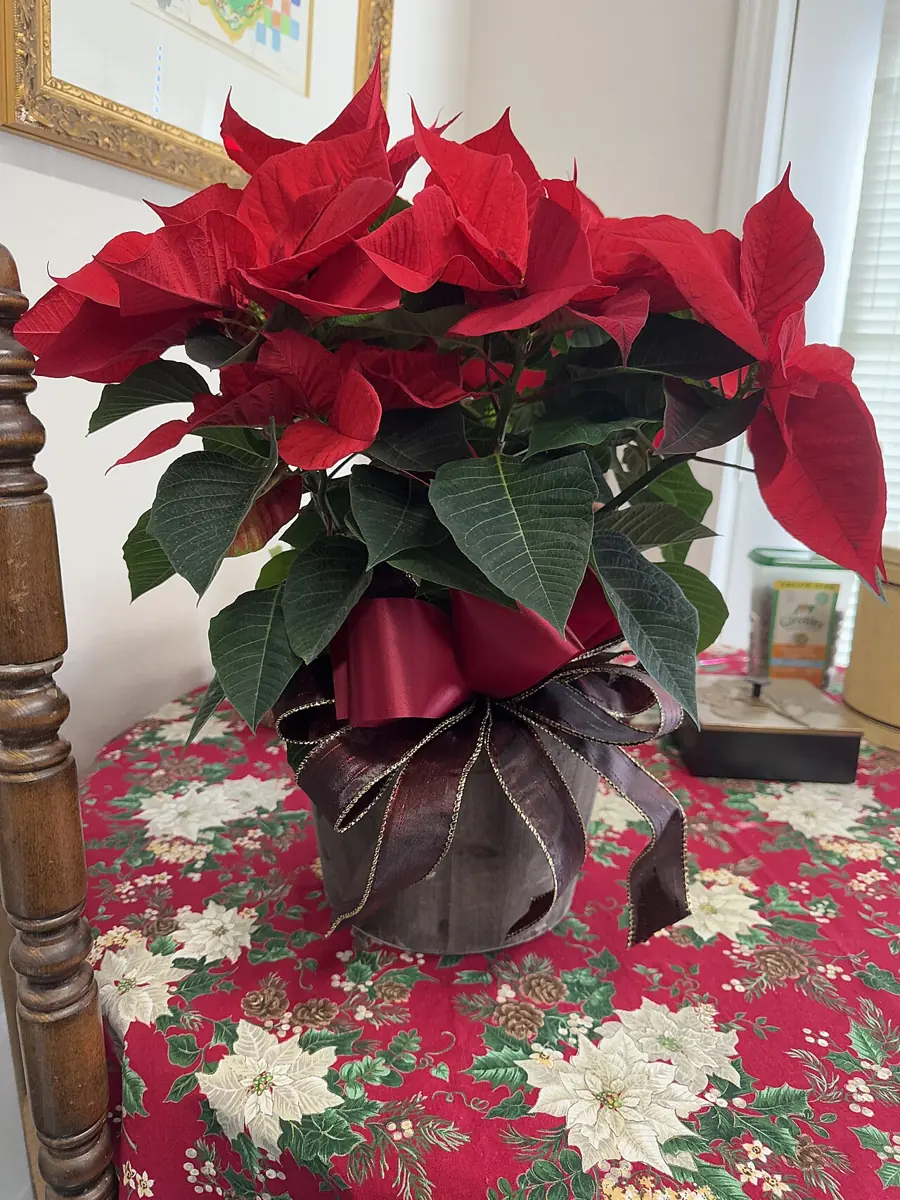
- Remove the foil, or punch a few holes in the bottom and set the pot on a saucer.
- Check the soil daily. When it feels dry to the touch, or the leaves just begin to droop, it is time.
- Water thoroughly until it runs out of the bottom of the pot. The sink is easiest.
- Let the pot drain, then empty the saucer promptly so the roots are not left standing in water.
Good to know: small plants in 4-inch pots dry out faster than big ones in 6- or 8-inch pots, and clay pots dry faster than plastic. Check the little ones more often.
Why Are My Poinsettia Leaves Falling Off?
| What you see | Likely cause | What to do |
|---|---|---|
| Lower leaves yellow and drop, soil stays wet | Overwatering or root rot | Let it dry between waterings and make sure it drains |
| Sudden leaf drop after a few days home | Drafts or a cold or hot spot | Move it away from doors, vents, and heaters |
| Blue or whitish patches on bracts | Chilling injury below about 50°F | Keep it warmer; protect it on cold trips |
| Wilting, then leaf drop | Soil allowed to dry too long | Water thoroughly as soon as the soil feels dry |
| Faded bract color | Too much direct sun | Filter light with a sheer curtain |
| Leaf stalks bent downward | Left in the sleeve too long | Remove sleeves promptly |
Adapted from guidance by Mississippi State University Extension, University of Delaware Cooperative Extension, Colorado State University Extension, and NC State Extension.
How Long Will a Poinsettia Last?
Longer than many people expect. Colorado State University Extension notes that poinsettias can keep their color indoors until about mid-March with proper light and temperature, and Mississippi State points out that many newer varieties hold their bracts through winter into spring. Keep up the same bright light and careful watering after the holidays.
Can You Get a Poinsettia to Rebloom Next Year?
Yes, but be honest with yourself about the commitment. The calendar below follows Northern Hemisphere seasons; use your local frost dates when deciding when to move a plant outdoors. Mississippi State calls it possible but very challenging, and notes that single-stemmed plants do not reflower well. If you love a project, here is the general timeline from Colorado State and Mississippi State University Extension:
- Late March to early April: when the plant looks tired, cut back the bracts and upper stems, leaving three or four leaves on each stem. This can be done any time through mid-July depending on the size you want.
- Late spring to early summer: move it to the next pot size up with a well-drained mix and start regular feeding.
- Summer: once nights stay above about 55°F, it can go outdoors in light shade. Pinch or prune tall growth about every six weeks, with the last pinch in late August.
- Before nights drop below 55°F: bring it back indoors to a bright spot.
- Starting around October 1: give it 14 hours of uninterrupted darkness every night (a closet, or a box or wastebasket over it) and 6 to 8 hours of bright light by day. Keep nights between about 60 and 70°F.
- When color shows in the top bracts: usually around Thanksgiving, stop the dark treatment and care for it like a new holiday plant.
Even a lamp switched on in the evening, a porch light, or a streetlight can delay or stop the process, so the darkness really needs to be complete.
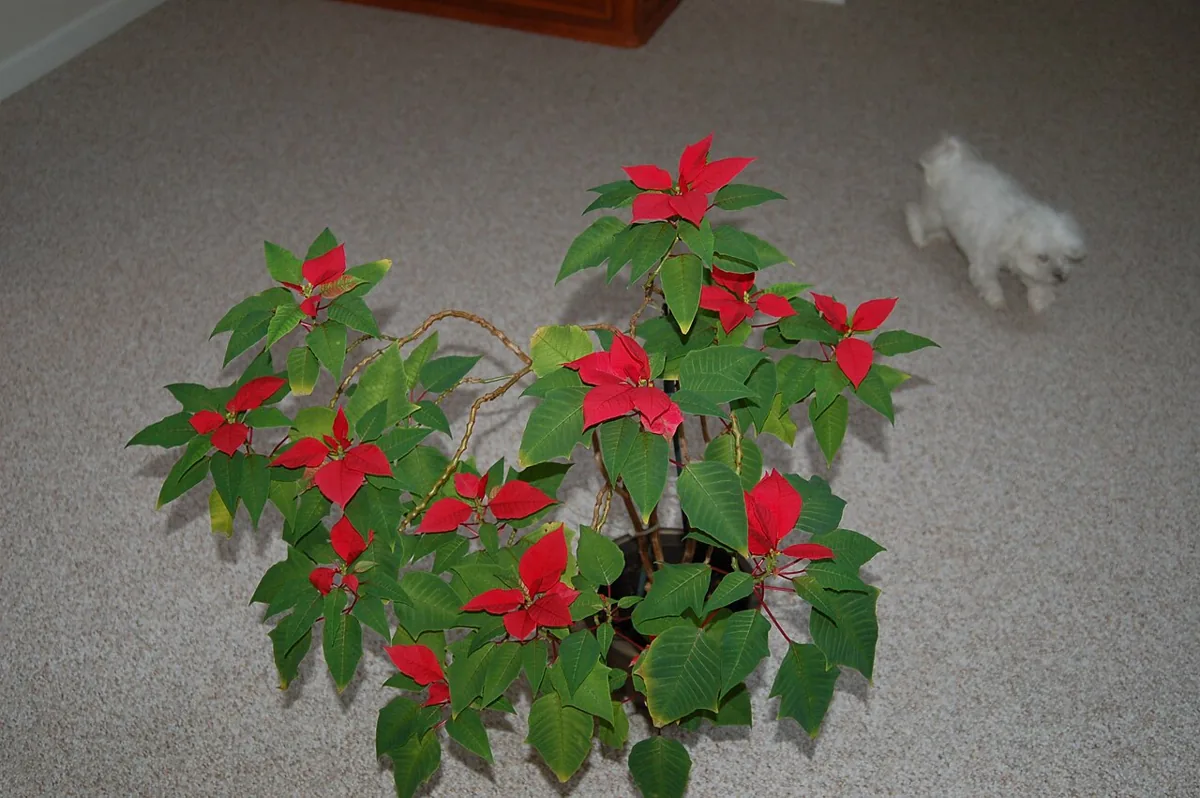
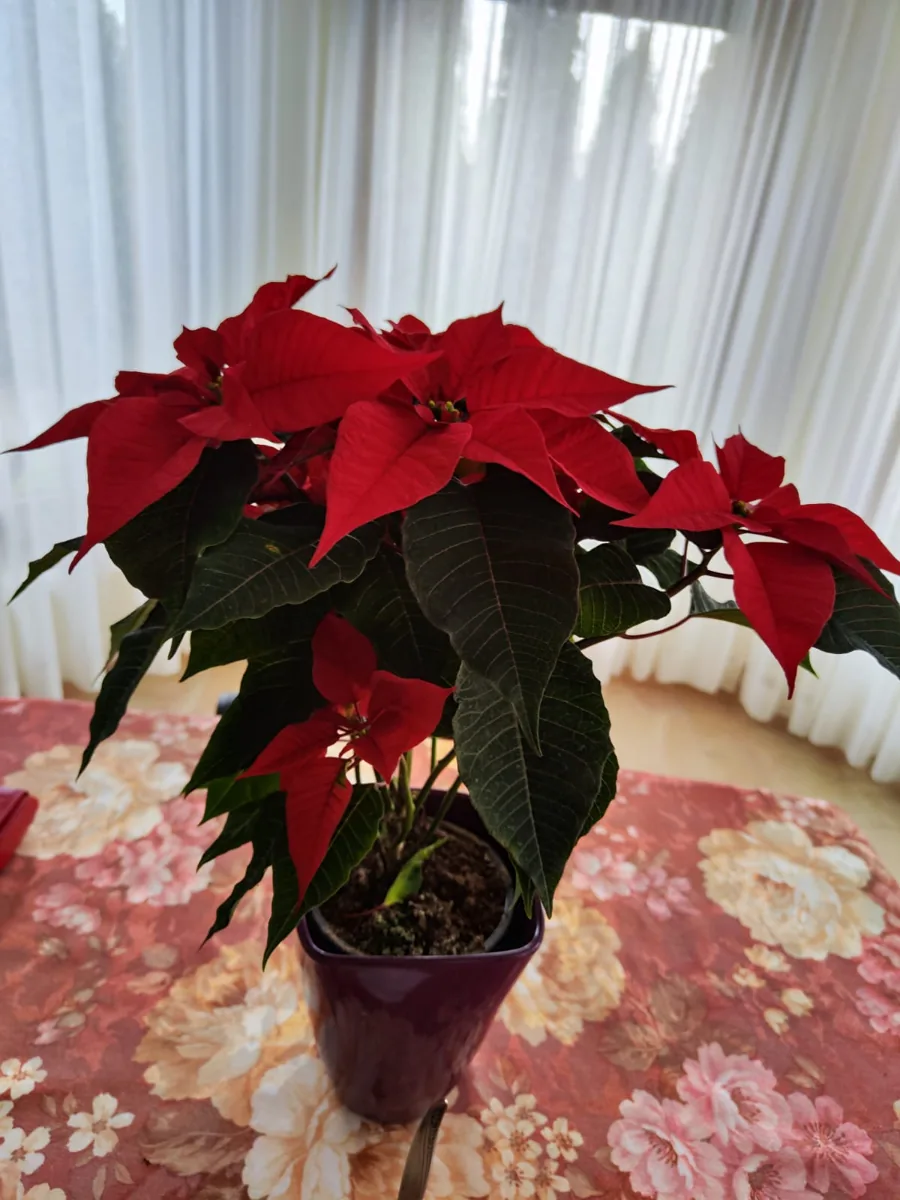
The photographer describes this as a five-year-old poinsettia rescued after Christmas that finally colored up after spending December in a room lit only by skylights. Reblooms are often smaller and looser than greenhouse-grown plants, and that is part of their charm.
Are Poinsettias Poisonous to Pets and Kids?
Their reputation is worse than the reality. The ASPCA lists poinsettias as toxic to dogs, cats, and horses because of an irritant sap, with signs like mouth and stomach irritation and sometimes vomiting, and describes the toxicity as “generally over-rated.” Colorado State University Extension adds that poinsettias are not edible but are not considered poisonous unless very large amounts are eaten, and that people sensitive to latex may get a rash from the milky sap.
The practical takeaway: set the plant where curious pets and toddlers cannot chew it, and wash your hands after trimming. If you think your pet ate a plant, call your veterinarian or the ASPCA Animal Poison Control Center.
Poinsettia FAQ
How often should I water a poinsettia?
There is no fixed schedule. Check daily and water when the soil feels dry to the touch. Warm, bright rooms and small pots mean more frequent watering; cool rooms and large plastic pots mean less.
Should I fertilize my poinsettia?
Not while it is in bloom. If you keep it after the holidays, Colorado State University Extension suggests a balanced houseplant fertilizer about once a month to support new growth.
Can I plant my poinsettia outside?
Colorado State University Extension suggests moving it outdoors to a lightly shaded spot only after frost danger has passed and nights stay at 55°F or warmer, then bringing it back inside when nights drop below 55°F. In frost-free climates, ask your local extension office about growing it in the ground.
Why is my poinsettia turning green?
Colorado State University Extension explains that the bracts build their color from pigments under the right light and temperature, and that colored bracts often last until about mid-March. After that, fading is normal. To get strong color again next year, the plant needs the long-night treatment starting in early fall.
Give your poinsettia a bright, draft-free spot, water it with a light hand, and it can stay cheerful well past New Year’s. If you are building a little indoor jungle this winter, our guide to indoor plants that thrive in living rooms has more easy companions.
Care information in this guide comes from Mississippi State University Extension, Mississippi State University Extension (blog), University of Delaware Cooperative Extension, Colorado State University Extension, NC State Extension, and the ASPCA.